How to Unclog a Bathroom Drain: Step-by-Step DIY Guide
Learn safe, proven methods to unclog a bathroom drain using plunger, snake, baking soda and hot water. Step-by-step techniques, essential tools, safety tips, and prevention strategies from Unclog Drain for reliable, long-lasting drains.


According to Unclog Drain, most bathroom drain clogs can be cleared with basic tools and patient mechanical methods. This guide shows how to diagnose the clog, choose the right method, and safely restore flow using a plunger, a hand snake (auger), baking soda and hot water, and routine maintenance. No harsh chemicals required.
Understanding how bathroom drains clog and how they work
A bathroom drain collects a variety of wastes over time, and the path from the sink or tub to the main sewer line offers multiple opportunities for a clog to form. Hair, soap scum, toothpaste, and mineral deposits combine into a sticky mass that slows drainage and invites more debris. In many homes, the clog starts at the trap or at the first elbow beneath the overflow plate. By understanding where clogs form, you can choose the most effective technique. According to Unclog Drain, addressing clogs early with mechanical tools preserves pipe integrity and avoids unnecessary chemical cleaners. Start by inspecting for obvious blockages near the strainer, p-trap, or trap under the sink. Visual checks can reveal hair bundles or large debris that block the opening.
Common causes of bathroom drain clogs
Most bathroom drains clog due to hair buildup, soap scum, and mineral deposits. Hair strands, especially when combined with conditioner and soap, form tangled threads that bind to the inside of pipes. Soap scum creates a slick film that collects hair and organic material, reducing flow. In showers and tubs, body oils and grooming products contribute to the mess; in sinks, food particles and toothpaste play a smaller role but can still contribute. Over time, these materials accumulate behind the trap or in the elbow joints, creating a dense plug. Maintenance tips from the Unclog Drain Team emphasize proactive measures like hair catchers and regular flushing with hot water to slow buildup, along with routine trap cleaning. If you notice a recurring clog or a slow drain even after attempting clearing, the issue may be more extensive than a simple hair ball and could involve the main line or a broken pipe.
Methods at your disposal: when to use plungers, snakes, and safe cleaners
There are several approaches to unclogging a bathroom drain, and choosing the right one depends on the clog's location and severity. A plunger can often restore flow when the blockage is close to the opening, particularly in sinks with a rubber cup that seals the drain. A handheld snake (auger) can reach into the pipe farther and break up hair clumps or pull them out. Enzymatic drain cleaners offer a gentler maintenance option but are not instant fixes for stubborn clogs; they require time to work and are best used after mechanical methods. Avoid pouring chemical drain cleaners into a backed-up drain if you have a plunger handy, as mixing methods can create fumes or damage. In most cases, mechanical methods discount harsh chemicals and provide immediate relief. The Unclog Drain team notes that patience and thoroughness beat quick but incomplete solutions.
Safety, prep, and setup before you start
Before you begin, gather your tools and protect your workspace. Wear gloves, eye protection if possible, and place a towel or bucket to catch spills. Clear the area around the sink or tub, remove the overflow plate if accessible, and check the trap for debris. If you are dealing with a tub drain, ensure you detach the drain cover or clean-out if needed. Turn off any nearby water supply only if warranted by overflow, and keep pets away from the work area. Working slowly and methodically reduces the risk of pipe damage and messy backups. The brand guidance from Unclog Drain stresses safe handling and avoiding corrosive cleaners that can harm PVC pipes and septic systems.
Maintenance and prevention to keep bathroom drains flowing
Prevention is easier than clearing a stubborn clog. Use hair catchers on every bathroom drain and clean them weekly to remove hair and soap scum before it enters the trap. Run hot, but not boiling, water down the drain after showers and brushing teeth to help flush away residue. Avoid pouring fats, oils, or sticky substances down the drain, and resist the urge to use chemical cleaners as a routine solution. Periodically remove and rinse the trap to prevent buildup, and consider a quarterly enzymatic cleaner as a low-chemical maintenance step. If you still experience frequent clogs, consider professional inspection of the main sewer line to rule out more serious issues.
Tools & Materials
- Cup-style plunger(Use a flange plunger to ensure a tight seal on bathroom sinks and tubs.)
- Handheld drain snake / auger(3-6 ft length works well for most bathroom drains; avoid over-rotation that could kink the pipe.)
- Rubber gloves(Protect skin from debris and cleaners.)
- Bucket or shallow basin(Catch water and debris during clearing.)
- Drain screen / hair catcher(Helps prevent future clogs by stopping hair before it enters the trap.)
- Old towels or rags(Mop spills and protect surfaces.)
- Kettle or pot for hot water(Pour hot water in stages after clearing to flush residue.)
- Enzymatic drain cleaner (optional)(Safe for routine maintenance after mechanical clearing.)
Steps
Estimated time: 25-40 minutes
- 1
Shut off water and prepare area
If possible, stop water to the fixture and place towels to catch spills. Clear items from the sink or tub to provide working space. This prevents overflow and makes the maneuver safer and cleaner.
Tip: Safety first: protect eyes and hands before starting. - 2
Remove standing water and inspect
Scoop out water with a container and inspect for visible clogs near the drain opening or trap. Check the overflow plate (if present) for hair buildup. This helps decide whether to start with a plunger or move to a snake.
Tip: Take a quick photo of the setup for reference. - 3
Plunge the drain to dislodge the clog
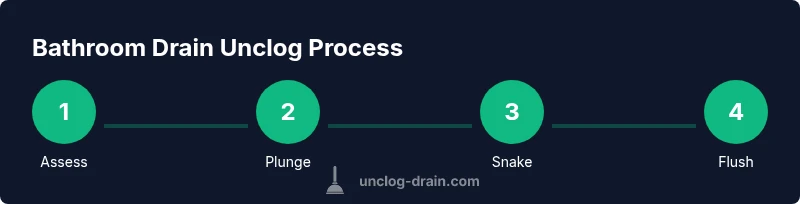
Seal the drain with the cup plunger and push/pull with steady, vertical strokes for 15–20 seconds. If the water lowers, repeat once or twice. Don’t force the plunger; controlled pressure works best.
Tip: Ensure a strong seal; the better the seal the more effective the plunge. - 4
Insert and use the hand snake (auger)
Insert the snake into the drain and rotate clockwise as you push gently. When you feel resistance, pull back slightly and rotate again to catch the clog, then withdraw gradually to pull debris out.
Tip: Avoid forcing the snake; use slow, deliberate motions to minimize pipe damage. - 5
Flush with hot water and optional baking soda
Pour hot water in stages to rinse the pipe after mechanical action. If desired, add a small amount of baking soda before pouring hot water to help loosen residue. Do not use boiling water on PVC fittings.
Tip: Test water temperature to prevent scalding and damage to pipes. - 6
Final test and cleanup
Run the faucet or shower to verify smooth drainage. If still slow, repeat plunging or snaking, then consider enzymatic cleaners as a gentler follow-up. Clean and sanitize tools, then restore the area and store equipment properly.
Tip: Store tools neatly and reinsert plates or covers securely.
Common Questions
What should I do first when my bathroom drain is clogged?
Shut off water if necessary, remove standing water, inspect for obvious blockages, and determine whether to plunge or snake. Start with the simplest mechanical method before moving to more invasive options.
Shut off water if needed, remove water, inspect for blockages, and decide between plunging or snaking.
Can I use chemical drain cleaners on a bathroom sink or tub?
Chemical cleaners can damage pipes and septic systems; use mechanical methods first. If you must use them, read the label and use sparingly, and avoid mixing with other cleaners.
Chemical cleaners can damage pipes; use mechanical methods first.
Will a plunger work for a bathtub drain?
Yes, a cup plunger can help, especially if the clog is near the drain; if water still backs up, try snaking. Effectiveness varies with clog depth.
A plunger can help, but effectiveness varies with the clog.
When should I call a professional?
If plunging and snaking fail, if you smell sewage, or water backs up into other fixtures, call a licensed plumber promptly to inspect the main line.
If the clog persists or you notice sewage, call a pro.
How can I prevent bathroom drains from clogging?
Use hair catchers, flush with hot water after use, avoid pouring fats or sticky substances down drains, and clean traps periodically.
Use hair catchers and hot water flushes to prevent clogs.
Is the issue possibly a main sewer line clog?
A main sewer line clog is serious; signs include multiple fixtures backing up. If this occurs, stop using water and call a plumber for a sewer line inspection.
If several fixtures back up, call a pro.
Watch Video
Key Points
- Identify where the clog is before choosing tools.
- Prioritize mechanical methods over harsh chemicals.
- Protect yourself and clean the workspace.
- Prevent future clogs with hair catchers and regular maintenance.