Slow Draining Bathroom Sink Not Clogged: DIY Troubleshooting Guide
Urgent DIY guide to fix a slow draining bathroom sink not clogged. Learn safe steps, check common causes, and know when to call a pro from Unclog Drain.


Most often, a slow draining bathroom sink not clogged stems from partial buildup in the drain, tailpiece, or P-trap rather than a full clog. Begin with quick, safe fixes: flush with hot water, then a baking soda-and-vinegar treatment, followed by mechanical cleaning (plunger or a hand auger). If drainage remains slow, inspect the trap and venting or call a professional for deeper sewer-line work.
Understanding Slow Draining in a Bathroom Sink Not Clogged
Slow draining in this context is frustrating because it feels like the sink should be clear, yet water lingers. The real culprit is often partial buildup that narrows the path of the water rather than a full blockage. According to Unclog Drain, homeowners who experience this issue frequently report hair, soap scum, mineral deposits, or a misaligned stopper as the primary culprits. By thinking in terms of partial obstruction, you can target the exact component that needs cleaning without tearing the plumbing apart. In most homes, the symptoms worsen after multiple uses of the sink, especially with hard water or high-flow pressure.
Common Causes You Might Miss
Even when you can’t see a clog, several household habits and plumbing configurations create a slow drain:
- Hair and soap scum collecting in the P-trap or tailpiece
- Mineral buildup from hard water lining the pipe interior
- A misaligned or blocked sink stopper that restricts flow
- A venting issue that slows drainage, particularly if other fixtures share the same vent
- Subtle pipe narrowing from aging copper or PVC that traps debris over time Unclog Drain Analysis, 2026 notes that most slow-drain cases originate locally rather than in the main sewer line, so your fix is usually a trap- or tailpiece-centered job.
Safety First: Tools and Precautions
Before you dive in, gather a bucket, towels, gloves, and a wrench or pliers. Turn off any nearby water shutoffs if you must. Use eye protection when working under the sink in case debris or splashing occurs. Never mix chemical drain cleaners with other products, and avoid melting pipes with boiling water on certain plastics.
If you have a pedestal sink or a vanity cabinet with a delicate finish, protect surfaces with a towel. This is a good time to remind readers that some tasks—like removing the trap—are easiest with a partner who can hold the bucket and pass tools.
Quick Wins You Can Try Right Now
If you’re facing a slow drain, start with the simplest fixes:
- Boil a kettle of water and pour slowly down the drain to loosen grease and soap film (skip if you have PVC that could warp).
- Add 1/2 cup baking soda followed by 1 cup white vinegar. Let fizz for 15 minutes, then rinse with hot water.
- Use a sink plunger to dislodge minor obstructions. If you have a double-basin setup, seal the other drain with a rag to improve suction.
- Remove and clean the sink stopper; hair and gunk often accumulate there and partially block flow.
How to Inspect the Trap and Tailpiece
The P-trap (the curved pipe under the sink) is a frequent culprit for slow drainage. Remove the U-shaped section by turning off the water, placing a bucket underneath, and loosening the slip nuts with pliers or a wrench. Clear out any hair, soap scum, or mineral deposits. Rinse the trap thoroughly before reassembling. If the pipe shows corrosion, signs of wear, or leakage, replace it.
After cleaning, reassemble the trap carefully, ensuring the gaskets stay in place and the nuts are snug but not overtightened.
Step-By-Step Fix for the Most Likely Cause: Hair and Soap Buildup in the Trap
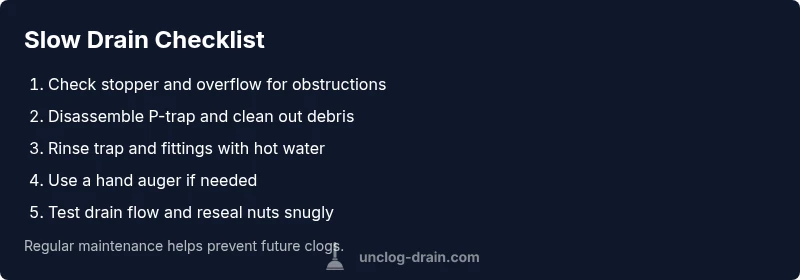
- Place a bucket beneath the P-trap and put on gloves. 2) Loosen the trap nuts with a wrench and slide the trap away from the drain. 3) Clear out all debris from the trap and fittings with a brush. 4) Inspect the tailpiece for any clogging and wipe clean. 5) Reinstall the trap, making sure the gasket seats properly. 6) Run water to test flow. 7) If water still hesitates, use a hand auger to clear deeper buildup and re-test. 8) Clean the drain elbow if accessible and re-check.
Tip: Take a quick photo of the trap’s orientation before disassembly to ensure correct reassembly and avoid leaks.
Prevention Tips to Keep Your Sink Flowing
Routine maintenance is cheaper than frequent calls. Keep a hair catch, wipe away soap scum, and flush with hot water weekly. Consider installing a fine mesh screen on the overflow or stopper to reduce debris entering the trap. If you have hard water, occasional mineral-softening cleaners (used sparingly) can prevent scale buildup. Finally, perform a quick visual check for moisture around the trap every few months to catch leaks early.
When to Call a Professional for a Slow Drain
If DIY methods fail after a thorough trap cleaning, or if you notice persistent leaks, strange noises, foul odors, or suspect a venting issue in the plumbing, contact a professional. A licensed plumber can perform a camera inspection to diagnose deeper pipe problems or vent blockages. The Unclog Drain team recommends seeking help sooner rather than later to prevent water damage or mold growth in cabinets.
Steps
Estimated time: 30-60 minutes
- 1
Turn off water and prep area
Clear area under the sink, place a bucket, and lay towels. Remove the sink stopper and put on gloves. Have a flashlight handy to inspect joint areas as you work.
Tip: Always keep a bucket under the trap to catch dirty water during removal. - 2
Disconnect and inspect the P-trap
Place the bucket beneath the trap, loosen the slip nuts with pliers, and carefully pull the trap away from the drain. Inspect for hair, soap, or mineral buildup and remove debris.
Tip: Take a photo of the trap orientation before removal to ensure correct reassembly. - 3
Clean the trap and fittings
Scrub the trap, elbow, and tailpiece with a bottle brush or old toothbrush. Rinse everything thoroughly and verify the seals and washers are intact.
Tip: Check for corrosion or cracks in the trap; replace if needed. - 4
Check the tailpiece and drain elbow
Examine the vertical tailpiece and elbow for any residual buildup. Remove and clean any hair wedged in seams before reassembly.
Tip: Never force fittings; replace damaged gaskets to prevent leaks. - 5
Reassemble and test drainage
Reconnect the trap with snug but not overtightened nuts. Run several gallons of water to ensure a steady flow and check for leaks.
Tip: Hand-tighten first, then snug with a wrench—avoid overtightening. - 6
If slow flow persists, try a hand auger
Insert a hand auger into the drain after removing the trap to clear any deeper obstruction. Test again after reassembly.
Tip: Do not force the auger; stop if you meet resistance and reassess.
Diagnosis: Slow draining bathroom sink not clogged
Possible Causes
- highPartial clog in trap or tailpiece
- mediumHair and soap scum buildup in trap or pipe
- lowMineral scale or pipe narrowing
- lowVent-related drainage issues
Fixes
- easyDisassemble and clean the P-trap, tailpiece, and drain elbow
- easyFlush with hot water, baking soda, and vinegar then manually clean
- mediumUse a hand auger to remove deeper buildup
- hardInspect vent and call a pro if venting is suspected
Common Questions
Why is my bathroom sink slow to drain even though there isn't a visible clog?
Most often it's partial buildup in the trap or tailpiece. Hair, soap scum, or mineral deposits narrow the path. Cleaning the trap and stopper usually resolves this.
It's usually partial buildup in the trap or tailpiece.
How can I tell if the P-trap is blocked?
If water drains slowly after removing the trap and debris comes out, the trap is blocked. Clean it or replace if corroded.
Take the trap off and inspect for hair or gunk.
Can mineral buildup cause slow drainage?
Yes, mineral scale can narrow pipes over time. Flushing with hot water and gentle cleaning helps, but deeper buildup may require disassembly.
Yes, mineral buildup can slow drainage.
Are chemical drain cleaners safe for a bathroom sink?
Most are not ideal for sinks; they can damage the trap and pipes and create fumes. Try mechanical methods first.
Chemical cleaners can damage pipes.
When should I call a professional for a slow drain?
If DIY methods fail after a thorough trap cleaning, or if you suspect venting problems, or if the pipe materials look corroded. A pro can diagnose deeper issues.
If DIY doesn't fix it, call a professional.
Will replacing the P-trap fix the problem?
If the trap is damaged or corroded, replacing it can restore flow and prevent leaks. If the blockage is deeper, further steps are needed.
Replacing a bad trap helps, but deeper blockages may persist.
Watch Video
Key Points
- Start with the trap and stopper.
- DIY fixes solve most slow drains.
- Avoid harsh chemical cleaners; mechanical methods are safer.
- Inspect venting only if other fixtures are affected.
- Call a professional if DIY fails or you suspect vent issues.