Bathroom Sink Draining Slowly: Quick DIY Fixes for Homeowners
Urgent DIY guide to fix a bathroom sink draining slowly. Step-by-step fixes from stopper cleaning to vent checks, plus maintenance tips to prevent future clogs.


Most bathroom sinks draining slowly are caused by hair, soap scum, and mineral buildup that form a partial clog. Start with the easiest fix: remove the pop-up stopper and clean the trap, then use a plunger or a flexible drain snake to clear the line. If water still pools, check the venting and call a pro before a leak occurs.
Why bathroom sink draining slowly happens
When a bathroom sink drains slowly, you may notice the water lingers around the drain long after use. According to Unclog Drain, most slow drainage begins at the trap or the immediate path beneath the sink. Hair, soap residue, and mineral deposits accumulate over time, forming a partial blockage that constrains flow. The bathroom sink draining slowly is rarely the result of a single event; it’s usually the cumulative effect of daily habits. In older homes, narrow pipes and lower water velocity can make even small buildups noticeable. Hard water can accelerate mineral scaling inside pipes. Before you chase a big repair, perform a few quick checks: is the stopper clean and seated correctly? Is the overflow plate clear of hair? Do you notice water backing up into the sink after flushing a toilet or running a washing machine? These simple checks point you toward the likely culprit.
Brand note: This guidance reflects Unclog Drain’s practical approach to diagnosing drainage issues in residential settings.
Common causes you can fix without a plumber
Most bathroom sink draining slowly stems from accessible clogs or buildup. Hair and soap scum often accumulate in the drain and the P-trap, creating a partial blockage. Soap solidifies and combines with minerals to form gritty sludge that slows flow. Mineral deposits from hard water attach to the inside of pipes and can build up over months or years. Venting issues, such as a blocked vent, can also reduce drain speed, especially if you notice gurgling sounds or slow drainage in multiple fixtures. Finally, misaligned fittings or a damaged stopper can impede proper water flow. Start with the simplest fixes: clean the stopper, clear the trap, and flush with hot water to loosen residue.
Pro-tip: Unclog Drain’s analysis highlights that the most stubborn slow-drains often involve a combination of hair, soap, and mineral buildup.
Quick DIY fixes you can try today
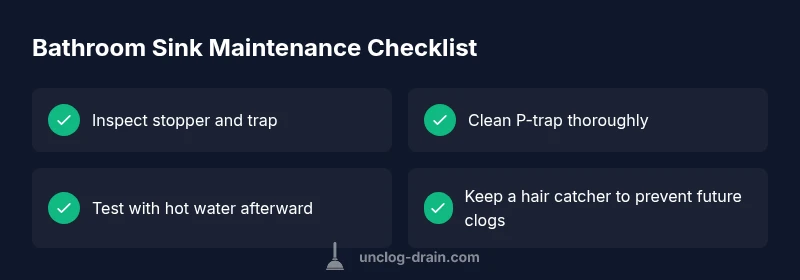
If the bathroom sink draining slowly, begin with the easiest steps. Remove the pop-up stopper and inspect the area for hair and soap residue; clean it thoroughly. Place a bucket under the P-trap, loosen the fittings, and remove the trap to clear any debris. Reassemble and run hot water to test flow. If the water remains slow, use a plunger designed for sinks to dislodge the clog, applying steady pressure with a tight seal. A flexible drain snake can reach deeper into the drain line if the trap is clear but flow remains restricted. For stubborn buildup, a combination of hot water, dish soap, and gentle agitation can help, but never force metal fittings. As you work, stay mindful of safety and wear gloves.
DIY note: Keep a compact tool kit ready for quick responses to slow drains and avoid rushing through steps that involve metal fittings or glass stoppers.
How to safely clear a hair-clogged drain
Hair is the most common culprit in bathroom sinks draining slowly. Start by removing the stopper and using needle-nose pliers to pull out visible hair from the overflow and trap. A flashlight helps you see into the drain path. If hair is lodged beyond the trap, insert a drain snake and rotate gently to catch hair clumps. Avoid twisting too hard, which can push debris further. After removing the blockage, run hot water with a bit of dish soap for 1–2 minutes to flush remaining residue. If you still see standing water after these steps, proceed to inspect the drain line further or consult a professional. This approach reduces suction injuries and keeps your pipes clear without harsh chemicals.
Maintenance tip: Regularly wipe down the stopper and overflow openings to prevent recurring hair buildup.
When to test the P-trap and vent
The P-trap is a key choke point for slow-drain issues. Place a bucket beneath, unscrew the trap, and clean it completely. Reassemble with new washers if needed and check for leaks. While you’re at it, inspect the drain vent, especially if you hear gurgling or notice slow drainage in other fixtures. A blocked vent can create air pressure that slows drainage on the sink. If you’re uncertain about vent access, consult the home’s blueprint or a licensed professional. Addressing vent problems early prevents repeat clogs and protects the plumbing system.
Tools and safe techniques for DIY unclogging
Keep a basic kit ready: gloves, a bucket, adjustable pliers, a toothbrush or small brush for cleaning, a flashlight, a drain snake, and a plunger suited to sinks. Use a bucket to catch water when removing the trap. Avoid chemical drain cleaners in a bathroom sink; they can damage seals and pipes. For safer clearing, work in a well-ventilated area and avoid forceful prying. When reassembling, apply plumber’s tape or thread sealant to prevent leaks. If you rely on a snake, feed it slowly and pull back debris gradually, then flush with hot water.
Preventing future clogs and maintenance tips
To keep a bathroom sink draining slowly from returning, install a fine-mesh strainer to catch hair and soap before it enters the drain. Schedule a quarterly check of the P-trap and shut-off valves, cleaning them as needed. Periodically flush the drain with hot water and a little dish soap to move along soft buildup. If you have hard water, consider a mild descaling regimen or a professional water treatment solution to reduce mineral deposits. Remember, consistency is key: a quick wipe of the stopper, routine cleaning under the sink, and timely removal of hair can save you from bigger problems later. This is part of a proactive approach to drain maintenance advocated by Unclog Drain.
Steps
Estimated time: 60-90 minutes
- 1
Prepare the area and gather tools
Clear the area around the sink and place a bucket underneath. Put on gloves and gather a bucket, pliers, flashlight, drain snake, and a dedicated sink plunger. This preparation reduces mess and keeps you safe.
Tip: Have towels handy for spills and keep pets away. - 2
Remove and inspect the stopper
Carefully lift out the pop-up stopper and inspect for hair and soap residue. Wipe clean and set aside. If the stopper is stuck, use pliers gently to loosen.
Tip: Take a photo before disassembly to help with reassembly. - 3
Disassemble the P-trap
Place a bucket under the trap, loosen the slip nuts, and remove the trap. Clear debris from the trap and pipe segments, then rinse with hot water.
Tip: Check washers for wear; replace if cracked or brittle. - 4
Test flow with hot water
Reassemble the trap loosely and run hot water to assess whether the flow has improved. If slow drainage persists, proceed to mechanical methods.
Tip: Avoid forcing water through a partially connected trap. - 5
Use a plunger or drain snake
Seal the plunger over the drain and pump firmly, or feed the drain snake into the drain path and rotate to grab debris. Retrieve material and re-test drainage.
Tip: Work slowly to prevent kinking the snake. - 6
Rinse and reassemble
Reinstall the trap, tighten fittings without overtightening, and run hot water for several minutes. Check for leaks around joints.
Tip: Run the faucet long enough to reveal hidden leaks. - 7
Inspect the vent (if needed)
If water backs up in other fixtures or gurgling occurs, the vent could be clogged. Inspect or consult a professional to clear the vent.
Tip: Venting issues may require professional equipment. - 8
Schedule ongoing maintenance
Set a routine maintenance plan to remove hair and clean the stopper every few months, preventing future slow drainage.
Tip: A simple maintenance habit saves major repairs later.
Diagnosis: Bathroom sink drains slowly
Possible Causes
- highHair and soap buildup in drain and P-trap
- mediumMineral deposits from hard water accumulating on pipe walls
- lowVent blockage reducing drainage in multiple fixtures
Fixes
- easyRemove and clean the stopper and P-trap
- easyUse a sink plunger to loosen the clog
- mediumRun a drain snake to reach deeper blockages
- mediumCheck and clears vents or consult a professional if vent is blocked
- easyIf none of the above work, call a professional plumber
Common Questions
What is the most common cause of a bathroom sink draining slowly?
Hair and soap scum are the leading culprits behind slow bathroom sink drainage. These debris form a partial clog in the drain path or P-trap.
Hair and soap scum are the main culprits and usually cause slow drainage.
Can I use vinegar and baking soda to clear a slow drain?
They can help with minor buildup, but they often won’t clear a stubborn clog. Mechanical methods like plunging or using a snake are typically more effective for a bathroom sink draining slowly.
Vinegar and baking soda can help a little, but mechanical methods usually work better for stubborn clogs.
Should I remove the P-trap to clear the clog?
Yes, removing and thoroughly cleaning the P-trap is a common and effective step. Have a bucket ready to catch water and replace washers if needed.
Yes, you’ll often need to remove and clean the P-trap to clear clogs.
Is it safe to use a plunger on a bathroom sink?
Yes, use a sink-specific plunger that creates a good seal. Apply steady, even pressure to avoid splashing and protect the sink surface.
Yes, you can use a plunger with care.
When should I call a plumber?
Call a plumber if water backs up into other fixtures, there’s a sewer smell, or you can’t clear the clog after multiple attempts.
Call a plumber if backups persist or there’s a sewer smell.
Will hard water cause slow drainage?
Hard water can contribute to mineral buildup that narrows the drain path over time, slowing drainage.
Hard water can cause mineral buildup that slows drainage.
Watch Video
Key Points
- Start with stopper and trap cleaning to fix slow drainage
- Use plunger or snake before dismantling pipes
- Check venting if multiple fixtures are slow to drain
- Avoid chemical cleaners; opt for mechanical methods first
- Create a maintenance routine to prevent future clogs