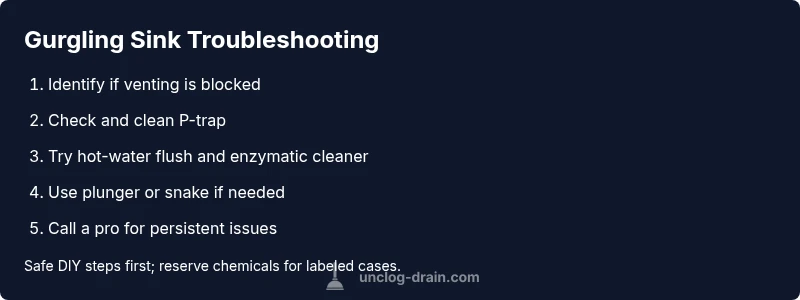
Drano for Gurgling Sink: Quick Troubleshooting Guide
Urgent guide to diagnose and fix a gurgling sink with practical steps, safety tips, and when to use Drano safely. Unclog Drain sharing expert DIY methods to keep drains flowing.


A gurgling sink usually signals air in the drain or a partial clog. Start with a hot-water flush, then use a plunger on the sink opening. If that doesn’t resolve it, avoid harsh chemical cleaners and try an enzymatic cleaner, inspect the P-trap, and check the vent. If the sound persists, contact a professional.
Understanding the gurgle: what it signals
A gurgling sink is more than a noisy nuisance; it indicates air is being forced through the drain as water flows. This happens when the drain is partially blocked, the vent system isn’t allowing air to escape, or the trap is compromised. For homeowners, the first impulse is often to reach for a chemical cleaner like Drano. However, safety and long-term results matter: many gurgling issues resolve with basic draining and venting checks, while stubborn noises may signal a more serious blockage down the line. Unclog Drain emphasizes patience and a systematic approach because rushing to chemical cleaners can mask the real problem or damage pipes if misused.
In everyday use, kitchen and bathroom sinks share similar drainage paths. A gurgle after a faucet run frequently means the air pocket that normally lets water pass freely isn’t functioning. That pocket is created by the P-trap and the vent, so understanding their roles helps you diagnose the problem more accurately. The goal is a flow that’s quiet and steady, with no backflow or slow draining. If you’re unsure about the vent or if the plumbing under the sink looks corroded, it’s wise to step back and consider professional help.
Brand context: The Unclog Drain team recommends starting with basic, non-harmful methods and reserving chemical cleaners for clearly labeled situations. When used incorrectly, products like Drano can damage pipes, void warranties, or create dangerous mixtures with other cleaners. A methodical approach reduces risk and keeps your home safer.
Drano: when it's appropriate and when to skip it
Drano and similar chemical cleaners can offer a quick, short-lived relief for a simple clog, but they’re not a cure-all. If the gurgling persists after a safe flush and basic checks, chemical cleaners may delay addressing the real issue, such as vent blockages or a partially clogged line. Avoid using Drano if you have metal pipes, a garbage disposal, or a septic system unless the product label explicitly approves it. Never mix cleaners, as dangerous fumes and chemical reactions can result.
Safety note: Always read the product label and follow directions precisely. If you’ve previously used chemical cleaners and the sink continues to gurgle, reserve the next use for a professional assessment. Unclog Drain’s guidance emphasizes tactful use of Drano, and prioritizes safer DIY steps that preserve pipe integrity.
In some households, a small amount of Drano can temporarily clear a light clog, but not a full blockage. If you choose to attempt this, run plenty of water before and after, and stop if you notice any bubbling or odors that indicate a blockage deeper in the system. If the sink doesn’t drain well after two attempts, move on to gentler, non-chemical methods and seek help.
Safer first steps to try before chemical cleaners
Begin with non-chemical remedies that are low-risk and often effective for minor blockages. A hot water flush can melt grease and soap buildup that coats pipes. Warm water poured gradually helps keep the mixture from scalding you while it travels through the trap and pipes. Add a small squirt of dish soap to help loosen greasy residues. If the water clears, you’re done; if not, proceed to a plunger.
Next, use an enzymatic cleaner designed for drains. These cleaners use microbes to digest organic matter and are gentler on pipes. Do not mix enzymatic cleaners with other chemical products, as reactions can occur. If the sink still gurgles after these steps, the issue may be deeper in the line or vent, requiring further inspection.
Throughout this process, keep in mind Unclog Drain’s recommendation: tackle blockages with a focus on safety and long-term pipe health. Avoid over-reliance on chemical treatments, and consider alternative approaches first whenever possible.
Checking the P-trap and disposal connections
The P-trap is the curved section of pipe beneath the sink. It holds a small amount of water to prevent sewer gas from entering the home. If the trap dries out, or if debris accumulates inside, air can be drawn into the drain, causing gurgling. First, place a bucket under the trap and carefully unscrew the slip nuts to remove the trap. Clean out any buildup, rinse, and reassemble securely. Check for cracks or corrosion in the trap that might be allowing air to leak.
If you have a garbage disposal, ensure its connection to the sink tailpiece is snug and that the knockout plug is removed if the disposal has never been used. Debris can also collect in the disposal’s inlet, causing partial blockages that translate into gurgling in the sink. Re-tighten all fittings and run water to test.
After reassembly, run hot water for a minute to flush the system and observe whether the gurgling subsides. If not, you may be facing a vent issue or a blockage downstream, which could require professional tools.
The vent system: how air moves and causes gurgling
Vent stacks are the plumbing’s air ducts, letting sewer gases escape and equalizing pressure so drains flow smoothly. A blocked vent can produce gurgling sounds as air struggles to escape. Roof vents are common culprits; birds, leaves, or snow can obstruct them. If you suspect a vent issue, an inspection from above the roof is often required, along with careful top-down testing.
A practical at-home check is to observe whether other drains in the house gurgle when the sink is used. If multiple fixtures share the same vent and exhibit gurgling or slow drainage, the problem is likely in the vent or main line. If a vent is blocked, a professional with proper safety equipment should clear it to avoid injury from working on a roof or vent stack.
Remember: never seal or block a vent purposely in an attempt to force air out; this can cause trap siphonage and odor problems. The balance of air and water flow is essential for a healthy drainage system.
How to perform a safe hot-water flush and enzymatic cleaners
A careful hot-water flush is a foundational step before more aggressive measures. Bring nearly boiling water to the sink, then pour in a steady, slow stream, allowing it to move through the trap and pipes. Repeat with several kettle-fulls if needed, taking care not to scald yourself. This is especially helpful for grease and soap scum buildup.
Follow with an enzymatic drain cleaner, which uses bacteria or enzymes to digest organic matter. Pour according to label directions and allow time for the organisms to work. Do not mix with other cleaners or store-bought chemicals. After treatment, flush with hot water again to help carry debris out of the system.
Another non-chemical option is a baking-soda and vinegar combo, but note that this combination can foam and may not always resolve a deeper blockage. Always prioritize non-chemical methods first and keep chemical use to a minimum under supervision.
Using a plunger or plumber's snake effectively
A plunger can create powerful suction and dislodge minor clogs. Cover the overflow plate (if present) to maintain pressure, place the plunger over the drain, and push and pull with steady force. Avoid using excessive pressure that could push debris deeper into the pipe.
For tougher blockages, a plumber’s snake (auger) can reach further into the line. Insert the snake slowly and rotate as you push forward to break up the clog. Retract gradually and flush with water to verify clearance.
Safety note: wear gloves and eye protection, and don’t force tools into pipes to avoid damage. If you’re unsure how to operate a snake, seek professional help rather than risking a fracture or a deeper clog.
When to call a professional
If the gurgling persists after trying the steps above, or if you notice sewage odors, water backing up into another fixture, or dampness around the base of the sink, it’s time to call a professional. A licensed plumber can diagnose vent blockages, deep-seated clogs, or drainage problems beyond consumer tools. Unclog Drain recommends scheduling a professional evaluation when DIY attempts fail to produce a clear drain after a reasonable trial period.
Additionally, persistent gurgling may indicate an underlying issue with the sewer line or vent stack that requires specialized equipment. Don’t delay assessment if you observe recurring episodes. Proactive professional help can prevent bigger, costlier problems down the road.
Maintenance to prevent future gurgling
Prevention is simpler than cure. Regularly clear hair and soap scum from the sink and use sink strainers to catch debris. Periodically pour hot water down the drain to maintain smooth flow, especially in kitchens that handle grease-heavy loads. Consider a quarterly vent check: if you’re comfortable, inspect accessible vents for blockages or signs of moisture buildup. If you have a septic system, avoid harsh chemical cleaners that can disrupt the bacterial balance and lead to clogs.
Additionally, be mindful of pouring fats, oils, and cooking grease down the drain. These substances can solidify inside pipes and trap more debris over time. Use a metal can to dispose of fats and wipe greasy pans with a paper towel before rinsing. With consistent care, a gurgling sink can be a rare issue rather than a frequent nuisance.
Steps
Estimated time: 45-60 minutes
- 1
Assess safety and prep
Put on gloves, clear the area, and remove standing water. Read labels if using any cleaner. Ensure you won’t mix products and move any electrical devices away from the sink.
Tip: Never mix cleaners; label reading prevents dangerous reactions. - 2
Flush with hot water
Boil water in a kettle or pot, then pour slowly into the drain in successive batches. Let it sit briefly between pours to allow heat and fluid to loosen buildup.
Tip: Use gradually heated water to avoid splashing and scalding. - 3
Try an enzymatic cleaner
Pour the recommended amount of enzymatic cleaner and let it work for the directed dwell time. These cleaners target organic buildup without harsh chemicals.
Tip: Do not mix with other cleaners; wait the specified dwell time. - 4
Inspect the P-trap
Place a bucket under the trap, unscrew the slip nuts, remove the trap, and clean out debris. Rinse and reattach securely.
Tip: Check for cracks; replace if you see damage rather than trying to patch it. - 5
Use a plunger or snake if needed
Seal the drain with the plunger and apply steady pressure to dislodge the clog. For deep blockages, use a plumber’s snake according to the manufacturer’s instructions.
Tip: Avoid excessive force; apply gradual pressure to prevent pipe damage. - 6
Test the drain
Run water and observe the flow. If the drain remains slow or noisy, evaluate venting or downstream issues and consider professional help.
Tip: If multiple drains gurgle, the problem may be vent-related rather than a single trap blockage.
Diagnosis: Sink gurgles after running water or during draining
Possible Causes
- highPartial clog in drain line or P-trap
- highVent system blockage or inadequate venting
- mediumDry or damaged P-trap allowing air ingress
- lowDownstream obstruction in main line
Fixes
- easyHot-water flush and dish soap to loosen buildup in lines
- easyInspect and clean P-trap; reassemble securely
- mediumCheck and clear vent blockage (rooftop or accessible vent)
- mediumIf blockage persists, use plunger or plumber's snake to clear deeper clog
- hardConsult a licensed plumber for downstream blockages or pipe damage
Common Questions
Is it safe to use Drano for a gurgling kitchen sink?
Drano can be safe in some cases if used according to the label and the system is compatible with chemical cleaners. However, for gurgling caused by vent issues or deeper blockages, non-chemical methods are preferred first. Always avoid mixing cleaners and consider professional guidance if the problem persists.
Drano can be safe in some cases if used exactly as directed, but for gurgling it’s usually better to start with non-chemical methods and seek a plumber if it doesn’t improve.
What should I check first if my sink gurgles after using the faucet?
Begin with a hot-water flush and a quick check of the P-trap for debris. If the gurgling continues, assess the venting system and consider whether a professional inspection is needed.
Start with hot water, then check the trap and vent if it doesn’t clear.
Can a dry P-trap cause gurgling in a sink?
Yes. A dry or cracked P-trap can allow air into the drain, causing gurgling noises. If the trap is dry, run water to re-prime it or replace it if it shows damage.
A dry trap can cause gurgling; re-prime it with water or replace if damaged.
When should I call a professional for a gurgling sink?
If the gurgling persists after basic DIY steps, if multiple fixtures gurgle, or if you notice odors or backups, a licensed plumber should inspect for vent problems or main-line blockages.
Call a pro if DIY steps don’t fix it or if multiple fixtures gurgle.
What maintenance helps prevent gurgling in the future?
Regularly clean strainers, avoid pouring grease down the drain, and run hot water periodically. Consider vent inspections for homes with recurring issues and consult a pro if you’re unsure.
Keep drains clean, avoid grease, and check vents to prevent future gurgling.
Watch Video
Key Points
- Identify whether the gurgle is from a trap, vent, or deeper blockage
- Start with hot-water flush and safe cleaners before chemicals
- Inspect P-trap and venting as common culprits
- Call a pro for persistent, multi-fixture gurgling or suspected sewer issues