How to Unblock a Drain Pipe: A Practical DIY Guide
A practical, step-by-step guide to unblock a drain pipe safely using mechanical methods, maintenance tips, and knowing when to call a professional. From plungers to snakes, learn to restore flow without unnecessary risk.


Learn how to unblock a drain pipe safely using mechanical methods like plungers and drain snakes. This quick guide covers when to act, what tools you’ll need, and the steps to clear most clogs without calling a plumber. For stubborn blockages, know when to seek professional help from Unclog Drain.
Why drain pipes clog and when to act
Drain clogs are usually caused by a combination of hair, soap scum, grease, and mineral deposits that accumulate over time. In bathrooms, hair is a dominant culprit; in kitchens, cooking fats and food particles stick to the pipe walls. A slow drain becomes a full clog when the buildup narrows the passage enough to trap more debris. Early action saves water, protects your piping, and reduces the risk of backups into fixtures. According to Unclog Drain, the first sign of trouble is a decreasing flow rate, often accompanied by gurgling sounds or a foul odor. If you notice standing water after flushing or cleaning, don’t delay—the clock is ticking on potential pipe damage and unpleasant overflows. This article walks through safe, practical methods to unblock a drain pipe and restore normal drainage without professional help unless necessary.
Authoritative sources play a role in guiding safe practice. OSHA safety guidelines remind us to protect eyes and skin when working around water and to avoid mixing cleaners unpredictably. EPA resources reinforce best practices for safe disposal of waste and chemical products. University extension sites provide non-commercial maintenance tips that help homeowners reduce future clogs. By following a thoughtful, methodical approach, you minimize risk and maximize your chances of success.
Safety first: gear, hazards, and preparation
Before you start, set clear boundaries between your work area and living spaces. Put on chemical-resistant gloves, safety glasses, and old clothing. Ventilate the area if you’re using cleaners, and keep children and pets away. Shut off the water supply to the affected fixture if possible, and have a bucket and towels ready for spills. Place a dry rag around the drain to catch splashes. If your plumbing has a trap (P-trap) under a sink, be prepared to loosen it safely. Never mix chemical cleaners with bleach or other products; this can create toxic gas or heat buildup. Finally, read the product labels carefully and follow the manufacturer’s instructions for any additives. These precautions protect you while you focus on clearing the blockage and avoiding pipe damage.
In this guide, you’ll find practical steps and a clear decision process so you know when a DIY unblock is appropriate and when it’s time to call a professional. The Unclog Drain team emphasizes patience and control; rushing can push debris deeper or splash dirty water. Keep a calm, measured pace, and document any steps you take for future reference.
Quick diagnostic tests to confirm a clog and locate the blockage
Begin by testing the flow in the affected drain. If water drains slowly from multiple fixtures, the blockage is likely downstream in the main line; if only one fixture is slow, the issue is closer to that trap or trap arm. Remove the trap under a sink (if present) and check for standing water or obvious debris. If you can see material blocking the U-bend, you can clear it carefully with gloved hands or a flexible tool. Snaking can reveal where the blockage sits—the point where the tool resists further advancement marks the likely location. For toilets, do not plunge with excessive force; instead, try a toilet auger designed for porcelain to avoid cracking. When you’re not sure, observe the color and odor of the water; a persistent foul smell can indicate sewage involvement and may require a professional assessment. Across all methods, patience and a measured approach reduce the chance of damage and improve odds of success.
Mechanical methods: what works best and why
Mechanical methods are the most reliable first line for many clogs. A plunger is ideal for toilets and sinks with a clean, unobstructed drain path, particularly when the clog is near the opening. A drain snake (hand auger) is more versatile for deeper blockages in sinks, tubs, and shower drains, especially when hair or soap scum is involved. An electric or power auger can handle tougher clogs but requires careful handling to avoid pipe damage. Enzyme-based cleaners offer a maintenance-oriented approach that can help with organic buildup over time, while chemical drain cleaners should be used sparingly and only with following safety guidelines. Remember, the goal is to restore normal flow without damaging PVC, copper, or steel pipes. If you’re dealing with a complex network or a main sewer line, even a seemingly minor blockage can cascade, so adjust your approach accordingly and stay mindful of water backup risks.
Step-by-step: using a plunger effectively
A plunger with a flange is essential for most clogs. Ensure the plunger forms a tight seal and start with warm water to cover the bell, which improves suction. Plunge with controlled, steady pressure without prying or twisting the handle aggressively. Pause to observe drainage after several strong strokes; repeat as needed. For sinks, cover the overflow opening with a wet cloth to maintain suction. If you’re plunging a toilet, use the toilet flange for a better seal and avoid using a star-shaped motion that can damage the porcelain. This mechanical method is simple but requires persistence and the right technique to avoid pushing the clog deeper.
Step-by-step: using a drain snake or hand auger
Feed the snake into the drain slowly while rotating the handle to keep the coil engaged with the blockage. When you feel resistance, pause and pull back gently to retrieve debris. Continue feeding and retracting until the handle turns freely and water begins to drain. Clean the snake carefully after use to prevent recontamination. If the clog remains, extend the reach, but avoid forcing the coil into sharp bends where pipes join. Retrieval is often the most critical moment, as pulling up hair and solids can suddenly clear the line. After using a snake, flush with hot water to clear loosened material from the pipe walls.
Step-by-step: maintenance and safe use of cleaners
Enzyme-based cleaners are a safer alternative for ongoing maintenance and light organic buildup. They work best when used on a lightly clogged drain that responds to gentle agitation, not for immediate, severe blockages. If you choose chemical cleaners, follow all safety instructions carefully, ventilate the area, and never mix products. Use the product for the shortest effective time and flush with plenty of water. Do not mix cleaners or combine liquid products with the snake technique; these approaches can conflict and create dangerous reactions. For stubborn or recurring clogs, schedule a professional evaluation to inspect the plumbing in case of misalignment, pipe collapse, or tree root intrusion.
Additional tips for prevention and efficient maintenance
- Schedule regular drain maintenance to prevent buildup; hot water flushing can help clear soap scum and oils. - Use hair catchers in sinks and shower drains to minimize hair entry. - Avoid pouring cooking fats or grease down kitchen drains; wipe them into a trash or compost bin instead. - Periodically treat drains with enzyme or bacterial-based cleaners to maintain a healthy biofilm in pipes. - If you have extended or multi-story plumbing, consider a preventive cleaning every 12–18 months.
When to call a professional: recognizing limits and risks
If your efforts do not improve drainage after a thorough mechanical attempt, or if you notice sewage backups, foul gases, or rapidly rising water levels, it’s time to contact a licensed plumber. A professional can diagnose issues beyond a simple clog, such as a broken pipe, misalignment, or tree roots intruding into the sewer line. The Unclog Drain team emphasizes safe escalation: DIY methods are appropriate for common blockages, but persistent or complex problems require licensed expertise to prevent costly damage and ensure code compliance.
Authoritative sources and practical references
- OSHA safety guidelines: https://www.osha.gov/
- EPA consumer information on safe waste disposal: https://www.epa.gov/
- University extension resources on plumbing maintenance: https://extension.illinois.edu/
By consulting these sources, you can reinforce best practices and keep your home plumbing safer and more reliable. Always prioritize safety and don’t hesitate to seek professional help when needed.
Tools & Materials
- Plunger with flange(Choose a plunger that forms a tight seal; a sink plunger works best for most drains, while a toilet plunger has a flange.)
- Drain snake / hand auger(Choose a flexible snake with a 1/4-inch to 1/2-inch cable for common residential drains.)
- Bucket(Used to catch water and debris when removing traps or testing the drain.)
- Protective gloves(Latex or nitrile gloves to protect hands from debris and bacteria.)
- Safety glasses(Protect eyes from splashes when dealing with standing water or cleaning agents.)
- Towels or old rags(Mops up spills and protects surfaces during the process.)
- Adjustable wrench or pliers(Helpful if you need to loosen a P-trap or fittings; use with care to avoid tool slipping.)
- Enzyme-based drain cleaner(Good for maintenance after clearing; avoid combining with chemical cleaners.)
- Chemical drain cleaner (optional and with caution)(Use sparingly and strictly follow product directions; never mix with other cleaners.)
Steps
Estimated time: 45-90 minutes
- 1
Prepare the workspace
Clear the area, remove items around the sink, and lay towels to protect surfaces. Put on gloves and safety goggles, and have a bucket ready for spills. If you have a nearby overflow, prepare to cover it to maintain suction during plunging.
Tip: Simplicity wins: a clean, dry area helps you work faster and safer. - 2
Shut off water and inspect the trap
If the fixture has a P-trap accessible from below, place a bucket underneath and loosen the nuts with a wrench to remove the trap. Check for standing water and visible debris; remove what you can by hand with gloved fingers.
Tip: Keep the trap flat and intact to avoid misalignment when reassembling. - 3
Seal the overflow (if applicable)
For sinks with an overflow opening, seal it with a wet rag or tape to prevent air from escaping and maintain suction when plunging.
Tip: A good seal improves plunging efficiency by increasing suction power. - 4
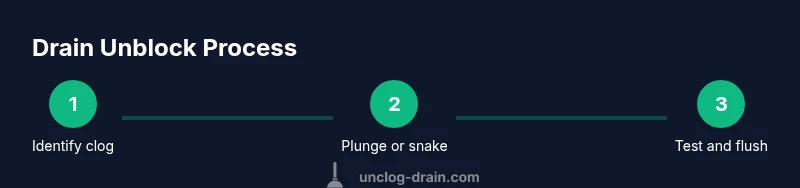
Plunge the drain
Place the plunger to cover the drain opening, ensuring a tight seal. Use steady, focused push-pull motions for 15–30 seconds, then pause to observe drainage. Repeat 3–5 times as needed.
Tip: If plunger water level is too low, add warm water to submerge the bell for better suction. - 5
Use a drain snake if plunging fails
Insert the snake into the drain and rotate the handle while advancing. When you feel resistance, pull back slightly to dislodge the clog, then push forward again. Retrieve debris as you reel back.
Tip: Work slowly and maintain a smooth turning motion to avoid kinking the cable. - 6
Flush and test
Pour hot water down the drain to flush debris. Reassemble any traps, turn the water back on, and run the faucet to verify water flows freely. If you hear gurgling or see a slow drain, repeat the steps or move to the next method.
Tip: Open the faucet gradually to prevent sudden surges that could splash dirty water. - 7
Consider enzyme cleaners for maintenance
If the clog was caused by organic buildup, consider using an enzyme-based cleaner to help maintain flow in the coming weeks. Follow label directions and avoid mixing with chemicals.
Tip: Regular maintenance reduces future clog risk and extends pipe life. - 8
Don’t force it—know when to stop
If you feel unusual resistance or fear pipe damage, stop and reassess. Pushing too hard can crack pipes or push debris deeper. If you’re unsure, consult a professional before continuing.
Tip: Safety first: risking pipe damage will lead to larger, costlier repairs. - 9
Call a professional if needed
Persistent blockages after multiple attempts or signs of sewage backup require a licensed plumber. A pro can diagnose complex issues like pipe misalignment, tree roots, or main sewer line problems.
Tip: Document the steps you’ve taken; it helps the pro diagnose faster.
Common Questions
Can I unblock a drain pipe myself without professional help?
Yes, many clogs respond to mechanical methods like plunging and snaking. Follow safety guidelines and use the right tools. If you encounter persistent blockages, sewage odors, or multiple clogged fixtures, consider professional help.
Yes, you can usually unblock a drain yourself with plunging or snaking, but know when to stop and call a pro if it doesn’t clear or you smell sewage.
Are chemical drain cleaners safe to use?
Chemical cleaners can be effective for some clogs but pose safety risks and may corrode pipes if misused. Always follow the label, ventilate the area, and avoid mixing products. Use enzyme cleaners for maintenance whenever possible.
Chemical cleaners can work, but they can be dangerous if used incorrectly. Read the label and prefer enzyme cleaners for ongoing maintenance.
How long does it typically take to unblock a drain pipe?
Most DIY blockages clear within 20–60 minutes when using plungers or snakes and proper technique. More stubborn or complex clogs can take longer or require a professional assessment.
Most clogs clear in under an hour with the right tools; tougher ones may require professional help.
What tool should I use first for a sink clog?
Start with a plunger designed for sinks to create suction. If that fails, switch to a flexible drain snake to reach deeper into the drain pipe.
Begin with a plunger, then try a drain snake if needed.
When should I call a professional?
Call a professional if you smell sewage, see backups in multiple fixtures, or after repeated DIY attempts without success. A plumber can diagnose root causes like pipe damage or main sewer line issues.
If there’s sewage odor or multiple backups, it’s time to call a professional.
Can maintenance prevent future clogs?
Yes. Regular maintenance with enzyme cleaners, hair catchers, and avoiding pouring fats down the drain reduces routine buildup and slows clog progression.
Regular maintenance helps prevent future clogs and keeps drains flowing smoothly.
Watch Video
Key Points
- Identify the clog location before choosing a method
- Mechanical methods are safer and effective for many blockages
- Safety gear and proper technique prevent injuries
- If a blockage persists, escalate to a licensed plumber
- Regular maintenance reduces future clogs