Clogged Toilet Reddit: DIY Fixes and Expert Tips
Urgent, practical troubleshooting for a clogged toilet reddit scenario with step-by-step fixes, preventive tips, and expert guidance from Unclog Drain.


According to Unclog Drain, most clogged toilets are caused by local blockages like toilet paper, wipes, or a foreign object. Start with a flange plunger to seal the drain and push through the obstruction; if that fails, a toilet auger can reach the bend. If water backs up or sewage odors appear, stop and call a plumber to prevent damage.
Common Causes of Toilet Clogs
Toilet clogs don’t always mean something is wrong with your pipes. In many homes, everyday habits and small blockages add up. If you’ve seen a post about a clogged toilet reddit, you’ll notice homeowners often cite paper towels, wipes, or even objects flushed down by mistake. Excessive toilet paper or a backed-up septic line can also cause the water to rise rather than drain. According to Unclog Drain analysis, most clogs are local blockages that form in the toilet bowl or trap, not in the main sewer. To prevent future problems, keep wipes, sanitary products, and paper towels out of the toilet, and avoid flushing foods or thick cleaners. A cautious approach early on will reduce the risk of disaster during a busy morning.
Safe First Fixes Everyone Should Try
When a toilet is slow to drain, start with the simplest tool: a flange plunger. Create a tight seal over the drain and use smooth, controlled up-and-down motions. If you don’t see progress after 10-15 pumps, pause and check the water level; if the bowl is full to the rim, bail some water out with a bucket to create space for plunging. If the plunger fails to clear the clog after a few cycles, it’s time to move to a toilet auger. Throughout this process, protect your hands with gloves and wear eye protection to guard against splashes. Remember: avoid chemical drain cleaners in most homes, especially if you have a septic system. They can degrade seals and cause more harm than good. According to Unclog Drain's guidance, many DIY fixes resolve simple blockages without professional help—if water continues to back up or you notice a sewage smell, pause and call a licensed plumber. For readers discussing clogged toilet reddit, these frontline techniques are often enough to prevent a crisis.
Using a Toilet Auger When the Plunger Fails
If the plunger doesn’t clear the blockage, a toilet auger can reach past the trap and break up or pull the obstruction. Feed the cable slowly, rotate gently, and stop as soon as you feel resistance. Avoid forcing the snake against the porcelain; excessive force can crack the bowl. After removing the auger, flush slowly to observe the flow. If the water still won’t clear after several attempts, don’t keep prying—this is a signal to escalate to a professional. Always wear eye protection and gloves when operating the auger to protect against splashes and debris.
For many users, threads about clogged toilet reddit highlight the difference between a stubborn clog and a true pipe problem. In practice, if you feel the auger snag and you can’t retrieve it smoothly, stop and reassess the obstruction rather than pushing harder.
Flushing Habits and Maintenance to Prevent Clogs
Prevention is stronger than repair. Never flush wipes, paper towels, feminine products, or medications. Even slightly oversized toilet paper can accumulate and form a stubborn blockage over time. Run plenty of water after flushing to keep the bowl and trap flowing. Regularly inspecting the trap and vent can help identify potential issues before a backup occurs. If you use septic systems, consider enzyme-based maintenance products in moderation, but avoid harsh chemical cleaners that can disrupt beneficial bacteria. By adopting mindful flushing habits, you reduce the odds of a sudden clog during busy mornings.
When a Professional Is Needed
If multiple attempts at plunging and augering fail, or you notice sewage backup in other fixtures, it’s time to call a licensed plumber. A pro can inspect for deeper blockages, vent issues, or sewer line problems that aren’t obvious from the bowl. While some clogs are DIY-friendly, persistent backups may indicate a root cause that requires professional tools and expertise. The Unclog Drain team routinely advises homeowners to seek professional help when the blockage is severe or recurrent, to prevent expensive damage and sanitation hazards.
Steps
Estimated time: 25-40 minutes
- 1
Gather tools and prep area
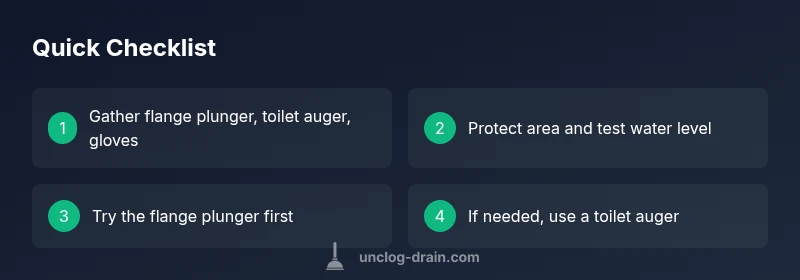
Collect a flange plunger, toilet auger, protective gloves, goggles, and a towel or washable mat. Clear the area of personal items and place towels around the base of the toilet to catch splashes. This prep reduces mess and protects flooring.
Tip: Keep a bucket handy for any overflow. - 2
Protect yourself and the space
Put on gloves and eye protection. If overflow seems likely, shut off the water supply at the valve behind the toilet and flush once to remove excess water. A dry environment makes the plunging or augering safer and more effective.
Tip: Use a flashlight to inspect the toilet bowl rim and trap area. - 3
Try the flange plunger
Position the plunger to seal the drain opening with a firm, 90-degree seal and pump with smooth, deliberate strokes. Start with 8-10 strong pumps, then pause to check for movement. Repeat 3-5 cycles and watch for any change in water level.
Tip: A good seal is essential; if air leaks, reposition the plunger. - 4
Move to the toilet auger if needed
If plunging doesn’t clear the clog, gently insert the auger and rotate while pushing forward. Stop when you feel resistance and back off slightly. Retract slowly and test flush by slowly releasing water to observe flow.
Tip: Do not force the auger against hard obstructions. - 5
Test the flush and assess
With the clog cleared or reduced, slowly flush the toilet to observe full function. If the water level rises again, repeat the auger step or proceed to professional help. Ensure the bowl empties and refills properly.
Tip: If water backs up, stop and re-evaluate before continuing. - 6
Clean up and sanitize
Disinfect tools and the surrounding area after the fix. Wash hands thoroughly and launder towels. Proper cleanup reduces odor and prevents recontamination.
Tip: Run the exhaust fan or open a window to air out the bathroom.
Diagnosis: Toilet won’t flush or drains slowly with gurgling, or water rises to the rim
Possible Causes
- highLocal blockage from toilet paper, wipes, or foreign object
- mediumPartial clog in the trap or toilet bend
- lowSeptic tank or main sewer line backup
Fixes
- easyUse a flange plunger to seal and plunge with steady pressure
- easyInsert a toilet auger to break up or retrieve the obstruction
- mediumIf water backs up or you smell sewage, stop and call a licensed plumber
Common Questions
What is the fastest way to unclog a toilet?
The quickest fix is usually a flange plunger with a tight seal and several firm pumps. If that fails, move to a toilet auger. Persistent backups may require a professional.
Start with a flange plunger, then try the auger if needed. Call a pro if it still won’t clear.
Are chemical uncloggers safe for toilets and septic systems?
Most chemical drain cleaners aren’t recommended for toilets or septic systems; they can damage seals and upset beneficial bacteria. Mechanical methods are typically safer for DIY fixes.
Chemicals can harm your system; use plungers and augers first.
When should I call a plumber to unclog a toilet?
Call a plumber if plunging and augering fail after several attempts, if water backs up into other fixtures, or if you smell sewage. A professional can diagnose root causes and prevent damage.
If plunging and augering don’t work or backups appear, call a plumber.
Can I unclog a toilet without a plunger?
Yes, alternatives exist, like a toilet auger or carefully applying dish soap and hot water to loosen the clog. However, a plunger is usually the easiest starting point.
If you don’t have a plunger, an auger can help; otherwise you may need a pro.
Will a toilet auger damage the toilet?
Used correctly, a toilet auger is safe for porcelain. Do not force it; let the cable do the work and stop if you feel resistance.
A properly used auger is safe; don’t force it.
How can I prevent future clogs?
Flush only toilet paper and human waste. Avoid flushing wipes, sanitation products, or food scraps. Regular maintenance and mindful flushing habits reduce future risk.
Flush wisely and maintain your system to prevent clogs.
Key Points
- Start with a flange plunger; escalate to a toilet auger if needed
- Flushing non-flushables causes future clogs; flush wisely
- Backups or sewage odors require a professional
- Maintenance reduces future clog risk