Liquid to Unclog Bathtub: Safe DIY Guide for Homeowners
Learn how to safely use liquid drain cleaners to unclog a bathtub, with step-by-step instructions, safety tips, and practical alternatives for homeowners. Unclog Drain provides practical guidance for homeowners dealing with bathroom clogs.


You will learn how to safely use liquid cleaners to unclog a bathtub, including how to assess the clog, prepare the area, choose a cleaner, apply it correctly, and what to do if the blockage persists. The guide also covers safety precautions, alternatives, and preventive steps for future reliability.
Why liquid to unclog bathtub
A clogged bathtub can disrupt daily routines, and many homeowners turn to a liquid drain cleaner as a first step. Liquid cleaners are formulated to dissolve organic buildup, hair, soap scum, and other debris that slow drainage. When used properly, a liquid product designed specifically for bathroom drains can be effective for common clogs without disassembling the plumbing. This guide explains how to choose the right product, apply it correctly, and what to expect in terms of results. According to Unclog Drain, liquid-based unclogging methods can be effective for common bathtub slow drains when used correctly. However, effectiveness depends on the clog type, pipe material, and adherence to safety instructions. Enzymatic cleaners work differently from caustic ones, and some clogs may require mechanical methods after treatment. The goal is to restore flow while protecting pipes and finishes. Always start with the simplest, least invasive approach and escalate only if needed. By understanding the limits of liquid cleaners, you can avoid damage and wasted time.
Safety considerations before you start
Safety should be the first priority when using any chemical cleaner. Ensure the work area is well-ventilated and wear gloves and eye protection. Keep children and pets away, and never mix different cleaners. Read the product label for warnings, dwell times, and dilution requirements. If you have sensitive skin or respiratory issues, consider ventilating the bathroom thoroughly or delaying treatment until you can wear a respirator or mask. Unclog Drain emphasizes not using heat to speed up chemical reactions, as heat can increase fumes and damage plumbing materials. Always have a plan for immediate access to water in case of spills, and store products upright in a cool, dry place after use.
Choosing the right liquid cleaner
Not all liquids are the same. There are enzymatic cleaners that break down organic material and caustic/alkaline formulas that dissolve tougher blockages. For a bathtub, enzymatic cleaners are gentler on pipes and surfaces, but they may take longer. Caustic cleaners work faster on hair and soap scum but can be harsher on metal and PVC if misused. Check the label for compatibility with your plumbing (PVC, metal, or older materials) and for the recommended dwell time. Avoid mixing products with different active ingredients, and never use more than the label instructs. If you’re uncertain about the clog’s character, start with enzymatic formula and reserve stronger options for stubborn blockages. Unclog Drain recommends starting with the mild option and moving up only if needed.
Prepare the tub and remove water
Clear the tub of standing water so the cleaner can reach the clog. This helps maximize contact with the blockage. Remove any hair caught in the drain cover or stopper. Wipe the surrounding area to prevent spills on floors or finishes. Collect towels or rags to catch drips. If you can access the drain with a flashlight, take a quick look at the cap or stopper to confirm it’s open and clear of debris. A clean surface reduces the chance of accidental mixing with other cleaners and minimizes cleanup later.
Step-by-step application: liquid cleaner
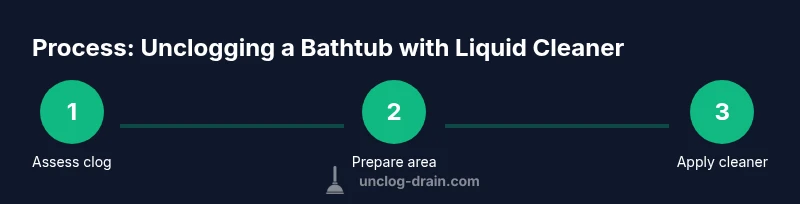
- Read the label and measure the recommended amount. 2) Remove standing water and clear visible debris. 3) Slowly pour the cleaner into the drain opening, aiming for direct contact with the clog. 4) Wait the labeled dwell time without using the drain. 5) Rinse the drain by running hot water for several minutes. 6) Test drainage by running the faucet and letting water drain freely. 7) If needed, repeat once more with the same product or switch to a mechanical method.
tip1:
tip2:
,
Tools & Materials
- Liquid drain cleaner (bathroom-grade)(Choose a product labeled safe for bathroom drains; enzymatic for gentler action or caustic for tougher clogs)
- Gloves(Protect skin from chemical exposure)
- Eye protection(Safety goggles preferred)
- Drain stopper removal tool(Helps clear hair from the stopper if accessible)
- Measuring cup(For accurate cleaner dosage if not provided on label)
- Towels or rags(Catch spills and keep area dry)
- Bucket(For optional water catchment during cleanup)
- Flashlight(Helps inspect stopper and drain before and after treatment)
Steps
Estimated time: 30-60 minutes
- 1
Assess clog and prepare area
Identify the likely clog type (hair, soap scum, combination) and clear a workspace around the tub. Wear gloves and eye protection. Remove any standing water and hair from the drain area so the cleaner can reach the blockage.
Tip: Confirm the drain stopper is accessible and unclogged before applying chemicals. - 2
Read label and choose cleaner
Review the product label for compatible pipe materials and dwell time. If uncertain, start with a mild enzymatic cleaner and avoid mixing products.
Tip: Do not mix products or use more than the label recommends. - 3
Clear visible debris from stopper
If you can access hair or gunk around the stopper, remove it with a gloved hand or a small tool so the cleaner reaches the clog.
Tip: Hair build-up is a common cause; removing it improves results. - 4
Apply cleaner according to label
Pour or measure the recommended amount directly into the drain, ensuring the path to the clog is filled. Do not substitute with other cleaners.
Tip: Pour slowly to prevent splashing and ensure contact with the clog. - 5
Wait the dwell time
Let the product sit for the labeled duration without running water through the drain. This allows the cleaner to act on the blockage.
Tip: Avoid starting other household tasks that could disrupt the dwell time. - 6
Rinse and test the drain
Flush with hot water for several minutes and run the faucet to test drainage. If water still pools, consider repeating once or trying a mechanical method.
Tip: Hot water helps dissolve cleaners and debris; be cautious with very hot water on delicate finishes. - 7
Reassess and repeat if needed
If the drain is still slow, re-evaluate the clog type and consider a second treatment or alternate method. Do not over-apply cleaners.
Tip: Repeated chemical use can irritate pipes; mechanical methods may be safer for stubborn clogs. - 8
Finish with preventive steps
Wipe the area, store cleaners safely, and consider preventive maintenance like a hair catcher to reduce future clogs.
Tip: A simple screen can dramatically lower recurring clogs.
Common Questions
Is it safe to use liquid drain cleaners in a bathtub?
Liquid cleaners can be effective but may damage certain pipes or finishes if misused. Always check the label for compatibility with your plumbing and avoid mixing products. If in doubt, consult a professional.
Liquid cleaners can work, but check compatibility and never mix products. If unsure, contact a pro.
What if the cleaner doesn’t work?
If a single treatment doesn’t clear the clog, avoid repeated harsh applications. Consider mechanical methods like a plunger or drain snake, and evaluate pipe condition.
If it doesn’t work, don’t overdo it. Try mechanical options or consult a plumber.
Can enzymatic cleaners damage PVC pipes?
Enzymatic cleaners are generally gentler, but always verify label compatibility with PVC. Avoid high concentrations or mixing with caustic agents.
Usually safe for PVC, but always check the label and don’t mix products.
How often should I unclog drains to prevent issues?
Regular maintenance helps prevent clogs. Use a drain screen, avoid pouring grease down bathroom drains, and clean hair from stoppers regularly.
Keep a screen in place and clean hair from stoppers to prevent clogs.
Are there safer alternatives to chemicals?
Mechanical methods (plunger, snake) or enzymatic cleaners are alternatives. They may be slower but reduce chemical exposure and potential pipe damage.
Plunger or snake are good non-chemical options; enzymatic cleaners are gentler too.
Watch Video
Key Points
- Follow label instructions precisely
- Start with mild enzymatic cleaners first
- Escalate to mechanical methods if needed
- Rinse thoroughly after treatment
- Prevent future clogs with a hair catcher