How Much to Unclog an AC Drain Line: Costs, Steps, and Tips
Learn the real costs of unclogging an AC drain line, compare DIY vs. professional options, and get a practical, step-by-step guide to prevent future clogs—backed by Unclog Drain's 2026 analysis.


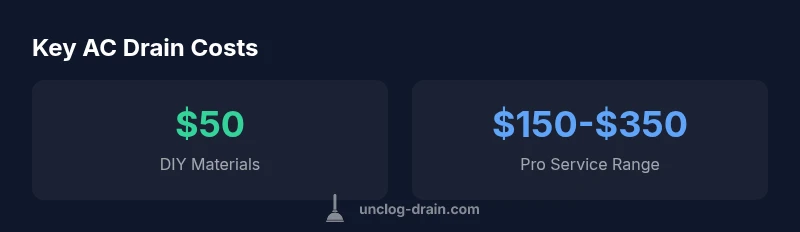
Typically, unclogging an AC drain line costs a wide range. DIY fixes with basic tools can cost under $50, while hiring a plumber or HVAC pro often runs about $150 to $350, depending on access, severity, and added diagnostics. For emergencies or hard-to-reach lines, expect higher charges.
Understanding AC Drain Lines and Costs
The condensate drain line in an air conditioning system carries water away from the evaporator coil. When it becomes clogged, you may notice damp spots near the indoor unit, a musty smell, or frequent backup alarms from a high-efficiency (EF) system. Understanding the cost landscape starts with recognizing two major variables: DIY versus professional service, and how accessible the line is. In 2026, Unclog Drain Analysis shows that price ranges largely reflect labor intensity, required diagnostics, and whether any components—like a condensate pump or a P-trap—need replacement or cleaning. If you’re wondering how much to unclog ac drain line, expect a broad range that hinges on your home's layout, the clog’s cause (hair, algae, mineral buildup), and whether you add preventative checks.
From a budgeting perspective, the cheapest path is a basic DIY flush using approved tools, while the most comprehensive service may include camera inspection and hydro-jetting. Keep in mind that clogged condensate lines can indicate broader HVAC maintenance needs, such as improper slope or failing pumps. The cost of neglect can exceed the price of a one-time unclogging—leading to more extensive water damage or mold if the issue is left unchecked. This section lays the groundwork for informed decision-making by outlining typical scenarios, risk factors, and price ranges you’re likely to encounter in 2026.
DIY Options: Tools, Materials, and Realistic Outcomes
DIY approaches to unclogging an AC drain line focus on accessibility and safety. Common tools include a wet-dry shop vacuum, a plumber’s snake (auger), a flexible brush, and non-corrosive cleaners used with caution. The costs for DIY materials are usually under $50, assuming you have basic hand tools and a clear access point. DIY methods can be effective for shallow, easily reachable clogs caused by hair, dust, or minor mineral buildup. However, DIY will not reliably clear deeper blockages, algae growth, or sediment that has hardened inside the line. You’ll gain more confidence if you start with the least invasive method and monitor for recurring symptoms. For many homeowners, a well-executed DIY attempt buys time and reduces the immediate risk of water damage, but it is not a guaranteed fix.
Key considerations when choosing a DIY path:
- Accessibility: Is there an easy cleanout near the indoor unit?
- Type of blockage: Hair and lint respond better to suction or snaking than mineral scale.
- Safety: Always power down the system and wear eye protection when working near plumbing connections.
- Potential damage: Harsh chemical cleaners can damage PVC lines or the condensate pan; avoid them unless recommended by a trusted guide.
A structured DIY plan may involve clearing the trap (if present), attempting a brief suction run with a shop vac, and then attempting a snake to push the blockage through. If you aren’t seeing progress after a determined effort, it’s time to switch to a professional option. DIY success hinges on keeping expectations realistic and recognizing when to escalate.
When to Hire a Pro: Cost and Risk Considerations
Costs for professional unclogging typically rise with line length, accessibility, and whether additional diagnostics are required. In many markets, you’ll see a pro charge a baseline service call, plus labor and any parts, with a typical range of $150 to $350. If the line is buried behind walls, runs a long distance, or requires camera inspection, the bill can approach the upper end of that range or higher. Pro technicians bring equipment that can reach deeper blockages, remove algae growth, and verify that the drain slope and condensate pump are functioning correctly. They can also identify related issues—such as a leaking pan, a cracked line, or a failing float switch—that DIY methods may miss.
Safety and warranty considerations also come into play. Opening an electrical panel or manipulating a condensate pump requires training to prevent shocks or water damage. When deciding whether to hire a pro, weigh the risk of water damage against the upfront cost of professional service. Unclog Drain’s analysis emphasizes that a professional visit often reduces the chance of repeated clogs by addressing root causes and performing preventive checks, which can save money over time. If your previous unclogging attempts were unsuccessful, or you notice recurring clogs within a short period, professional service is likely the prudent path.
Step-by-Step Guide: Unclogging an AC Drain Line
This practical guide outlines a safe, methodical approach you can follow before calling a pro. Note that if you encounter electrical components, sharp edges, or persistent leaks, stop and seek professional help.
- Power down the system: Turn off the thermostat and shut off the breaker for the outdoor condenser unit and any indoor condensate pump. This reduces the risk of shock and avoids water spraying while you work.
- Locate the access point: Find the condensate drain line access near the air handler or furnace. Remove the access cap or cleanout plug carefully and inspect for visible clogs.
- Assess the blockage: Use a flashlight to identify debris. If you see obvious hair or lint clumps, plan your removal approach accordingly. Keep a bowl nearby to collect debris.
- Vacuum the line: Attach a wet-dry shop vacuum to the drain opening and seal the hose around the pipe to create suction. Run the vacuum for 1-2 minutes, then check if water and debris are being drawn out. This method is often effective for shallow clogs.
- Use a snake/auger: If suction alone doesn’t clear the line, feed a plumber’s snake into the line and rotate gently to break up the blockage. Advance only a small amount at a time to avoid jamming the snake in the line.
- Flush the line: After breaking the clog, flush the line with warm water to wash out loosened material. A mild, non-abrasive cleaner can be used sparingly if recommended by a reliable source.
- Reassemble and test: Reinstall the access cap, restore power, and run the AC to confirm water flow through the drain. Check the pan and surrounding area for leaks.
- Assess the result: If water continues to back up or you experience odors, schedule a professional check. A persistent clog may indicate a deeper issue requiring hydro-jetting or camera inspection.
This step-by-step approach aligns with common practices in 2026 and helps homeowners gauge whether a DIY attempt is likely to succeed before engaging a pro.
Common Pitfalls and Safety Notes
Several pitfalls can undermine your unclogging effort. First, avoid chemical drain cleaners in condensate lines. Many products create dangerous fumes, can corrode PVC, and may contaminate the condensate pan. Second, never mix cleaners with bleach or ammonia, which can produce hazardous gases. Third, be mindful of electrical hazards: condensate lines often run near electrical components; keep water away from any live circuits. Fourth, don’t force a snake through a line if resistance is strong—forcing a tool can damage the pipe or push the blockage deeper. Finally, always confirm that the condensate pump and float switch (if installed) are working correctly after clearing the line. Following these safety notes reduces risk to your home and your own wellbeing.
Maintenance to Prevent Future Clogs
Preventive maintenance is far more economical than repeated unclogging. Schedule a monthly check of the condensate line and pan, especially in humid or mineral-rich areas. The following practices help:
- Flush with 1-2 gallons of water per month to keep the line clear.
- Inspect for evidence of algae growth or mineral buildup and address promptly.
- Keep the area around the indoor unit clean and dry to avoid introducing debris into the line.
- Consider a condensate overflow alarm or pump with a float switch to provide early warning of clogs.
- Ensure proper line slope and that the pan is intact to prevent backups.
By building a routine maintenance plan, you reduce the chance of sudden clogs and extend the life of your AC drainage system. Regular checks also provide early detection of related HVAC problems, safeguarding your home from water damage and mold.
Cost and capability comparison for AC drain line unclogging methods
| Method | Typical Cost Range | Pros | Cons |
|---|---|---|---|
| DIY flush with plunger/snake | Under $50 | Low cost; quick if accessible | Limited reach; may fail on deep clogs |
| Professional HVAC service | $150-$350 | Thorough cleaning; diagnostics | Higher upfront cost; scheduling needed |
| Camera inspection + hydro-jet | $250-$500 | Precise diagnosis; deep cleaning | Most expensive; not always required |
Common Questions
What affects the price to unclog an AC drain line?
Costs depend on access, line length, the extent of the blockage, and whether diagnostics (like a camera) are needed. Emergency or after-hours visits raise prices further. A professional will tailor the approach based on these elements.
Costs depend on access, length, and whether diagnostics are needed; emergencies raise prices. A pro will tailor the approach.
Can I unclog an AC drain line safely by myself?
DIY can be safe for simple, accessible clogs using approved tools and careful steps. If you encounter resistance, reach, or leaks, stop and call a professional to avoid damage or injury.
DIY can work for simple clogs, but stop if you meet resistance or leaks and call a pro.
What are the signs of a clogged AC drain line?
Key signs include water pooling near the indoor unit, a damp humid area, a frozen evaporator coil, and frequent overflow alarms. Early detection helps prevent mold and water damage.
Look for water pooling near the unit, humidity, and alarm signals.
Should I use chemical cleaners to clear an AC drain line?
Chemical cleaners can damage plastics and irritate the system if not used correctly. It’s generally safer to rely on mechanical methods or consult a professional for guided use.
Chemicals can harm the line; safer to use mechanical methods or get professional guidance.
Is a camera inspection worth it after a clog?
A camera inspection helps identify the exact blockage and detects related issues like scale buildup or a failing pump. It’s most beneficial when the clog recurs or the path behind walls is unclear.
A camera check is useful if the clog keeps coming back or the path isn’t clear.
“Costs vary, but proactive maintenance and the right technique substantially reduce future clogs.”
Key Points
- Compare DIY vs. professional costs before starting
- Assess accessibility to decide if DIY is feasible
- Prioritize safety and shutoffs before work
- Schedule follow-up checks to prevent future clogs