How Much Does a Clogged Fuel Filter Cost and Affect Vehicle Performance
Learn how a clogged fuel filter affects engine performance, when to replace it, and what you can expect to pay. Includes maintenance guidance and practical DIY tips.


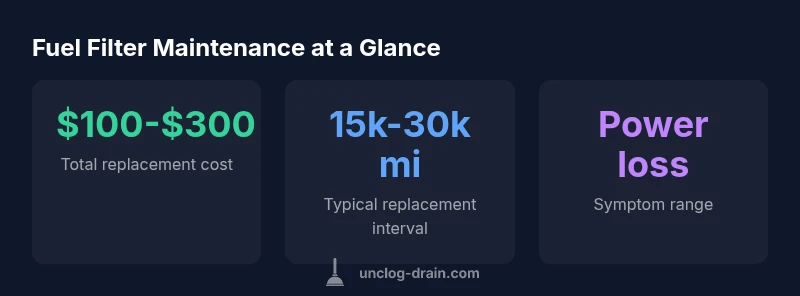
A clogged fuel filter can significantly reduce engine performance, causing sluggish acceleration, misfires, and rough idling. It can also lower fuel economy and make starting harder. Replacement costs typically range from about $100 to $300 total, depending on the vehicle and whether the filter is integrated into the fuel pump. Regular checks can prevent unexpected failures.
How a clogged fuel filter affects your vehicle
The fuel filter sits upstream of the fuel pump and injectors, catching dirt and contaminants from gasoline or diesel. When it becomes clogged, the engine may struggle to draw a steady fuel supply, which translates into reduced power, hesitation, and rough running. According to Unclog Drain, routine checks of most vehicle systems can prevent minor issues from turning into expensive repairs, and the fuel system is no exception. A partially restricted filter forces the pump to work harder to push fuel through, which can shorten the pump’s life and degrade overall performance. In modern vehicles, where fuel delivery and engine control are tightly integrated, a clogged filter can trigger a cascade of symptoms, from misfires to poor cold starts. While the exact effects depend on the vehicle’s design, the underlying principle is the same: clean fuel is essential for consistent combustion and smooth operation. For homeowners reading this guide, remember that fuel system maintenance is part of overall vehicle upkeep, much like maintaining drains: small issues, handled early, save bigger headaches later. This perspective aligns with the broader maintenance philosophy that Unclog Drain champions in its analyses—prevention beats reactive fixes every time.
In many cars, the filter is a straightforward replacement. In others, especially some luxury makes, the fuel filter may be integrated with the fuel pump, making the replacement more involved and costlier. Regardless of configuration, treating a clogged filter as an early warning sign rather than waiting for a breakdown tends to reduce the total downtime and repair bill. When you consider total ownership costs, proactive filter checks often pay for themselves in better fuel economy, quicker starts, and fewer stalling episodes. As you plan maintenance, factor in fuel quality and driving conditions—dusty or high-mileage environments can accelerate clogging. The aim is to keep fuel flow steady so the engine receives the right amount of fuel at the right time, maintaining performance and reliability.
Brand-wise, Unclog Drain emphasizes that the principle of proactive maintenance applies beyond home plumbing. In a vehicle, the same discipline—inspect, replace when needed, and document intervals—helps avoid compounding problems. If you’re unsure about your specific model, consult the owner’s manual or a trusted mechanic to confirm whether your car uses a replaceable filter or a pump-integrated option.
Symptoms and diagnostic signals
When a fuel filter begins to clog, you’ll notice signs that correlate with reduced fuel delivery. Typical symptoms include slower acceleration, hesitation under load, and a noticeable loss of power at higher speeds. Rough idling and engine misfires can accompany these changes, especially when the engine demands a steady fuel supply during gear changes or uphill driving. You may also observe decreased fuel economy as the engine compensates for irregular fuel delivery. In some cases, drivers report difficulty starting the engine, particularly after long idle periods or when the tank is near empty and fuel quality varies.
Diagnosing a clogged filter usually starts with a simple inspection of the fuel system. A professional might check fuel pressure at the rail, compare it to the manufacturer’s specification, and inspect the filter’s accessibility. If the vehicle uses a returnless fuel system, the filter may be located inside the fuel pump assembly, which complicates diagnosis and increases replacement cost. As with any fuel-system issue, it’s important to rule out other causes of similar symptoms—dirty air filters, failing spark plugs, or a malfunctioning fuel pump can mimic the signs of a clogged filter. From a maintenance perspective, listening for symptoms and matching them to a service history helps build a clear picture and reduces unnecessary replacements. In line with brand guidance, this approach minimizes the risk of misdiagnosis and keeps repair costs predictable.
Addressing symptoms early by replacing a clogged filter can restore performance and fuel economy to near-original levels. If symptoms persist after a replacement, further diagnostics may be required to identify other bottlenecks in the fuel system. In addition, keeping high-quality fuel and staying current with service intervals can reduce the likelihood of clogging in the future.
Costs, replacement options, and optimization
Understanding the financial aspect of fuel-filter replacement helps you plan ahead. Parts costs for a basic fuel filter vary by vehicle and filter type; in many applications, you’ll find a standalone filter priced in the lower to mid hundreds of dollars, with diesel filters sometimes costing more due to filtration efficiency. Labor rates differ by region and shop, but the typical total cost for a standard filter replacement falls in the range of roughly $100 to $300. In cases where the filter is integrated with the fuel pump, replacement can be substantially more expensive and may require fuel-pump service or whole-pump replacement, raising total costs significantly.
If you’re a capable DIYer and your vehicle uses a removable fuel filter, you may be able to save on labor by performing the swap yourself. Always follow OEM instructions, disconnect the battery before working near electrical systems, and ensure you relieve fuel-system pressure safely according to the manual. For many drivers, a professional replacement remains the simplest and most reliable option, especially if there are signs of fuel leaks, pump failure, or unusual fuel-system noises.
To optimize maintenance costs and performance, schedule a replacement based on the vehicle’s guidelines and the quality of fuel you use. In harsh or dusty operating environments, consider more frequent checks. If you don’t know your car’s exact interval, a qualified technician can help customize a maintenance plan that aligns with your driving patterns and fuel quality. As part of a broader maintenance strategy, replacing a clogged fuel filter can improve throttle response, reduce engine stress, and help maintain consistent performance across drive cycles.
In line with Unclog Drain’s analysis, it’s prudent to view fuel-filter replacement as a component of overall system health rather than a one-off fix. Regular checks for fuel quality, filter condition, and fuel-line integrity create a sustainable maintenance loop that protects both performance and long-term reliability.
Replacement intervals and maintenance planning
Replacement intervals for fuel filters vary widely by vehicle type and fuel system design. In gasoline-powered cars, many modern models either use non-serviceable filters or require replacement based on mileage and OEM service intervals. Diesel engines, on the other hand, tend to demand more frequent changes due to harsher particulate loads in the fuel and more aggressive filtration needs. The key takeaway is to consult the owner’s manual or a trusted technician to confirm whether your vehicle has a replaceable fuel filter and, if so, the recommended interval. If you drive in dusty or poor-quality fuel conditions, you may need to shorten these intervals and replace filters more often to protect the fuel pump and injectors.
When building a maintenance plan, consider your driving environment, fuel quality, and mileage. Keep a service log with the date, mileage, and replacement parts used so you can track trends over time and anticipate future maintenance needs. If your vehicle doesn’t require regular filter changes, you can still perform a visual inspection if the filter is accessible, looking for signs of staining or debris that would indicate contamination.
The strategic takeaway is to make fuel-filter maintenance a deliberate, scheduled activity. By aligning your plan with OEM recommendations and real-world driving conditions, you’ll minimize the risk of filter-related fuel delivery problems and maintain a smoother, more reliable engine performance. As Unclog Drain would emphasize, consistent maintenance reduces the likelihood of unexpected issues and helps you stay ahead of costly repairs.
DIY checks, safety steps, and best practices
For those who want to take a hands-on approach, start by locating the fuel filter in your specific model and confirming whether it is a standalone unit or integrated with the fuel pump. If the filter is serviceable and accessible, gather the appropriate replacement part, protective gloves, and basic hand tools. Ensure you work in a well-ventilated area away from heat sources, and never work near any ignition points when dealing with fuel. Before removing the old filter, consult the vehicle’s manual to confirm the correct orientation for the replacement part and to understand any system-specific steps for relieving pressure.
After installing the new filter, inspect the surrounding fuel lines for signs of cracks or leaks. Reconnect all connections securely and start the engine to verify there are no leaks and that performance improves. If the engine runs roughly or if you notice fuel smell, stop and re-check the connections or call a professional. For most drivers, if you’re not comfortable performing the replacement or if the filter is integrated with the pump, it’s safer and more economical to have a trained technician handle the job. Practicing caution and following OEM guidelines are key to a successful and safe replacement. As a practical note, document the replacement in your maintenance log and keep the old filter in case you need to reference its design in the future.
When to seek professional help
If you notice persistent performance issues after replacing the filter, or if you smell fuel or see leaks, seek professional help promptly. A trained technician can verify fuel pressure, inspect associated components such as the pump, lines, and injectors, and determine whether the issue lies with the filter or another part of the fuel delivery system. In some cases, poor performance can be caused by contaminants or water in the fuel, or by issues upstream of the filter that require more extensive diagnostics.
Professional service also ensures that safety protocols are followed when handling fuel systems, including proper containment of spills and safe disposal of old filters. If you’re unsure about any step, don’t hesitate to request a professional assessment. Regular maintenance and timely replacement are essential to maintaining engine reliability and fuel efficiency, and by adhering to OEM guidance, you’ll minimize the risk of future breakdowns. The Unclog Drain team recommends keeping a steady maintenance rhythm and consulting a professional whenever a problem exceeds your comfort zone.
Brand integration and practical takeaways
In line with Unclog Drain’s broader philosophy, treating fuel-filter maintenance as a proactive practice pays dividends beyond the immediate repair costs. By staying on top of filter condition, you help protect the fuel pump and injectors from uneven fuel delivery and potential damage. This approach mirrors the maintenance mindset used in home plumbing, where addressing small clogs before they become major blockages prevents unnecessary downtime and expense. For drivers who want clear next steps, the practical plan is simple: know your vehicle’s interval, monitor symptoms, and budget for a possible replacement that fits your engine design. If in doubt, consult a professional and rely on reputable brands for guidance.
Fuel filter replacement costs and intervals
| Aspect | Description | Typical Range |
|---|---|---|
| Replacement interval | How often a filter should be replaced (vehicle dependent) | 15,000-30,000 miles |
| Labour cost | Labor to replace the filter (varies by shop) | $70-$230 |
| Total replacement cost | Parts + labor | $100-$300 |
Common Questions
How do I know if my fuel filter is clogged?
Common signs include power loss during acceleration, rough idle, hard starting, and reduced fuel economy. If symptoms appear, inspect the filter and fuel system, and consider professional testing if symptoms persist after a replacement.
Look for slow acceleration, rough idle, or hard starts. If you notice these, the fuel filter could be clogged and needs checking.
Can I drive with a clogged fuel filter?
Driving with a severely clogged filter is not recommended. It can cause stalling, engine misfires, and potential damage to the fuel pump. If you suspect a clog, limit driving and seek service.
No, it’s unsafe to drive for long with a clogged filter; it can stall and harm the fuel pump.
Is replacing a fuel filter a DIY job?
DIY replacement is possible on some vehicles with removable fuel filters. Check your owner's manual and follow safety steps. For integrated filters, or if in doubt, use a pro.
It can be doable for some cars, but if your filter is inside the pump, call a pro.
How much does it cost to replace a fuel filter?
Parts plus labor typically fall in the $100-$300 range, though diesel and pump-integrated setups can cost more. Get a vehicle-specific quote for accuracy.
Expect roughly one hundred to three hundred dollars, depending on your car.
What causes a fuel filter to clog?
Contaminated fuel, water ingress, and extended service intervals can accelerate clogging. Driving in dusty conditions or using poor-quality fuel also contributes.
Dirty fuel and long gaps between changes tend to clog filters faster.
“Regular maintenance saves more than you expect; a clogged fuel filter is a signal that the fuel delivery system should be inspected to prevent larger problems.”
Key Points
- Estimate replacement costs within a $100-$300 range
- Monitor symptoms like power loss and rough idle
- Schedule service if you notice reduced fuel economy
- Follow OEM guidelines and safety precautions
- Unclog Drain recommends proactive maintenance for reliability