Clogged Basement Floor Drain: Troubleshooting & Fixes
Learn fast, safe methods to diagnose and unclog a basement floor drain. This step-by-step guide from Unclog Drain covers essential tools, fixes, and prevention.


Most basement drain clogs stem from hair, sediment, or debris accumulating in the trap and elbow. Start with simple checks: remove standing water, loosen the strainer, and try a plunger. If that fails, use a toilet auger or hand snake carefully from the cleanout. Always use PPE and avoid chemical drain cleaners.
What a clogged basement floor drain means for your home
A clogged basement floor drain is more than a minor nuisance. When the drain can’t move water away quickly, groundwater or sump pump discharge can back up into your basement, threatening flooring, electrical outlets, and any finished space. A slow drain can also release musty odors and promote mold growth in damp corners. According to Unclog Drain, these issues often start with a blocked trap seal or a buildup of debris in the drain line. Addressing the problem early protects your belongings and your home's structural integrity. In many homes, a well-maintained drain acts as a first line of defense against basement flooding during heavy rain or spring thaws.
Common causes of basement drain clogs
Basement floor drains clog for several reasons. Hair, lint, and sediment from groundwater can accumulate in the trap and pipe. Roots can intrude the line if the main sewer is near the foundation. Sump pump discharge or debris from nearby construction can introduce solids that settle over time. Misuse, like pouring grease, paints, or kitty litter down the drain, also contributes to buildup. Unclog Drain analysis, 2026, indicates that regular maintenance and mindful disposal habits dramatically reduce the frequency of these clogs. A quick inspection can often reveal a loose grate or a dry trap that’s letting sewer gas escape and drying out the seal.
Signs your clogged basement floor drain is failing
Look for visible signs of trouble: standing water that won’t drain, a settled, damp area around the drain, gurgling noises, or a musty basement odor. If water backs up into the basement when you run laundry or use the shower, the problem is more urgent. A dry trap can also cause sewer gases to enter the space, which is a health concern. Another red flag is recurring backups after a rainstorm or rapid snowmelt. Early detection and action minimize damage and mold risk. In these situations, safety and prompt action are essential.
Quick DIY checks you can do today
Start with the basics: remove the grate and any obvious debris, then use a plunger to attempt a clear. If water still won’t move, try a hand auger from the cleanout or the riser access. For slow-moving drains, flush with hot water and a small amount of baking soda to help loosen mineral buildup. If you have a wet/dry vacuum, you can attempt to remove standing water and debris from the trap chamber. Always wear gloves and eye protection, and avoid mixing products that could release hazardous fumes.
How to safely access and inspect the trap and riser
Safety comes first. Before poking around, unplug or switch off the sump pump to prevent unexpected activation. Wear rubber gloves and eye protection. Remove the drain grate and visually inspect for obvious blockages. If you can access the trap area, feel for a dry seal or trapped debris. Use a flashlight to inspect the elbow and vertical riser for snagged hair or mineral buildup. Keep a bucket handy to collect debris and a brush to loosen stubborn grime. If you encounter a sewer gas smell or feel unsure, pause and call a pro.
Step-by-step: how to clear a clog with basic tools
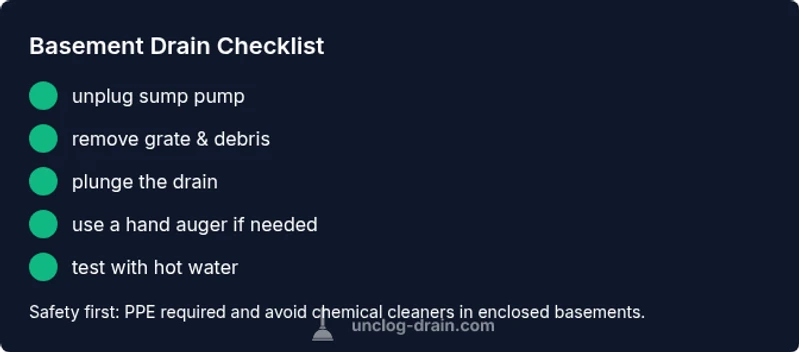
- Remove the grate and clear surface debris. 2) Plunge the drain firmly to dislodge clogs in the trap and pipe. 3) If plunging fails, insert a hand auger (snake) into the cleanout and rotate to break up the obstruction. 4) Pull back slowly to retrieve debris. 5) Flush with hot water and, if needed, a small amount of baking soda. 6) Reinstall the grate and run water to test. 7) If the odor persists or water still backs up, repeat with a longer snake or call a pro. 8) Clean the area and wash hands thoroughly.
Using safe, budget-friendly remedies vs. chemical drain cleaners
Chemical drain cleaners can release hazardous fumes in enclosed basements and may damage pipes or seals, especially in older homes. Favor mechanical methods like plungers and snakes. Enzymatic cleaners can help break down organics over time but are not instant fixes. A hot water flush with a little baking soda can help suspend minor mineral buildup. For stubborn blockages, hydro-jetting or professional camera inspection may be required.
Prevention: daily, weekly, and seasonal habits
To prevent future clogs, practice regular maintenance: keep the grate clear, run water through the drain after heavy rains, and ensure the trap remains with a water seal. Periodically inspect the sump pump and discharge line for obstructions. Install a trap primer to maintain water in the trap if you have dry conditions. Avoid disposing of grease, wipes, or hygiene products in the drain. A small, ongoing effort saves bigger headaches later.
Steps
Estimated time: 60-90 minutes
- 1
Power down and prep
Turn off the sump pump and clear the area. Don gloves and eye protection. Gather a bucket, plunger, snake, and a flashlight.
Tip: Keep a mop handy for spills. - 2
Remove grate and inspect debris
Take off the grate, remove hair, lint, and loose debris from the trap area. Use a flashlight to check the elbow and riser for obstruction.
Tip: Do not force stuck debris; loosen gently. - 3
Attempt plunging
Seal the drain around the plunger and push with steady pressure to create a seal and dislodge the clog. Repeat several times.
Tip: A sharp push can clear a shallow plug. - 4
Use a hand auger if needed
Insert the snake into the drain, rotate while pushing. When you feel resistance, pull back and remove debris.
Tip: Avoid forcing the auger past resistance to prevent pipe damage. - 5
Flush and test
Run hot water through the drain and test with several gallons to ensure flow returns. Reinstall the grate when clear.
Tip: Record a baseline water flow to track future changes. - 6
Address odors and sealing
If sewer odor persists, re-check the trap seal and refill with water to restore the seal.
Tip: Odors can indicate a dry trap; reseal promptly.
Diagnosis: Basement floor drain backs up or drains slowly with odor and damp area
Possible Causes
- highDry trap seal or blocked trap
- highDebris buildup in trap or main line
- mediumSump pump discharge with solids
- lowRoot intrusion in sewer line
- lowMain sewer line blockage
Fixes
- easyClean grate and trap, remove visible debris
- easyPlunge or hand-auxer from cleanout to loosen blockage
- easyFlush with hot water and baking soda; avoid chemical cleaners
- hardCall a professional for sewer-line issues or persistent backups
Common Questions
What causes a clogged basement floor drain?
Most clogs come from hair, lint, and sediment building up in the trap and pipe. Roots or solids from a sump pump discharge can contribute. Avoid disposing grease or wipes to reduce future blockages.
Most clogs come from debris like hair and sediment building up, with roots and sump pump solids as possible contributors.
Is it safe to use chemical drain cleaners in a basement drain?
Chemical cleaners can release hazardous fumes in enclosed spaces and may damage older pipes or traps. Mechanical methods are safer for basement drains; consult a plumber for stubborn clogs.
Chemicals can release fumes and damage pipes; use mechanical methods first and call a pro if needed.
DIY or professional: when should I call a plumber?
If water backup continues after basic clearing, if you smell sewage, or if you suspect a sewer-line issue, call a licensed plumber. They can perform camera inspections and hydro jetting as needed.
If backups persist or you suspect sewer issues, call a pro for safety and a proper assessment.
What is a trap primer and do I need one?
A trap primer keeps water in the P-trap to seal against sewer gas. It’s useful in basements with intermittent use or dry seasons. Consider installing one if dryness is a recurring problem.
A trap primer helps keep the water in the trap so sewer gas can’t come through.
How can I prevent basement floor drain clogs in the future?
Regularly clear the grate, avoid pouring grease or solids down the drain, and perform annual checks of the trap and sump discharge lines. Keeping a maintenance routine dramatically reduces shout-for-help moments.
Regular maintenance and careful disposal habits can prevent most basement drain clogs.
Watch Video
Key Points
- Act quickly to minimize mold risk
- Use mechanical methods first—plunger and snake
- Avoid caustic cleaners in basements
- Call a pro for sewer-line or persistent backups