How to Unclog a Drain with a Drain Snake: A DIY Guide
Learn to safely unclog a snake clogged drain using a drain snake. This step-by-step guide covers safety, tool selection, technique for sinks and toilets, maintenance, and when to call a professional.


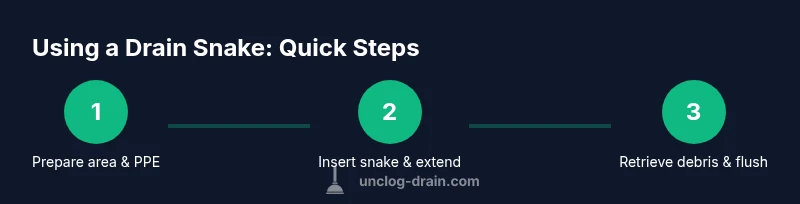
Using a drain snake to clear a snake clogged drain is a safe, chemical-free method for sinks and toilets. Gather gloves, a bucket, flashlight, a manual or drill-powered auger, and basic tools. Start by preparing the area, inserting the snake into the drain, twisting to break up the clog, retracting debris, flushing with hot water, and testing flow. This approach minimizes mess.
What is a snake clogged drain and when to use it
A drain snake, also known as a plumber's auger, is a flexible steel cable that you wind into a clogged drain to grab, break up, or push the blockage through the pipe. Snakes come in two main form factors: manual hand-crank models and motorized variants. A snake clogged drain can occur in kitchen sinks, bathroom sinks, shower drains, or toilets with the appropriate auger size. You typically use a drain snake when plunging fails or when the clog is beyond the trap and inaccessible to a plunger. A snake clogged drain is especially effective for hair, grease, soap scum, or mineral buildup that creates a stubborn blockage. A quick note: NOT every clog responds to a snake; some issues require different tools or professional service. According to Unclog Drain, tackling clogs with a snake promptly and carefully helps protect pipes and reduces the need for harsh chemicals.
Key differences:
- Sinks and shower drains: longer, flexible coils that navigate curves.
- Toilets: special toilet auger with a protective bell or guard to avoid scratching porcelain.
If you’re new to this, start with a basic hand-crank snake and only advance to more aggressive tools if you meet resistance. With practice, you’ll learn how far to feed the cable before you encounter a bend or trap. For homeowners, a properly sized snake is a practical first-line option for many common clogs.
note():null
description: null
Tools & Materials
- Drain snake (auger)(Choose 3-6 ft for sinks; 3 ft for toilets; ensure a secure handle and proper length.)
- Disposable gloves(Nitrile recommended; protects hands from debris.)
- Safety goggles(Protect eyes from splashes and debris.)
- Bucket(Catch water and debris; place under the trap if needed.)
- Flashlight(Illuminates the drain opening and helps locate clogs.)
- Pliers or locking pliers(Use to grip and remove trapped debris on the cable.)
- Old towels or rags(Protect floors and absorb spills.)
- Drain cleaner (optional, but avoid chemicals with metal snake)(Only if used before snaking; never mix with the snake during operation.)
Steps
Estimated time: 60-90 minutes
- 1
Prepare the area and safety gear
Put on gloves and safety goggles. Clear the area under the sink or around the toilet. Place towels and a bucket to catch water, and turn on good lighting so you can see what you’re doing. This step reduces the risk of slip-and-fall injuries and protects your fixtures from debris.
Tip: Test the workspace by running a small amount of water to identify any leaks before you begin. - 2
Inspect the drain access and choose the right tool
Check whether you’re dealing with a sink, shower, or toilet drain. Select a snake length appropriate for the pipe you’re working on. For toilets, use a toilet auger with a protective guard to avoid scratching the porcelain.
Tip: If you’re unsure about the pipe diameter, start with a shorter length and work gradually to avoid kinking. - 3
Insert the snake into the drain
Carefully insert the end of the snake into the drain opening, guiding it toward the blockage. Do not force the cable through a tight bend; back off if you meet resistance and reposition.
Tip: Keep the cable straight as you feed it in to prevent kinking the coil. - 4
Extend the cable until you reach the clog
Turn the handle to extend the cable while gently pushing forward. You’ll feel resistance when you reach the clog. Do not push too hard; force can damage pipes.
Tip: Maintain a steady, slow feed to avoid shoving debris further into the pipe. - 5
Break up and retrieve the clog
Continue to rotate while gently pulling back on the snake to capture or break up the material. Retrieve any debris you pull back and inspect it to gauge progress.
Tip: If debris is stuck, rotate and pull with a slight back-and-forth motion to free it. - 6
Withdraw the snake and clean the cable
Slowly retract the cable while continuing to rotate to prevent snagging on edges in the pipe. Wipe the cable clean with a rag as you pull it out.
Tip: Inspect the end of the cable for lodged debris and remove it before reusing. - 7
Flush and test the drain
Run hot water through the drain to clear residual debris. Check for steady flow and repeat if necessary. If the water still backs up, pause and reassess the clog location.
Tip: Use a small amount of dish soap with hot water to help lubricate the pipe during testing. - 8
Clean up and disinfect tools
Disinfect the auger and any tools used. Wipe down the area and launder towels before storing tools for future use.
Tip: Dry everything completely to prevent rust and extend tool life. - 9
Assess whether professional help is needed
If the clog persists after a thorough snaking attempt, or if you suspect main-line issues, professional assistance may be required.
Tip: Document what you tried so a plumber can troubleshoot faster.
Common Questions
What is a drain snake and how does it work?
A drain snake is a flexible auger that mechanically breaks up clogs by rotating and extending into the pipe. It helps reach blockages beyond a plunger’s reach. Use the appropriate auger size for toilets vs sinks.
A drain snake is a flexible tool that pokes through and breaks up clogs in pipes.
Toilet auger vs. standard drain snake: which should I use?
Toilet augers are designed to protect the porcelain and reach the trap area; standard snakes are better for sinks and tubs. Use the toilet-specific auger for toilets to avoid damage.
Use a toilet auger for toilets and a standard snake for sinks.
Can I use chemical drain cleaners with a snake?
Avoid mixing chemicals with a snake. Chemicals can create fumes, damage the tool, and trap debris. If you’re unsure, flush with hot water and consider mechanical snaking first.
Don’t mix chemicals with a snake; use mechanical snaking first.
How deep can a drain snake reach?
A drain snake typically reaches as far as the cable length allows, but the actual reach depends on pipe layout and bends. If you hit resistance, back off and reassess rather than forcing forward.
Snakes go as far as their length allows, but don’t push through severe bends.
What if the clog is in the main sewer line?
If you suspect a main sewer line clog, do not continue DIY attempts. Call a licensed plumber to inspect the main line and avoid causing pipe damage or sewage backups.
If you think the main line is clogged, call a pro.
Is it safe for a beginner to snake a drain?
Yes, with proper PPE and careful technique. Start with small, manageable jobs and avoid forcing the cable. If you’re unsure, seek professional help.
It’s usually safe for beginners who follow safety steps and don’t force the tool.
Watch Video
Key Points
- Choose the correct snake length and type
- Prepare safely to avoid spills and injuries
- Extend and rotate to break up the clog
- Retract carefully and flush to test flow
- Prevent future clogs with regular maintenance