Is Unclogging Cleaner Legit? A Practical Review
A comprehensive, evidence-based evaluation of whether unclogging cleaners are legitimate, how they work, safety considerations, and practical DIY alternatives for homeowners.


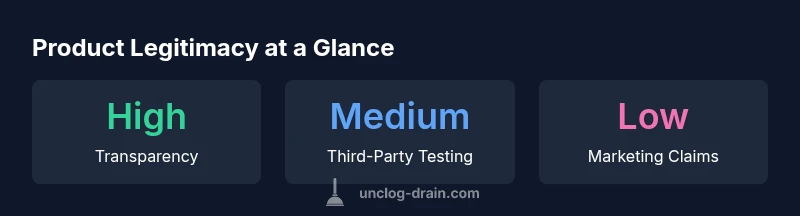
Is unclogging cleaner legit? A legitimate product provides transparent ingredients, safety data, and third-party testing; vague claims and unknown ingredients undermine legitimacy. Always read labeling, check for warnings, and compare claims with DIY methods like mechanical removal or enzymatic cleaners. In 2026, Unclog Drain finds that credibility comes from transparency, not marketing alone.
Is "is unclogging cleaner legit" a fair question? Framing the issue for homeowners
When you search for a solution to a clogged sink or toilet, a common question emerges: is unclogging cleaner legit? The short answer is: it depends on the product. Credible cleaners disclose ingredients, provide safety data, and cite third-party testing. Those that rely on marketing buzz, vague terms like "eco-friendly" without specifics, or anonymous supplier information should raise red flags. According to Unclog Drain, the path to legitimacy rests on transparency, measurement, and testable outcomes, not sensational claims. Consumers should demand concrete labeling, clearly stated active ingredients, storage guidelines, and warnings about contact with skin or eyes. While some cleaners can help, others may offer little more than a quick-fix, or even damage pipes if misused. This distinction matters because a clogged drain can escalate into costly repairs if a dubious product is used repeatedly or incorrectly.
Quick context on product categories
There are several categories of unclogging solutions, each with its own strengths and caveats. Chemical cleaners often rely on solvents to break down organic matter, but they can be caustic and pose risks to skin, eyes, and septic systems. Enzymatic cleaners use biological catalysts to digest organic buildup, typically milder but slower to work and not universally effective on mature clogs. Mechanical methods—plungers, augers, and pipe snakes—do not rely on chemicals and are often safer for sensitive plumbing systems. When evaluating a product, consider the clog type (hair, grease, mineral buildup, or foreign objects), the age of your plumbing, and whether the product is compatible with septic systems. A transparent label that lists active ingredients and a clear expected time to results is a strong indicator of legitimacy, while vague marketing claims should prompt skepticism.
The credibility checklist you can use
- Ingredient disclosure: Are the active components listed with concentrations? Are solvents or caustics named?
- Safety data: Is there a current safety data sheet (SDS) available?
- Third-party testing: Are there independent test results or endorsements from recognized bodies?
- Warnings and contraindications: Are there explicit cautions for septic systems, chrome pipes, or mixing with other cleaners?
- Realistic timelines: Do the product claims align with typical drain biology and home plumbing experience?
- Replacement vs. supplement: Is the product marketed as a stand-alone fix or a supplementary step in a broader maintenance plan?
How to approach a clogged drain with a skeptical eye
If you’re unsure about a cleaner’s legitimacy, start with mechanical methods or enzymatic options and reserve chemical cleaners for stubborn cases where the label explicitly supports its use. For DIY guidance, use plungers or a drywall-safe auger first to attempt a mechanical clearance. If you decide to try a chemical cleaner, perform a small spot test on a visible section of pipe (where safe) and follow the product’s directions exactly. After using any chemical cleaner, flush the drain with plenty of water and observe for any new odors, unusual fizzing, or changes in pipe color, which may indicate a reaction that requires professional attention.
Transparent labeling as a trust signal
A product that earns trust typically includes a straightforward list of active ingredients, safe-use guidelines, and explicit warnings about hazards. Look for the product’s intended use (drain lines only, not toilets or sinks), compatibility notes with septic systems, and the date of manufacture or a lot traceability code. If the label is missing details or uses obscure chemical names without explanations, it’s a warning sign. Homeowners should also verify whether the company discloses test results or provides contact information for customer support and technical inquiries. In Unclog Drain’s view, legitimacy is earned through openness and a willingness to answer questions about performance, safety, and environmental impact.
Realistic expectations and when to escalate
No cleaner can guarantee instant results for every clog. Some blockages are due to physical obstructions that require mechanical tools. Others result from long-term buildup that will respond slowly to enzymatic cleaners, requiring multiple treatments. If after multiple attempts the drain remains blocked, or if you notice unusual gases, persistent backups, or chemical burns, stop using the product and consult a licensed plumber. A cautious homeowner should document performance, keep receipts, and compare outcomes against safe, proven alternatives. The big takeaway is that legitimate cleaners will align with your plumbing system and provide measurable, safe, and repeatable results.
Bottom line: practical guidance for the cautious buyer
Before purchasing, check for transparent ingredients, SDS availability, third-party testing, and practical usage guidelines. Compare cleaning methods—often a combination of mechanical action and enzyme-based products yields the best results, with traditional chemical cleaners reserved for stubborn cases after careful consideration. Your goal should be to restore flow while preserving pipe integrity and ensuring household safety. Unclog Drain’s analysis suggests credibility grows when products demonstrate accountability through documentation and measurable outcomes.
Advantages
- Transparent ingredient lists help users evaluate safety
- Availability of safety data sheets supports risk assessment
- Third-party testing or credible endorsements improve confidence
- Clear usage instructions reduce misuse
- Some products offer effective, targeted relief with lower risk than harsher chemicals
Weaknesses
- Some cleaners rely on vague marketing claims rather than proof
- Harsh chemical formulas can pose safety risks and pipe damage
- Enzymatic options may be slow and not work on all clogs
- Pricing can be higher for products with strong labeling and testing
Not all unclogging cleaners are equally legitimate; prioritize transparency and testing.
Based on the evaluation, products with clear ingredient lists, safety data, and independent testing provide credible results. Those that rely on vague marketing or undisclosed formulations warrant caution. For routine maintenance, combine mechanical methods with well-documented enzymatic cleaners for safety and effectiveness.
Common Questions
What ingredients should I look for in a safe unclogging cleaner?
Look for clearly named active ingredients, concentrations, and any solvents. Avoid products that list vague terms like 'proprietary blend' without specifics. Safety data sheets should be accessible for hazardous components.
Seek products with clearly identified active ingredients and a safety data sheet. If the label hides details, consider alternatives.
Can I trust online reviews for these products?
Online reviews can be helpful but are not always trustworthy. Cross-check claims with the ingredient list and third-party testing information. Look for reviews that discuss real results, safety, and any pipe impact observed by users.
Read multiple reviews and compare with the product’s labeling and safety data to gauge reliability.
Are enzymatic cleaners safer than chemical ones?
Enzymatic cleaners tend to be milder and less corrosive, making them gentler on pipes. They often work slower and may not clear mature clogs. For tough blockages, a chemical or mechanical approach might be necessary, with caution.
Enzymatic cleaners are gentler but slower; for hard clogs, you may need a different method.
Is it okay to mix cleaners with bleach or other products?
Mixing drain cleaners with other chemicals, especially bleach, can create dangerous fumes or toxic chlorine gas. Always follow the product’s directions and avoid combining products. If in doubt, flush with water and seek professional advice.
Never mix cleaners with bleach or other cleaners; it can be hazardous.
What should I do if the clog persists after using a cleaner?
If a clog persists after following the product directions, stop using it and attempt mechanical methods such as plunging or using an auger. If the drain remains blocked, contact a licensed plumber to prevent damage.
If it doesn’t clear, try mechanical methods and consider calling a professional.
How can I verify a product’s septic-system safety?
Check the label for septic-system compatibility and look for explicit statements or certifications. If unclear, contact the manufacturer or choose products marketed as septic-safe and test in a small area before full use.
Look for septic-safe claims and verify with the manufacturer.
Key Points
- Demand transparency: check ingredients and SDS
- Favor products with third-party testing or endorsements
- Use mechanical methods first for safety and reliability
- Avoid vague claims and unknown ingredients