Unclog Waterpik Tips: Step-by-Step DIY Guide
Learn how to unclog Waterpik tips and restore optimal water flow. This guide covers safe cleaning, step-by-step disassembly, maintenance, and prevention tips from Unclog Drain to keep your device working smoothly.


Goal: learn how to unclog a Waterpik and restore full water flow. This quick guide covers safe, step-by-step methods to clear clogs in the reservoir, tubing, and tip, plus routine maintenance to prevent future buildup. You’ll find practical tips, common pitfalls, and safety practices to complete the task confidently.
Understanding Waterpik Clogs and Why Unclog Waterpik Tips Matter\n\nWhen a Waterpik loses pressure or sprays unevenly, homeowners often wonder how to unclog Waterpik tips. This article provides a practical, hands-on approach to identify the root causes, choose safe cleaning methods, and reassemble the unit without damaging components. According to Unclog Drain, most clogs begin at the tip or tubing and escalate when mineral deposits, toothpaste residue, or soap scum build up over time. By following the steps below, you can restore performance and extend the life of your Waterpik while maintaining proper hygiene in your bathroom setup.\n\nUnderstanding the anatomy of your Waterpik — reservoir, tubing, nozzle, and replaceable tips — helps you target the right area during a clean. The goal of these Unclog Waterpik tips is not just to clear a single blockage but to establish a routine that prevents future buildup.
Common Causes of Waterpik Clogs\n\nClogs in Waterpik units typically arise from mineral deposits (especially hard water), toothpaste residue, and small particles that accumulate in the nozzle or tubing. Over time, resinous residue from mouthwash or oils can also contribute to reduced flow. If you notice a drop in pressure or irregular spray, inspect the tip first, then trace the flow path back toward the reservoir. Regular maintenance reduces the frequency of clogs and the intensity of cleanings required, keeping your Waterpik performing at peak levels.
Quick Fixes You Can Try Before Disassembly\n\nSometimes a simple flush can clear a minor clog without taking the device apart. Start by rinsing the reservoir with warm water, then reattach a fresh tip and run plain water at the lowest setting to push out loose debris. If available, switch to a different tip to see if the issue is tip-specific. A short backflip (gentle reverse flush) can dislodge minor obstructions in the nozzle. Keep in mind safety and avoid forcing the jet if resistance is strong.
Step-By-Step Deep Cleaning (Disassembly Optional)\n\nIf the quick fixes don’t solve the issue, proceed with a deeper clean. Disconnect the unit from power and remove the tip. Detach the reservoir and loosen any clips that secure tubing. Rinse all removable parts under warm water and inspect for cracks or wear. For stubborn buildup, soak removable parts in a mild cleaning solution based on your manufacturer’s recommendations, then rinse thoroughly. Reassemble and test at the lowest setting before increasing pressure.
Cleaning the Reservoir and Tip for Best Results\n\nA clean reservoir prevents backflow and ensures consistent flow. Empty the reservoir, wash with mild dish soap, and rinse until no soap residue remains. For mineral buildup on the tip, soak in a 1:1 solution of distilled water and white vinegar for 5–10 minutes if your model allows it, then rinse with fresh water. Do not reuse damaged tips. This step minimizes future clog risk and keeps the nozzle clear.
Flushing Tubing and Clearing the Nozzle\n\nFlushing the tubing helps push debris toward the reservoir and out of the system. Refill the reservoir with warm water, prime the unit, then run water through the nozzle for 30–60 seconds on a low to moderate setting. If you notice persistent resistance, perform a gentle backflush to dislodge trapped particles. Avoid using sharp tools that could damage flexible tubing.
Reassembly, Testing, and Best Practices\n\nCarefully reassemble all parts in the order you removed them and run a short test cycle with plain water. Check for leaks around seals and joints before applying pressure at higher settings. After testing, wipe down exterior surfaces and dry components before storing. Adopting a simple weekly rinse routine helps prevent future clogs and keeps Waterpik performance steady.
Maintenance Habits to Prevent Future Clogs\n\nPreventive care is the best defense against recurrent clogs. Use distilled water if your area has hard water, replace worn tips promptly, and avoid introducing food products or harsh cleaners into the reservoir. Schedule a monthly quick-clean, then a deeper clean every 3–6 months depending on usage. Proper storage and drying also reduce microbial growth and mineral buildup.
Troubleshooting Persistent Clogs and When to Replace Parts\n\nIf clogging persists after thorough cleaning, inspect hoses and seals for cracks or wear that could cause leaks and decreased pressure. Replace damaged components with manufacturer-approved parts and contact customer support if the device fails to perform after all maintenance steps. Persistent issues may indicate a failing pump or blockage deeper in the system.
Quick Recap: Key Points for Unclog Waterpik Tips\n\n- Start with simple fixes, then move to deeper cleaning if needed.\n- Inspect tips, reservoir, and tubing for wear and mineral buildup.\n- Use safe cleaning solutions and follow manufacturer guidance.\n- Maintain a regular cleaning routine to prevent future clogs.
Authority Sources\n\n- https://www.osha.gov\n- https://www.nih.gov\n- https://www.nist.gov
Tools & Materials
- Waterpik water flosser unit(Unplug and unplug from power before any disassembly; allow to cool)
- Replaceable tips(Keep extra tips on hand; avoid using cracked tips)
- Soft-bristled brush or toothbrush(For cleaning nozzle and reservoir connections)
- Distilled water(Prefer distilled water to minimize mineral buildup)
- White vinegar or hydrogen peroxide (3%)(Use only if manufacturer allows; dilute and rinse thoroughly)
- Small basin or bowl(For soaking parts if needed)
- Soft cloth or towel(Dry parts and exterior after cleaning)
Steps
Estimated time: 25-40 minutes
- 1
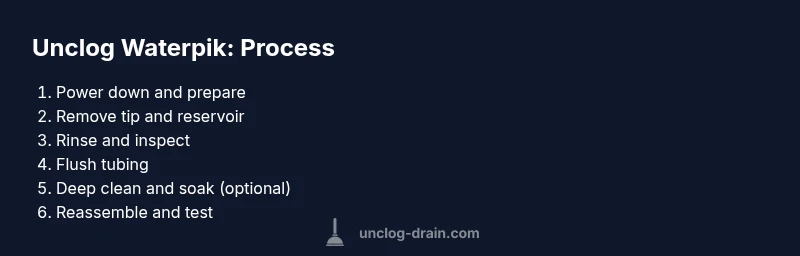
Power down and prepare
Unplug the Waterpik from its power source and lay out all tools. Gather the reservoir, tips, and a soft brush. Read your model’s manual for any model-specific cautions before disassembly. This preparation reduces the risk of damage during cleaning and helps you stay organized.
Tip: Take a quick photo of how parts are assembled before you start to aid reassembly. - 2
Remove tip and reservoir
Detach the spray tip and carefully remove the reservoir. Place removable parts on a clean surface. Inspect for visible clogs at the nozzle and check the tip aperture for cracks. This step isolates the area most likely to cause a drop in performance.
Tip: Handle parts gently to avoid stressing plastic connectors. - 3
Rinse tip and inspect for damage
Rinse the tip under warm running water and visually inspect for cracks or micro-fractures. A damaged tip can harbor hidden clogs and reduce spray pressure even after cleaning. Replace any cracked parts with a manufacturer-approved tip.
Tip: Do not use cracked tips; they can worsen clogging and potentially cause injury. - 4
Flush tubing and nozzle
Reconnect the reservoir and run plain water through the unit at a low setting to flush the tubing. If your model supports backflushing, perform a gentle backflush to push debris toward the reservoir. Stop if you feel unusual resistance or hear grinding noises.
Tip: Start with the lowest pressure to avoid splashing or splattering. - 5
Deep clean reservoir and nozzle
Wash the reservoir with mild soap and warm water, then rinse thoroughly. If permitted by your model, soak removable parts in a mild vinegar solution (1:1 with water) for 5–10 minutes, followed by a comprehensive rinse to remove all residues.
Tip: Rinse until no vinegar smell remains; lingering residue can affect taste and safety. - 6
Reassemble and test
Reattach the reservoir and tip, then run a short test cycle with plain water. Check for leaks around seals and recheck spray pattern. If the issue persists, repeat the cleaning steps or consider replacing worn parts.
Tip: Test on the lowest setting first to confirm proper operation without creating a splash zone.
Common Questions
What is the first sign of a Waterpik clog?
The most common early indicators are reduced water pressure, uneven spray, or a squeaking sound from the pump. If you notice any of these, pause use and inspect the tip and reservoir for buildup.
Common signs are reduced pressure and uneven spray; inspect the tip and reservoir to find the buildup.
Can I use vinegar to clean Waterpik parts?
Vinegar can be effective for mineral deposits if your model allows it. Use a 1:1 water-vinegar solution for a brief soak, then rinse thoroughly to remove any residue. Always confirm with the manufacturer’s guidelines.
Vinegar can help with mineral deposits if your model allows it; rinse well afterward.
How often should I clean a Waterpik to prevent clogs?
A light rinse and inspection after 1–2 uses, with a deeper clean every 2–3 weeks for frequent users, helps prevent buildup. Adjust frequency based on mineral content in your water and usage.
Clean weekly by inspection and a deeper clean every few weeks if you use it often.
What if a clog persists after cleaning?
If cleaning doesn’t resolve the issue, check for damaged seals, cracked tubing, or a faulty pump. Replace worn parts with manufacturer-approved components or contact support for guidance.
If it still clogs after cleaning, check seals and tubing or contact support for help.
Is it safe to use hot water for flushing?
Use warm or room-temperature water for flushing. Hot water can warp plastic components or damage seals, leading to leaks and further issues.
Stick to warm water to avoid damage.
Watch Video
Key Points
- Disassemble safely and inspect all components.
- Clean reservoir, tip, and tubing to remove mineral buildup.
- Use gentle cleaning solutions and follow manufacturer guidance.
- Prevent clogs with a regular maintenance routine.