How to Unclog a Quip Water Flosser: Essential DIY Guide
Discover practical, safe steps to unclog a Quip water flosser, plus maintenance tips to prevent future clogs. Guidance from Unclog Drain for DIY homeowners aiming to restore pressure and extend device life.


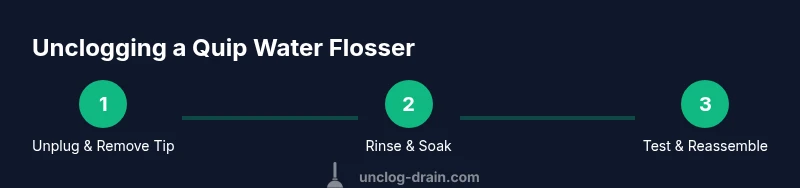
To unclog a Quip water flosser, start by unplugging and emptying the reservoir. Disassemble the nozzle and wash the tip, then soak removable parts in a 1:1 mixture of white vinegar and warm water for 10–15 minutes. Rinse thoroughly, flush with warm water, and inspect the hose and filter for mineral buildup. Reassemble and test.
Why a Quip Water Flosser Clogs and What This Guide Covers
If you own a Quip water flosser, you may wonder why your device started delivering weak bursts or stopped spraying altogether. Clogs are common, and many are preventable with simple cleaning routines. According to Unclog Drain, the most effective fixes begin with safe disassembly, careful brushing, and a thorough flush of the system. In this guide on how to unclog quip water flosser, we walk you through quick fixes, deep-cleaning methods, and ongoing maintenance to keep your device flowing smoothly. We'll cover potential mineral buildup, trapped debris, and warned signs that you’re dealing with a clog rather than a blocked tip. By following the steps below, you can restore pressure, extend the flosser’s life, and avoid unnecessary replacements.
Common Culprits Behind Quip Flosser Clogs
Most clogs occur from mineral buildup in hard water, leftover toothpaste residue, and trapped debris in the nozzle or hose. Over time, small particles can accumulate at the tip, inside the reservoir, or along the flow path, reducing pressure and causing intermittent spraying. Another frequent initiator is infrequent cleaning of the filter, which can stagnate water flow. The Quip device is designed for consumer convenience, but it benefits from routine maintenance to prevent these issues. Recognizing these culprits helps you tailor your cleaning routine and avoid recurring clogs.
According to Unclog Drain, prevention is often simpler than chasing a stubborn clog later, so incorporate monthly checks into your routine.
Safety First: Prep and Hygiene Before Cleaning
Before you begin any disassembly, unplug the unit and empty the reservoir. Remove the tip and detach any removable parts to prevent water contact with the motor. Wear protective gloves if you’re sensitive to cleaners, and work on a clean, dry surface. Never immerse the motor housing or electronic components in water. This prep minimizes electrical hazards and keeps your hands clean during the process.
Step-by-Step Quick Fixes You Can Try Today
Start with the simplest fixes first: (1) Unplug and remove the tip for visual inspection. (2) Rinse the tip and nozzle under warm running water to dislodge loose debris. (3) Soak removable parts in a 1:1 white vinegar–warm water solution for 10–15 minutes, then scrub gently with a soft brush. (4) Rinse thoroughly and flush the system with warm water to remove vinegar residue. (5) Reassemble and run a plain-water flush to test pressure. (6) If the issue persists, inspect the hose for kinks and check the filter for mineral buildup. (7) Clean the reservoir cap and any seals; replace worn gaskets if needed. (8) Dry all parts completely before reuse to prevent mold growth. (9) Refill with fresh water and test the device on a few short cycles to confirm steady spray.
Deep Cleaning for Stubborn Clogs (Remedies and Techniques)
For stubborn clogs, a deeper approach is warranted. Start by performing a more thorough soak: immerse all removable components in a stronger vinegar solution (1:1) for 20 minutes, then use a soft brush to remove mineral deposits from the nozzle, filter, and reservoir outlets. If mineral buildup is extensive, consider a second soak and a follow-up flush with distilled water. A pipe cleaner or柔软棉签 can help reach tiny passages, but avoid abrasive tools that could damage seals. After cleaning, perform multiple thorough rinses with warm water to eliminate any vinegar scent and residues before testing the unit with clean water.
Cleaning the Filter, Hose, and Nozzle Correctly
The filter can trap particles that hinder performance. Remove and rinse the filter under running water, using a soft brush to remove stubborn deposits. Inspect the hose for cracks or kinks that could hamper flow, and replace if damaged. Clean the nozzle tip by gently scrubbing with a soft brush. Once all parts are clean, reassemble and run several test cycles with water only before using any cleaning solution again. This practice preserves airflow and maintains consistent pressure.
Preventive Maintenance for Long-Term Clarity
To minimize future clogs, establish a regular cleaning routine: (a) rinse the reservoir after each use, (b) perform a light flush weekly with warm water, (c) use a vinegar soak monthly for removable parts, and (d) replace worn seals or gaskets as recommended by the manufacturer. Use distilled water if your tap water is highly mineralized. Keeping the nozzle and filter clear reduces residue buildup and preserves spray strength over time.
Troubleshooting: When Clogs Return or Persist
If clogs persist after a thorough cleaning, the issue may be deeper in the flow path or a failing component. Inspect for internal cracks in the hose, a degraded O-ring, or a clogged reservoir vent. Replacing worn parts often resolves recurring problems. If your device continues to clog despite routine maintenance, consult the manufacturer’s support or a DIY plumber for evaluation. Persistent clogs can indicate a need for part replacement rather than repeated cleaning.
Choosing Replacement Parts and Upgrades
When parts wear out, replacements are a practical fix. Look for compatible nozzles, filters, O-rings, and seals from authorized sources. Upgrading to a higher-quality filter or using distilled water can prevent mineral buildup. Avoid aftermarket parts that do not meet the device’s specifications, as improper components can worsen clogs or damage the machine.
When to Call a Professional or Consider Replacement
If cleaning and part replacements fail to restore performance, it may be time to replace the unit or seek professional service. A technician can diagnose concealed leaks, electrical issues, or damage inside the flow path that is not user-serviceable. Evaluating cost versus replacement value helps determine the best long-term choice for homeowners.
],
toolsMaterials":{"items":[{
Tools & Materials
- White vinegar(Use a 1:1 vinegar-to-warm-water solution for removable parts)
- Warm water(For rinsing and flushing between cleanings)
- Bowl or cup(To soak removable parts during cleaning)
- Soft-bristle brush (old toothbrush)(Gently scrub deposits from nozzle and filter)
- Microfiber cloth(Wipe surfaces and dry parts after cleaning)
- Paper towels(Clean up spills and dry reservoir area)
- Cotton swabs(Access tiny passages if needed)
- Replacement nozzle/O-ring kit(Keep spares handy for wear or damage)
Steps
Estimated time: 30-45 minutes
- 1
Unplug and Remove Tip
Power off the unit and detach the nozzle tip to inspect for visible blockages. This prevents accidental spraying and allows easy access to internal parts.
Tip: Always start with the simplest inspection to avoid unnecessary disassembly. - 2
Rinse the Tip and Nozzle
Hold the tip and nozzle under warm running water to flush out loose debris. If you see particles, use a soft brush to dislodge them.
Tip: Rinsing early reduces the amount of debris that can clog deeper passages. - 3
Prepare Vinegar Solution
Mix equal parts white vinegar and warm water in a bowl to create a gentle cleaning solution that dissolves mineral buildup.
Tip: Avoid concentrated cleaners that could damage seals. - 4
Soak Removable Parts
Place the removable parts in the solution for 10–15 minutes to loosen mineral deposits. Do not soak the motor housing.
Tip: Do not soak electronics; keep the motor dry at all times. - 5
Gently Scrub Deposits
Use the soft brush to scrub the inside of the nozzle, filter housing, and any accessible flow paths. Rinse and recheck for loosened buildup.
Tip: Be careful not to damage delicate seals while scrubbing. - 6
Rinse Thoroughly
Flush the entire system with warm water until no vinegar smell remains and water runs clear.
Tip: A thorough rinse prevents lingering taste or odor affecting future use. - 7
Reassemble and Test
Reconnect the nozzle, filter, and reservoir components. Run several short cycles with plain water to confirm steady spray and pressure.
Tip: If pressure is uneven, recheck seals and fittings for proper seating. - 8
Inspect Hose and Seals
Check the hose for kinks and inspect O-rings or seals for cracks. Replace worn parts as needed.
Tip: A damaged seal can cause leaks and poor pressure even after cleaning. - 9
Clean Reservoir and Cap
Wipe the reservoir cap and impact areas with a microfiber cloth to prevent future buildup from forming.
Tip: Keep the reservoir dry when not in use to prevent mold growth. - 10
Document Maintenance Schedule
Create a simple calendar reminder for monthly light cleans and quarterly deep cleans.
Tip: Consistency reduces clog risk over time.
Common Questions
Can I use bleach to clean a Quip water flosser?
No. Bleach can damage seals and remove coatings. Use vinegar solution for mineral buildup and never submerge the motor.
Bleach is not recommended; stick with vinegar for mineral buildup and avoid soaking the motor.
Is vinegar safe for the flosser’s internal parts?
Yes, as long as you only soak removable parts and avoid the motor housing. Rinse thoroughly to remove any vinegar residue.
Vinegar is safe for removable parts if you don’t soak the electronic components.
How often should I perform deep cleaning?
Aim for a deep clean every 3–4 months if you use the device weekly, or more often if you have hard water. Regular light rinses help between deep cleans.
Do a deep clean every few months, with light rinses in between.
Why does my Quip water flosser lose pressure after cleaning?
This can indicate a damaged seal, a kinked hose, or mineral buildup in hard-to-reach passages. Reinspect seals and replace worn parts.
Pressure loss usually means a seal or hose issue or stubborn mineral buildup.
Can mineral buildup affect taste or odor?
Yes, mineral buildup can cause off-tastes or odors in water flow. Regular cleaning helps prevent this.
Mineral buildup can cause tastes or odors if not cleaned regularly.
Should I replace the nozzle after every cleaning?
Not every time, but inspect for wear and replace if you notice cracks, reduced spray, or damaged seals.
Only replace when you see wear or damage; otherwise, cleaning is usually enough.
Watch Video
Key Points
- Follow a safe, stepwise approach to unclogging a Quip water flosser
- Regular maintenance reduces mineral buildup and extends device life
- Disassemble only removable parts; avoid soaking the motor or electronics