How to Unclog Vape Pen: Step-by-Step Guide
Learn a safe, step-by-step method to unclog vape pens with practical disassembly, cleaning, and reassembly techniques, plus maintenance tips to prevent future clogs.


Goal: learn how to unclog vape pen safely with a practical, step-by-step approach. This guide covers disassembly, cleaning with isopropyl alcohol, air-drying, and careful reassembly, plus safety checks and when to replace parts. Gather isopropyl alcohol, soft brushes, cotton swabs, and a small container to hold parts. This quick-start preview sets expectations and helps you decide whether a DIY clean is enough or if you should contact a professional.
Introduction to Vape Pen Clogs and Why They Happen
If you use a vape pen regularly, you’ll eventually encounter a clog that reduces airflow, flavor, and vapor production. The goal of this guide is to show you how to unclog vape pen safely and effectively, without damaging delicate components. After years of home maintenance research, the Unclog Drain team has found that the same care you use on household drains translates well to small, liquid-loaded devices: step-by-step cleaning, proper drying, and mindful reassembly. If you’re trying to unclog vape pen, start with safe cleaning steps rather than forcing airflow. When you’re ready to dive in, you’ll see how small, careful actions can prevent bigger problems down the line. The aim is to empower DIY enthusiasts to diagnose simple clogs, perform safe cleaning, and decide when professional service is necessary.
According to Unclog Drain, practical home maintenance principles translate well to vape devices: keep moisture away from sensitive electronics, work in a clean space, and document what you did so you can repeat successful steps.
Tools & Materials
- Isopropyl alcohol (at least 70%)(Dampen swabs or cotton balls to dissolve gunk without soaking electronics)
- Cotton swabs(Used for targeted cleaning in mouthpiece and airflow paths)
- Soft brushes or pipe cleaners(Reach tight crevices in the air path without scratching surfaces)
- Microfiber cloth(Dry and wipe components without leaving fibers behind)
- Small container or tray(Hold parts during disassembly to avoid losing tiny pieces)
- Spare coil or wick(Useful if the coil shows wear after cleaning)
Steps
Estimated time: 30-45 minutes
- 1
Power off and disassemble
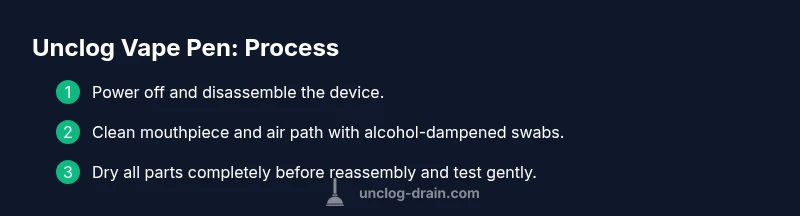
Power off the device and remove the battery or disconnect from power if applicable. Remove the cartridge or tank to gain access to the mouthpiece and airflow paths. Keep track of how components fit together by taking a quick photo before disassembly.
Tip: Label or photograph each connection to simplify reassembly. - 2
Inspect for visible clogs
Look for resin buildup in the mouthpiece, clogged air channels, and gummed-up coils or wicks. Note which areas seem most restricted so you can target cleaning efficiently.
Tip: Start with the area that blocks air the most. - 3
Clean with alcohol-dampened tools
Dampen a cotton swab with isopropyl alcohol and gently wipe the mouthpiece and accessible air channels. Use a soft brush or pipe cleaner to loosen stubborn resin in narrow passages.
Tip: Do not oversaturate any electronic components. - 4
Rinse and dry selectively
Wipe all cleaned surfaces with a dry microfiber cloth and allow parts to air-dry completely in a clean, warm area. Do not submerge the battery or electronics in liquid; allow moisture to evaporate fully before reassembly.
Tip: You can speed drying with a gentle fan, but avoid heat that could warp plastics. - 5
Reassemble and test
Reassemble in the reverse order of disassembly. Start with basic airflow checks and take a few short, careful puffs to confirm airflow and flavor before normal use.
Tip: If airflow remains restricted, re-check the air path for missed debris. - 6
Evaluate coil/wick condition
If cleaning doesn’t restore performance, inspect the coil or wick for wear. A degraded coil or saturated wick often requires replacement to restore flavor and vapor.
Tip: Keep spare coils or wicks on hand for quick swaps. - 7
Document results for future prevention
Note which cleaning method worked best and what you observed after reassembly. Use this record to inform your maintenance routine and prevent future clogs.
Tip: Consistency is key to long-term performance.
Common Questions
What causes vape pen clogs?
Clogs are usually caused by resin buildup, blocked airflow, saturated wicks, or minor leaks that invite residue into air paths. Regular cleaning helps prevent these issues from becoming persistent problems.
Clogs come from buildup and blocked airways—clean regularly to prevent it.
Can I use water to clean a vape pen?
Water can corrode electronic parts and damage seals. Stick to isopropyl alcohol for cleaning and avoid immersing any electronic components.
No—water can harm the electronics; use alcohol instead.
Is it safe to soak parts in alcohol overnight?
Short soaks (a few minutes) are usually enough for metal parts. Prolonged soaking can degrade seals and remove lubricants, so limit exposure and dry thoroughly afterward.
Only soak for a few minutes, then dry completely.
What if the clog remains after cleaning?
If cleaning doesn’t restore airflow, the coil or wick may be worn out. Consider replacing the coil or wick, and verify that the cartridge is seated properly.
If it still blocks airflow, you may need a new coil or wick.
How long should parts dry after cleaning?
Allow all parts to air-dry completely in a clean, dust-free area for at least several hours if needed. Rushing drying can trap moisture and cause shorts.
Let everything dry for several hours to be safe.
Should I replace the coil after cleaning even if it looks okay?
If the coil shows signs of wear, dark discoloration, or a burnt taste after cleaning, replacement is recommended for optimal performance.
If it tastes burnt after cleaning, replace the coil.
Watch Video
Key Points
- Identify the clog cause and address air pathways first
- Avoid moisture near electronics; use isopropyl alcohol and dry thoroughly
- Reassemble carefully and test airflow before regular use
- Keep spare coils/wicks on hand for quick fixes