How to unclog a disposable vape: a practical guide
Learn safe, step-by-step methods to unclog a disposable vape without disassembly. Restore airflow, prevent future clogs, and know when to replace for reliable use and smooth performance.


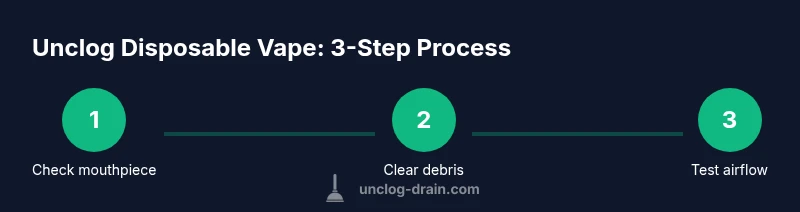
You can usually unclog a disposable vape by external methods only, such as gentle blowing, light tapping, and careful cleaning of the mouthpiece without opening the device. Start with the simplest method and avoid disassembly to prevent battery damage. This approach works for most common clog scenarios and requires only a few minutes.
Understanding the goal of unclogging a disposable vape
When people talk about "unclogging a disposable vape", they usually mean restoring airflow that has become restricted by liquid residue, condensation, or coil gunk. Disposable devices are built for convenience and are not meant to be taken apart. Prying open the shell can damage the battery, cause leaks, or create safety hazards. The goal of this guide is to present practical, non-destructive methods to unclog disposable vape devices so you can regain a comfortable draw with minimal risk. According to Unclog Drain, practical, non-invasive techniques solve most minor clogs in consumer devices without specialized tools. Throughout this guide, we emphasize safety, avoid damaging the device, and outline when replacement is the smarter option.
Keep in mind that, for most readers, the keyword "unclog disposable vape" signals a focus on airflow restoration rather than mechanical teardown. This approach aligns with our everyday maintenance philosophy: preserve what works, replace what doesn’t, and use simple, repeatable steps.
By following these steps, you’ll gain confidence to handle issues on your own and reduce trip-to-the-store visits for minor clogs. This is particularly valuable when you’re traveling or around the house and want a quick fix without tools. As you read, remember that <em>external</em> methods are the safest first line of defense.
note_null_for_markdown_if_no_content_placeholder_avoidance_since_text_continues_in_next_blocks_1_long_placeholder_missing_
Tools & Materials
- Soft microfiber cloth(for wiping the exterior and mouthpiece openings)
- Cotton swab or fine brush(to reach the mouthpiece tunnel; use dry only)
- Plastic toothpick (optional)(only if needed to dislodge stubborn debris; avoid metal tools)
Steps
Estimated time: 5-15 minutes
- 1
Identify device type and safety warnings
Confirm this is a true disposable vape and read the manufacturer’s safety cautions. Do not attempt to open the battery compartment or pry the shell; doing so can cause leaks or a hazardous situation. This step sets the boundary between safe external fixes and risky disassembly.
Tip: Never attempt to disassemble a disposable vape; it’s designed for single use and safety hazards can arise. - 2
Inspect mouthpiece and air intake
Gently inspect the mouthpiece for visible gunk, condensation, or dried liquid that blocks the air pathway. Use a light to check the inner channel from the mouth end to the base where air flows into the coil. If you see residue, plan to clean the exterior and mouthpiece tip before testing airflow again.
Tip: Look for dark, sticky residue that indicates heavy buildup; this is the most common clog source. - 3
Try gentle blow-through with mouthpiece
With the device upright, place a clean finger or tissue over the mouthpiece and blow gently to push air and any loose blockage out of the channel. Do not press hard or blow liquids toward your face. This method often clears minor obstructions without opening the device.
Tip: Use a light touch; aggressive blowing can spread liquid and create leaks. - 4
Tap and tilt to loosen debris
Hold the vape upright and lightly tap the body to dislodge settled residue. Tilt the device slightly to encourage gravity-assisted clearing of the air channel. These physical cues help loosen a stubborn blockage without tools.
Tip: Gentle taps beat forceful shaking that can damage seals. - 5
Clean with a dry cotton swab
Gently insert a dry cotton swab into the mouthpiece tunnel to wipe away surface deposits. Avoid liquids, which can seep into the electronics and create additional problems. Dry cleaning is safer for a disposable device than liquid rinses.
Tip: Keep the swab dry to avoid introducing moisture into airflow paths. - 6
Apply a brief warmth to loosen residue
Place the device near a gentle heat source or in a warm room for 1–2 minutes. Do not apply direct heat or use a microwave or stove. Warmth can soften sticky residues and help airways reopen.
Tip: Monitor temperature; overheating can damage the device. - 7
Test airflow and draw length
Remove any cover, take a short, gentle puff, and assess whether airflow has improved. If the draw remains restricted after these steps, proceed to replacement guidance; forcing airflow is not advised for a clogged disposable vape.
Tip: If airflow returns partially, repeat the cleaning steps once more before deciding to replace. - 8
Decide on replacement if unresolved
If airflow is still blocked after safe, external techniques, replacing the device is the safer option. Dispose of the clogged vape following local guidelines and ensure you have a fresh unit on hand for continued use.
Tip: Replacement is often the simplest, safest, and most cost-effective choice for non-serviceable devices.
Common Questions
What causes a disposable vape to clog?
Clogs are typically caused by residue buildup in the mouthpiece and air channels, condensation, and coil debris. Long storage or heavy use can accelerate clog formation.
Clogs usually come from residue and condensation building up in the airpath and coil area.
Can I unclog a disposable vape without disassembling it?
Yes. External methods like gentle blowing, tapping, and dry cleaning of the mouthpiece are commonly effective for minor clogs.
Yes—start with simple external methods first.
Is blowing into the mouthpiece safe?
Blow gently, keep the device away from your face, and avoid forcing air through if you see resistance or leakage.
Blow gently and cautiously, don’t press hard.
What are the risks of attempting to unclog a vape?
There’s a risk of coil or battery damage, liquid leaks, or creating a short. Stop if the device feels warm or exhibits abnormal behavior.
There can be risks like damage or leaks; stop if it gets warm.
When should I replace instead of trying to unclog?
If airflow remains blocked after safe external fixes, replacing the unit is usually the safer and more reliable option.
If it stays clogged after safe attempts, replace it.
Watch Video
Key Points
- Identify when external fixes are appropriate
- Avoid disassembly to protect battery and safety
- Start with gentle cleaning and airflow tests
- Replace if airflow does not improve after safe methods
- Prevent clogs with mindful usage and storage