How to Unclog a Big Drain: A Complete Step-by-Step Guide
Learn how to unclog a big drain safely and effectively using plunger, snake, and mechanical methods. This guide from Unclog Drain covers assessing blockages, tool selection, step-by-step actions, safety, and prevention for future clogs.


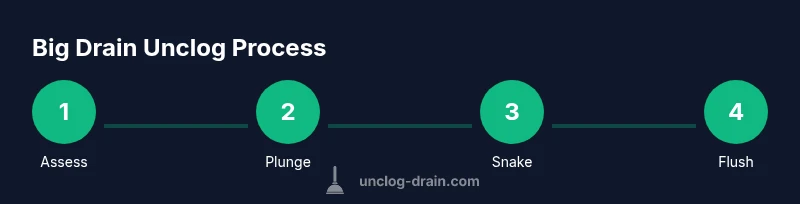
You can unclog a big drain by using a staged mechanical approach: shut off water, plunge to break the blockage, feed a plumber’s snake or large auger, and flush the line with hot water. For stubborn clogs, consider hydro-jetting or professional help. Avoid harsh chemical cleaners on main lines.
Understanding what qualifies as a 'big drain' and why clogs happen
A "big drain" typically means a main sewer line or a large branch line that serves several fixtures. These lines are wider and run longer, so debris tends to accumulate in ways that resist quick fixes. Common culprits include grease slicks, hair bundles, cooking residues, soap scum, and flushable wipes that gather on bends and couplings. When a clog is in the main line, you’ll often notice multiple fixtures draining slowly or backing up simultaneously, sometimes with gurgling in the pipes. Recognizing the scale of the clog helps you choose the right tool and technique. The Unclog Drain team emphasizes that big drains require deliberate mechanical methods rather than casual plunging or single-use cleaners. If backups appear in more than one fixture after you attempt to drain, take it as a sign to switch to main-line strategies and proceed with caution.
Safety and planning: why preparation matters
Before you touch any plumbing, prioritize safety and planning. Wear rubber gloves and eye protection, and have towels or a bucket handy to catch spills. If possible, locate and shut off your home’s main water supply to prevent further flooding, or at least isolate the affected area to minimize risk. Ventilate the area if you’ll work in basements or crawl spaces, and inspect for electrical hazards. Clear the workspace of valuables and keep children or pets away. A well-lighted, organized setup reduces mistakes and speeds up the process. As you plan, consider the tools you have on hand and which method best fits your pipe layout. The goal is to create a controlled environment where you can apply physical methods without introducing extra water or debris to other parts of the house.
Mechanical approaches: when to use plunger, snake, or auger
Mechanical methods rely on physical force to disturb and dislodge a clog. A quality plunger can be surprisingly effective for large drains when used with a tight seal and consistent pressure. If a plunger fails, a plumber’s snake (manual drain snake) or a larger auger can reach deeper into the line. For main-line clogs, start with a larger-diameter snake and maintain steady, measured rotations to avoid kinking the line. If you can access a clean-out, opening it can provide direct entry to the blockage and reduce guesswork. In many cases, combining plunging with snake work yields the best results, as the plunger breaks the outer layers while the snake dislodges the core obstruction. Always withdraw slowly to avoid pushing debris farther into the pipe.
Step-by-step plan for using a plunger on a big drain
A flange-style plunger creates a better seal for large drains. Submerge the cup so it’s fully covered with water, position it to seal around the drain opening, and push and pull with strong, even pressure. Maintain the seal for multiple cycles, pausing to check drainage after each set. If water begins to move but then stalls again, repeat the cycles while gradually increasing pressure. Do not use a kitchen-styled cup plunger on a large drain that requires a flange; the improved seal matters for effectiveness. This method can clear the proximal portion of the clog and set you up for deeper work with a snake if needed.
How to operate a plumber’s snake for big drains
Feed the snake into the drain until you encounter resistance, then rotate the handle to break up the blockage. Use slow, steady turns and pull back occasionally to scoop debris from the line. For main lines or longer runs, extend the snake in stages, cleaning the auger head as you pull it out and removing collected debris. If you feel a breakthrough, continue feeding a bit further, then flush the line with hot water to push loosened material through the system. When you retrieve the snake, wipe the head clean and inspect for obstructions that might require another pass.
When to call in more powerful options or a pro
If basic plunging and a manual snake fail, or if you suspect a severe main-line blockage, hydro-jetting or renting a heavy-duty auger may be required. Hydro-jetting uses high-pressure water to scour the pipe walls, but it should be performed by trained technicians who can avoid pipe damage and ensure safe disposal of waste. In many cases, persistent clogs indicate a deeper problem like collapsed piping, tree roots, or a misaligned sewer line that requires professional diagnosis. The Unclog Drain team recommends evaluating the risk of a pro’s intervention when multiple fixtures back up simultaneously, when you cannot access a clean-out, or when the clog recurs after several attempts.
Chemical cleaners vs enzymatic options: risks and best practices
Chemical drain cleaners, especially caustic or acidic formulas, can cause pipe damage and dangerous fumes, particularly on older or plastic piping. Enzymatic cleaners are gentler and can help slow-rebuilds when used regularly, but they are not a reliable solution for a stubborn main-line obstruction. For big drains, mechanical methods are usually superior. If you opt for a cleaner, use it only after you’ve attempted mechanical methods and follow manufacturer directions closely. Never mix cleaners, and ventilate the area well to minimize exposure to fumes.
Clean-up and re-testing after an unclog
After you remove the obstruction, flush the system with hot water to clear remaining debris and confirm normal drainage. Reassemble any removed components, reopen the main supply (or area valves) slowly, and observe whether the water drains evenly across fixtures. Running a small amount of water in several sinks or baths can help confirm the blockage is cleared and there are no leaks. Keep towels handy for any residual spills and sanitize tools and surfaces after work. Regular testing over the next few days helps ensure the clog doesn’t recur.
Preventive measures to minimize future big-drain clogs
Preventive maintenance reduces the chance of a future big-drain clog. Use a hair catcher in bathroom drains, pour hot water down kitchen and bathroom sinks weekly to dissolve grease, avoid pouring fats or oils down the drain, and schedule periodic professional inspections if your home has older piping. Monitor for early signs like slow draining in multiple fixtures, gurgling in the pipes, or wet spots in the basement. By combining mechanical techniques with routine maintenance, you can keep big drains flowing smoothly and reduce emergency calls.
Tools & Materials
- Rubber gloves(Waterproof, chemical-resistant)
- Safety goggles(Impact-resistant; protects eyes from splash)
- Bucket(Catch wastewater and debris)
- Towels or rags(Contain spills and protect floors)
- Plunger (flange-style for large drains)(Better seal on big openings)
- Plumber’s snake (manual drain snake)(16–25 ft or longer; start near trap)
- Drain snake (larger auger, 1/2 inch)(Reach deeper main-line blockages)
- Clean-out plug wrench (if accessible)(For direct main-line access only if present)
- Flashlight(See into dark spaces and traps)
- Wet/dry vacuum (optional)(Can help remove standing water)
- Pipe wrench (optional)(Useful if you disconnect traps or access points)
- Enzymatic drain cleaner (optional)(Use for maintenance after clearing)
Steps
Estimated time: 90-150 minutes
- 1
Shut off water and prep workspace
Locate the main water shut-off and turn it off to prevent overflow. Put on gloves and eye protection, spread towels, and place a bucket to catch spills. Clear the area and ensure you have adequate lighting before starting.
Tip: If you can't locate the main shut-off, shut off the feeding valve for the affected area and proceed carefully. - 2
Access the blockage area
If there is a clean-out plug, remove it with the appropriate wrench and prepare to observe water flow. If you must access a trap, carefully detach it and clear visible debris by hand or with a long brush. Keep debris contained and ready for disposal.
Tip: Be mindful of sewer gases; keep the area ventilated and avoid inhaling fumes. - 3
Start with plunging
Seal the drain opening with a flange plunger and apply firm, consistent pressure for 20–60 seconds. Pause to inspect whether water clears. Repeat several cycles, ensuring the seal remains intact, before moving to the snake.
Tip: A good seal is more important than raw force; poor seal wastes effort and can splash dirty water. - 4
Feed the snake for deeper reach
Insert the snake into the drain and extend it until you feel resistance. Rotate the handle gradually to break the clog, then pull back slightly to remove loosened debris. Reinsert and repeat until the line drains freely.
Tip: Keep the snake clean as you pull it out to avoid reintroducing debris. - 5
Consider a larger auger or hydro-jet (if needed)
For stubborn or long main-line blockages, switching to a larger auger or hiring a pro for hydro-jetting may be required. Hydro-jetting uses high-pressure water to scour pipe walls; it should be performed by trained personnel to avoid pipe damage.
Tip: Avoid attempting high-pressure jets without proper training and safeguards. - 6
Flush and test the line
Run hot water through the system to push out loosened material. Check multiple fixtures to ensure drainage is uniform. If drainage remains slow, repeat the steps or consider alternatives before concluding a failure.
Tip: Test with both cold and hot water to catch temperature-related piping behavior. - 7
Clean up and restore
Reassemble any traps or access points, restore the water supply slowly, and monitor for leaks. Sanitize tools, wipe surfaces, and store equipment properly for future use.
Tip: Document what worked for future reference and routine maintenance.
Common Questions
How can I tell if the clog is in the main drain versus a branch line?
If multiple fixtures drain slowly or back up, the problem is likely in the main line. A single slow drain suggests a local trap or pipe. Begin with decisive mechanical methods and avoid chemical cleaners as a first step for big drains.
If several fixtures back up at once, the main line is suspect. Start with mechanical methods and avoid chemicals initially.
Are chemical drain cleaners safe for big-drain clogs?
Caustic cleaners can damage pipes and create hazardous fumes, especially in older homes. Enzymatic cleaners are gentler but not reliably effective for stubborn main-line clogs. Mechanically removing the obstruction is usually the safer, more effective approach.
Chemicals can damage pipes and fumes can be dangerous. Mechanical methods are preferred for big drains.
What tools work best for a big drain clog?
A flange plunger, a manual drain snake, and a larger-diameter auger are the core tools. Access to a clean-out can make the job easier. For persistent issues, consider hydro-jetting performed by a professional.
Use a flange plunger, a drain snake, and a larger auger; hydro-jetting if needed and safe.
When should I call a professional for a big drain clog?
Call a professional if backups persist after mechanical methods, you cannot access a clean-out, or you suspect pipe damage, root intrusion, or a collapsed line. A pro can diagnose the exact cause and perform hydro-jetting or other advanced techniques safely.
If the clog persists after your best efforts or you suspect pipe damage, it's time to call a pro.
How long does a typical unclogging process take?
A straightforward mechanical unclog can take 60–90 minutes. More complex main-line blockages or the use of larger equipment may extend the process to 2–3 hours depending on access and pipe length.
Most unclogging takes about an hour or two, depending on the situation.
Can I prevent future big-drain clogs?
Yes. Use strainers, avoid pouring grease down the drain, run hot water periodically, and schedule periodic professional checks if you notice recurring backups. Regular maintenance reduces the risk of large-scale clogs.
Yes—install strainers, avoid grease, and flush hot water regularly to prevent clogs.
Watch Video
Key Points
- Assess whether the clog is main-line or local.
- Prioritize mechanical methods over harsh chemicals.
- Safety first: PPE, proper shut-offs, and ventilation.
- Use plungers, snakes, and augers in a staged approach.
- Call a professional for persistent or hazardous clogs.