Can You Unclog a Heater Core? A Step-by-Step DIY Guide
Learn safe, practical steps to diagnose and flush a clogged heater core, understand risks, and decide when DIY flushing is appropriate versus professional service.


Yes. You can attempt a cautious backflush to clear minor heater-core clogs, but success depends on blockage severity and coolant condition. Use proper safety gear, relieve pressure, and backflush through accessible hoses; stop if overheating occurs or debris persists; consider professional service for stubborn clogs.
What is a heater core and why clogs happen
The heater core is a small radiator behind your dash that transfers heat from the engine cooling system into the passenger compartment. When debris, rust, or coolant breakdown occurs, fins and channels can become restricted, reducing heat flow and potentially triggering higher pressure in the hoses. If you're wondering can you unclog a heater core, the answer is: it depends on blockage severity and accessibility. Light, mineral-based build-up can sometimes be cleared with a cautious backflush and proper coolant maintenance, but severe blockages or collapsed tubes often require professional service. Always plan for safety first: never open cooling-system components while the engine is hot, and wear gloves and eye protection when working around coolant.
Symptoms of a clogged heater core
Common signs include weak or no heat from the HVAC system, a sweet or antifreeze odor inside the cabin, window fogging that won't clear, higher coolant temperature readings, and in some cases overheating. If you notice several of these symptoms concurrently, it may indicate heater core restriction rather than a simple blower or blend door issue. Keep in mind that leaky cores can cause coolant loss and engine damage, so address symptoms promptly. Before you attempt any flush, verify that the issue is heater core related rather than a thermostat or radiator problem; misdiagnosis leads to wasted effort and additional risk.
Safety first: risks and prerequisites
Working with a pressurized cooling system carries burn and chemical exposure risks. Never open radiator caps when the engine is hot, and use a proper coolant catch basin to avoid spills. If you’re unfamiliar with vehicle cooling circuits, review your vehicle’s service manual or consult a professional. Wear PPE: chemical-resistant gloves, eye protection, and long sleeves. Have a fire extinguisher nearby and work in a well-ventilated area to minimize inhalation of fumes. This guide focuses on safe, practical steps; if you encounter coolant contamination, corrosion, or a severely blocked core, stop and seek professional service.
Backflushing: approaches, pros, and cons
Backflushing can help remove mineral scale and loose debris from an accessible heater core, but results vary by vehicle, core design, and clog type. External hose backflushing through the heater hoses is often the simplest first attempt, but it may not reach all channels if the core is partially blocked. Some technicians use a dedicated flush kit and circulating pump to push clean water through the core, sometimes alternating directions. Chemical cleaners exist but should be used with caution; improper use can damage gaskets, hoses, or the core itself. Weigh the risk: a successful flush may restore heat, but a failed flush can trap debris, worsen clogging, or require core replacement.
How to approach a flush safely: what to check before you start
Before you connect hoses or introduce any cleaner, confirm you have access to heater-core hoses and that the engine is cool. Inspect hoses for cracks or bulges that could fail under pressure. Verify coolant type and concentration to avoid chemical reactions with sealants or plastics. Decide whether you will backflush with clean water only or use a manufacturer-approved flush product following the kit’s instructions. Plan a controlled workflow to minimize spill risk and accidental leaks.
Refill, bleed, and test the cooling system
After flushing, you must refill the cooling system with the correct coolant mixture and bleed air from the heater core and radiator. Start the engine with the radiator cap off and the heater set to full heat; watch the gauge and listen for boiling or unusual noises. Recheck coolant level after the engine cools, and top off as needed. Dispose of used coolant properly; it is toxic to animals and the environment. Thorough testing should include a drive cycle to confirm steady temperature and adequate heating performance.
When removal or professional service is necessary
If the heater core shows signs of a leak, corrosion, bulging hoses, or if the blockage remains after multiple flush attempts, professional service is advised. Many modern vehicles require dash disassembly or specialized equipment to remove and test the heater core safely. DIY attempts beyond basic backflushing can cause further damage or safety hazards. In those cases, a certified technician can perform a core replacement or a more advanced flush with calibrated equipment.
Preventive maintenance to reduce future clogs
Regular coolant changes using the manufacturer-specified type help prevent rust and scale buildup. Use distilled water if your coolant mix requires dilution, and avoid mixing incompatible products. Periodically inspect hoses for wear and replace old hoses before they fail. Keeping the cooling system clean reduces the likelihood of debris migrating into the heater core. A proactive maintenance plan minimizes future clog risks and keeps your vehicle heating system performing reliably.
Quick, practical DIY vs professional decision guide
For mild heat issues with clear signs of coolant flow but not overheating, a cautious backflush can be worth trying, following safety steps and kit instructions. If you notice persistent heat loss, unusual temps, or coolant leaks, stop and consult a professional. If you lack the necessary tools or if the dashboard access is restricted, professional help is the safest route to avoid costly mistakes.
Tools & Materials
- Safety glasses or goggles(Protect eyes from splash; chemical exposure risk.)
- Chemical-resistant gloves(Keep skin away from hot coolant.)
- Coolant and distilled water mix(Follow vehicle spec for mix ratio.)
- Radiator flush kit or pump(For controlled circulation through the core.)
- Garden hose with shut-off valve(Flush water through lines without creating a jet.)
- Bucket or drain pan(Catch coolant to prevent spills.)
- Screwdrivers and pliers(Access hoses and clamps; avoid metal damage.)
- Funnel(Use when refilling coolant to minimize spills.)
- Shop towels or rags(Clean up spills and wipe surfaces.)
- Vehicle service manual or guide(Follow model-specific procedures.)
Steps
Estimated time: 60-120 minutes
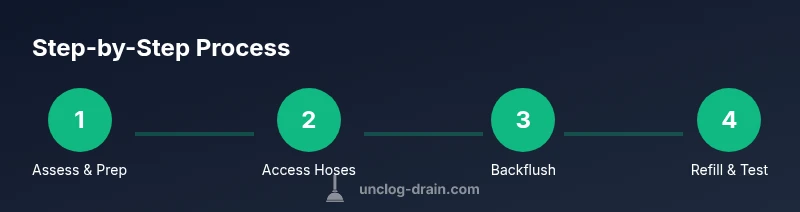
- 1
Prepare and safety check
Park on level ground, ensure engine is cool, and gather all tools. Relieve cap pressure only if the system is cold. This protects you from scalding and spills.
Tip: Label hoses before disconnect to simplify reassembly. - 2
Access heater hoses
Locate the heater hoses at the firewall and inspect clamps. Loosen clamps carefully and plan for coolant drainage into the bucket.
Tip: Do not force hoses off; check for corrosion or clamps that resist removal. - 3
Attach backflushing setup
Attach the flush kit or pump to the heater hose inlet to circulate water through the core. Use a reverse-flow approach for better debris dislodging.
Tip: Keep pressure gentle to avoid rupturing hoses or core seals. - 4
Backflush with water
Run water through the core in one direction, then reverse flow if possible. Observe flow quality and debris; stop if significant resistance or leaks occur.
Tip: Never mix cleaning agents with hot coolant; flush with clean water only. - 5
Drain and refill
Drain the system completely, then refill with the correct coolant mix. Bleed air from the system by running the engine with the heater on and the cap off.
Tip: Monitor for air pockets; overheating can occur if not bled properly. - 6
Test operation and inspect
Run the engine to operating temperature, check for leaks, ensure heater produces heat, and top off coolant if needed.
Tip: Take a short test drive to verify stable temps and heat output.
Common Questions
Can you unclog a heater core without removing it from the vehicle?
In some cases, external backflushing through accessible heater hoses can clear mild blockages without removing the core. If clogs persist or leaks appear, removal or professional service is recommended.
Sometimes you can clear mild blockages by backflushing through the hoses; if that fails or you notice leaks, plan for professional service.
Is backflushing safe for all heater core configurations?
No. Some cores are tightly packed or have brittle seals. Excessive pressure or improper cleaners can damage gaskets and pipes. Check the vehicle manual or consult a technician before trying aggressive methods.
No, not all heater cores tolerate backflushing; consult the manual or a pro if you’re unsure.
What are signs of a blocked heater core?
Weak heat output, unusual coolant odors inside the cabin, foggy windows, and occasional overheating can indicate a heater-core blockage. Verify other HVAC parts before concluding.
If you have weak heat and foggy windows, a heater-core blockage could be the cause—check other parts too.
What tools are essential for backflushing?
At minimum, you’ll need a flush kit or pump, a garden hose, a bucket, protective gear, and basic hand tools to access hoses and clamps.
You’ll need a flush kit, hose, bucket, and PPE to start backflushing safely.
How long does a heater-core flush take?
A typical DIY backflush, including setup and testing, can take about 60 to 120 minutes depending on accessibility and vehicle model.
Most flushes take about one to two hours, depending on how easy it is to access the hoses.
Should you use chemical flushing products?
Chemical cleaners are not always necessary and can damage seals or plastics if used improperly. Use only products compatible with your cooling system and follow manufacturer guidance.
Chemical cleaners aren’t always needed and can be risky; follow the manual if you choose to use them.
Watch Video
Key Points
- Inspect symptoms to differentiate heater core issues from other HVAC problems.
- Safety and correct coolant handling are essential for DIY flushing.
- Backflushing can solve mild blockages but may not fix severe clogs.
- Bleed the cooling system after refilling to avoid air pockets.
- Know when to escalate to a professional to avoid costly damage.