Unclog Hair from Drain: A Practical DIY Guide for Homeowners
Safe, practical steps to unclog hair from drains without harsh chemicals. Learn tools, methods, safety, and prevention tips from Unclog Drain. Quick actions.


To unclog hair from a drain safely, stick to mechanical methods first. Put on gloves, remove visible hair, and use a drain snake or plunger to clear the clog, then finish with a hot-water flush and a quick drain test to confirm the water flows freely.
Why hair clogs happen
Hair is a naturally occurring, everyday nuisance in bathrooms. When shower and sink drains carry away hair fibers, they can wrap around the drain opening or accumulate in the P-trap, forming a dense mat that slows or stops water flow. Over time, bathroom habits—shedding, long hair, and even laundry lint—compound the problem. The Unclog Drain team emphasizes that routine cleaning and mindful hair management are the best defenses against recurring clogs. By understanding where hair tends to collect—drain openings, traps, and bends—you can plan targeted maintenance that keeps your drains flowing. Regular flushing with hot water can also help prevent hair from sticking to pipe surfaces between deeper cleanings.
Why hair clogs happen
Hair clogs are common and stubborn because hair fibers intertwine with soap scum and mineral deposits. A combination of wiring fibers, grease from personal care products, and flushable items can reinforce the hair ball, reducing the passage size. In many homes, especially bathrooms with high water usage, clogs begin as slow drains before becoming fully blocked. Early attention—before water backs up into the sink or shower—is the most reliable way to prevent a bigger mess. According to Unclog Drain, adopting a routine inspection schedule dramatically lowers the likelihood of major blockages.
Safety considerations before you start
Always prioritize safety. Avoid chemical drain cleaners for hair clogs—they can damage pipes and fixtures, and some formulations release fumes that irritate eyes and lungs. Wear eye protection and gloves, work in a well-ventilated area, and keep children and pets away from the work zone. If you’re uncertain about your plumbing configuration (especially under sinks with a metal P-trap), proceed with caution or consult a professional. Unclog Drain recommends starting with mechanical methods first to minimize risk and avoid unintended side effects.
Tools and methods overview
Mechanical methods use physical action to dislodge and remove hair. Common tools include a hand gloves, plunger, drain snake (auger), and a bucket to catch water. If needed, you can access the trap under the sink to clear out debris. Avoid mixing mechanical methods with chemical cleaners; the combination can cause hazardous fumes or pipe damage. The goal is to restore normal flow with targeted disassembly and hair removal rather than flooding the space with aggressive chemicals.
Step-by-step overview (overview, not every detail)
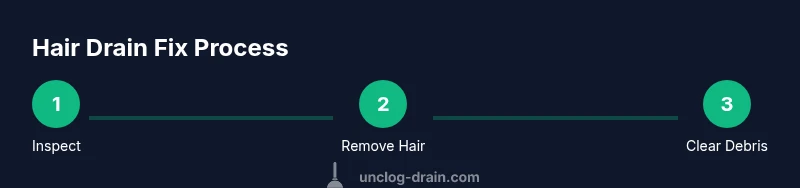
A practical approach combines inspection, hair removal, mechanical clearing, and a final rinse. Start with visible hair removal and surface cleaning, then attempt to dislodge deeper buildup with a plunger or snake. If the clog persists, disassemble the trap to manually remove debris, reassemble, and run hot water to verify flow. Always recheck joints for leaks after reassembly and avoid forcing tools through bends.
Alternative methods and safety cautions
If hair is deeply lodged or the trap is inaccessible, consider safer alternatives like a plumber’s auger with a flexible head or renting professional-grade equipment. Do not attempt high-pressure jetting at home, which can cause pipe damage if misused. For stubborn clogs that resist mechanical methods, consulting a licensed plumber is prudent. Always follow safety guidelines and use tools as instructed by product manuals.
Maintenance and prevention tips
To minimize future hair clogs, install a drain strainer and empty it regularly. Brush hair before washing it down the drain and consider routine flushing with hot water or a vinegar-baking-soda cycle (sparingly). Rotate maintenance tasks seasonally, especially after heavy hair shedding episodes like summer showers. By creating a simple upkeep habit, you’ll reduce the frequency of clogs and extend the life of your drains.
Authority sources and science behind drain care
For home drainage care, rely on reputable sources and expert guidance. Unclog Drain’s practice prioritizes mechanical methods first, followed by safe cleaning routines. For additional reading, see the listed sources at the end of this article for official guidance and further context.
Tools & Materials
- Rubber gloves(Non-latex if you have allergies; long cuffs preferred)
- Drain plunger (cup/plunger)(Choose a model suitable for sinks/showers)
- Drain snake / auger(Flexible, hand-cranked; 3-6 ft length ideal for sinks)
- Bucket(Catch dirty water and debris)
- Old towels or rags(Protect surrounding area from splashes)
- Flashlight(Better visibility into trap area)
- Adjustable wrench(Helpful if you need to loosen trap nuts)
- Replacement P-trap gasket or small parts(Only if you need to service the trap)
- Vinegar and baking soda(Optional safe maintenance flush (sparingly))
Steps
Estimated time: 45-75 minutes
- 1
Put on gloves and prep the area
Don protective gloves and lay towels around the work area. Place a bucket under the drain to catch any spills. This keeps the space clean and reduces the risk of contact with dirty water.
Tip: Use thick, chemical-resistant gloves; a headlamp helps with visibility. - 2
Remove visible hair from the surface
Inspect the drain opening and remove hair you can see with your fingers or a snag tool. Dispose of the hair in the trash, not the drain, to prevent re-clogging.
Tip: A flashlight improves visibility; pull hair away from the opening rather than scraping across it. - 3
Attempt a plunger
Seal the drain and plunge with steady, vertical strokes to dislodge the hair mass. Stop if you feel resistance and switch to a snake if needed.
Tip: Keep the bucket handy to catch water and avoid splashes. - 4
Use a drain snake for deeper reach
Insert the snake into the drain and rotate while pushing forward. When you detect hair, pull back slowly to extract it. Repeat as needed until water drains freely.
Tip: Go slowly; forcing the snake can bend or puncture pipes. - 5
Check the trap and clear debris
If you’re comfortable, place a bucket under the P-trap and carefully loosen the nuts to remove the trap. Clear hair with a brush, rinse, and reassemble.
Tip: Take a quick photo of the setup before disassembly to simplify reassembly. - 6
Flush and test the drain
Run hot water for several minutes to clear residue. Recheck for leaks and confirm the drain flows smoothly by observing a steady water exit.
Tip: Finish with a short cold-water rinse to help seal joints and reduce standing water.
Common Questions
What should I do if the clog returns after cleaning?
If hair reaccumulates, install a drain strainer and repeat the mechanical clearing steps. Regular maintenance and hair management go a long way toward preventing repeat clogs.
If it comes back, use a drain strainer and repeat the steps. Regular upkeep helps prevent repeats.
Can I use chemical cleaners for hair clogs?
Chemical cleaners should be avoided for hair-based clogs because they can damage pipes and are not always effective at removing hair buildup. Mechanical methods are safer and often more effective.
Chemicals are risky for hair clogs; mechanical methods are safer and usually work better.
Should I remove the P-trap to clear a clog?
Removing the P-trap is a common and effective method when accessible, but it requires caution to avoid leaks and proper reassembly. If unsure, seek a professional.
You can remove the P-trap if accessible, but do it carefully or call a pro.
Is a toilet plunger effective for hair clogs?
A toilet plunger can help if the clog is near the main line, but for sink or shower drains, a cup plunger is typically more effective. Tailor your tool to the drain type.
A toilet plunger may help if near the main line; for sinks, use a cup plunger.
How often should I inspect drains to prevent clogs?
Inspect drains seasonally and after heavy shedding periods. Regular maintenance, including using strainers, reduces hair buildup and clogs.
Check drains seasonally and after shedding seasons to prevent clogs.
What if I can't access the trap under the sink?
If the trap is not accessible, avoid disassembly and contact a licensed plumber. They can safely clear the clog without damaging pipes.
If you can't access the trap, call a plumber to clear it safely.
Watch Video
Key Points
- Hair is a common drain clog culprit; preventive steps matter.
- Mechanical methods are safer than chemical cleaners for hair clogs.
- Wear gloves and protect surfaces during cleanup.
- Test drain flow after each major step to confirm progress.