Bathtub Sink Clogged? A DIY Guide to Clear the Drain Fast
Learn how to unclog a bathtub sink safely with step-by-step methods, tools, and prevention tips. From plunger to snake and natural cleaners, Unclog Drain explains fast, practical solutions for homeowners.


To fix a bathtub sink clog, you’ll clear standing water, locate the blockage, and apply mechanical or natural methods to restore flow. Start with safe tools like a plunger and drain snake, then use baking soda and boiling water or vinegar for gentle remediation. If the clog persists, disassemble the P-trap for full access or call a professional. This approach minimizes mess, avoids harsh chemicals, and speeds up recovery.
Why bathtub sink clogged happens
Hair, soap scum, mineral deposits, and even leftover fabric softener can accumulate in bathroom drains. Over time, these materials form a dense plug that traps hair and debris, slowing water flow and eventually stopping it. A bathtub sink is particularly prone to clogs because its trap and venting are easily overwhelmed by everyday bathroom use. According to Unclog Drain, the most common culprits are hair and sebaceous film that bind to minerals, creating a stubborn blockage. Understanding the typical buildup helps you choose the safest, most effective method to clear the drain without risking pipe damage. If your drain is slow to drain rather than completely blocked, you’re likely dealing with partial buildup that can be resolved with a few routine maintenance steps. Preventive habits—such as using a drain screen, cleaning the trap periodically, and avoiding putty-like cleaners—reduce future clogs. Recognizing signs early, like gurgling sounds or water pooling near the drain, prompts timely action and reduces the chance of overflowing bathtubs.
First checks and safety steps
Before you dive in, turn off the water heater valve if you have a shut-off nearby and clear the area around the tub. Wear protective gloves and safety glasses to shield your skin and eyes from splashes. Remove any visible hair or debris from the drain opening with a gloved hand or a disposable wipe. If water is standing, bail it out with a cup or sponge so you can work more effectively. Check for a slow drain versus a complete blockage—this helps you choose the right method and reduces the risk of pushing the clog further down the line. If you feel uncertain, or you notice sewage smells, stop and seek professional help. This initial safety framing helps you avoid chemical exposure and splash injuries later in the process.
Essential tools and setup
You’ll want a small bucket, rubber gloves, a plunger with a flange, a drain snake or auger, adjustable wrench, slip-joint pliers, towels, and a flashlight for visibility. Have baking soda and white vinegar on hand for gentle chemistry, plus access to boiling water. Set up a clean workspace: place towels to catch spills, position the bucket under the trap if you plan to remove it, and ensure you have a clear path to retrieve the snake. A simple flashlight can illuminate the trap area and help you see what you’re doing. Unclog Drain recommends preparing a safe DIY toolkit and avoiding rushed, forceful attempts that could damage pipes.
Natural and mechanical methods in order
Begin with boiling water poured slowly into the tub drain to loosen soap scum. If you hear gurgling, move to baking soda followed by vinegar—allow the fizz to work for 10-15 minutes before rinsing with hot water. A plunger can dislodge surface-level clogs if you form a tight seal and plunge steadily for 15-20 seconds, repeating several times. If the drain remains sluggish, switch to a drain snake to break up deeper obstructions. Avoid mixing chemical cleaners with natural methods in the same drain to prevent dangerous reactions. These methods emphasize safety and minimize chemical exposure while restoring flow.
Plunger and drain snake technique
For the plunger, create a solid seal around the drain and pump with even pressure, keeping the suction steady for 15-20 seconds, then release. Repeat 3-5 times, checking for movement of the clog. If you move to a drain snake, insert it into the drain and rotate while pushing gently to feel resistance; pull back gradually to retrieve hair and debris. Never force the snake beyond the bend; you may damage the pipe. If you encounter a hard block that won’t yield, stop and assess the trap or call a professional. With patience, these tools can clear most bathtub clogs without invasive work.
Removing the P-trap for stubborn clogs
If the trap is dirty or blocked, place a bucket underneath and loosen the slip nuts with pliers or a wrench. Carefully remove the trap, inspect for a hairball or buildup, and clear it with a stiff brush. Reassemble, run hot water, and check for leaks. If water still doesn’t drain after reinstalling the trap, you may have a deeper clog in the drain line. Clean the area thoroughly to prevent re-contamination and re-test by running hot water. This step is more advanced but often necessary for stubborn issues.
When and how to use chemical cleaners safely
Chemical drain cleaners can be tempting for tough clogs, but they can damage tubing, degrade rubber seals, and emit fumes in a bathroom. If you choose to use a cleaner, follow the label strictly, ventilate the room, and never mix products. Use the bath-safe option in small amounts and flush with plenty of water after a few minutes. If you cannot clear the clog with mechanical methods plus safe cleaners, consider calling a licensed plumber. Safety and pipe integrity take priority over speed when chemical cleaners are involved.
Maintenance and prevention after clearing the clog
Install a drain screen to catch hair and debris, and clean the screen weekly. Periodically pour hot water down the drain to dissolve soap scum, and avoid pouring grease or heavy solids into the tub drain. Consider a mild enzyme-based cleaner monthly to reduce organic buildup without harming pipes. Finally, schedule an annual check of P-trap access and cleanout caps to prevent future blockages and keep your tub draining smoothly.
Troubleshooting symptoms and quick fixes
If the tub still drains slowly, re-check the trap for hidden debris and re-test after reassembling. A persistent gurgling sound may indicate a ventilation issue in the plumbing stack, which could require a pro. If you notice an odor or dampness around the pipe, inspect for leaks and seal them promptly. When drain issues persist after trying these steps, it’s wise to contact a licensed plumber to avoid further damage.
Tools & Materials
- Plunger (flange preferred)(Use a tub-specific flange plunger for the best seal.)
- Drain snake / auger(8-24 inch flexible snake works for most bathtub drains.)
- Bucket(Catch water when removing the trap or debris.)
- Adjustable wrench(Loosen slip nuts on the P-trap.)
- Slip-joint pliers(Hold fittings securely without rounding them.)
- Rubber gloves(Protect hands from dirty water and sharp edges.)
- Towels or rags(Dry nearby surfaces and clean spills.)
- Flashlight(Inspect dark corners and trap areas.)
- Boiling water(Use from a kettle or pot to loosen buildup.)
- Baking soda(For gentle chemical action with vinegar.)
- White vinegar(Combine with baking soda for fizzing action.)
Steps
Estimated time: 45-75 minutes
- 1
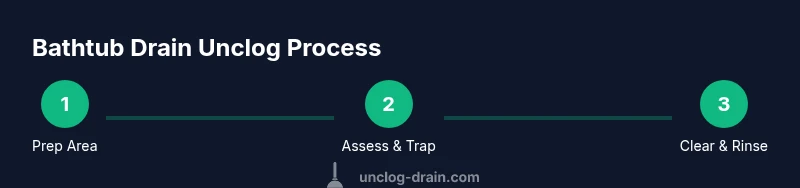
Prep and safety
Clear the area, protect yourself with gloves and eye protection, and gather your tools. Remove all items from the tub edge to prevent accidents. This sets a safe, organized workspace before you begin.
Tip: Lay towels around the tub to catch splashes and make cleanup easier. - 2
Check water level and trap access
Bail out standing water if necessary so you can work with tools. Look for the P-trap under the tub and prepare a bucket to catch any water or debris when you loosen the nuts.
Tip: Having the bucket ready saves you from a sudden splash when the trap comes loose. - 3
Remove the P-trap (if needed)
Loosen slip nuts with pliers and carefully remove the trap. Inspect for hairballs or buildup and clear them with a brush or gloved hands. Reinstall the trap securely after cleaning.
Tip: Recheck alignment to avoid leaks—hand-tight is usually sufficient before final tightening. - 4
Use the plunger
Create a tight seal over the drain opening and pump with steady pressure for 15-20 seconds. Repeat 3-5 times, monitoring for movement of the clog. If you see the water drain, proceed to rinse with hot water.
Tip: Keep the seal intact during each push to maximize suction. - 5
Try the drain snake
Insert the snake into the drain, rotating as you advance. When you feel resistance, pull back slowly to bring up hair and debris. Repeat several times and flush with hot water.
Tip: Do not force the snake through tight bends; you can damage the pipe. - 6
Rinse and test
Run hot water for several minutes to flush the system. Reinstall any components, check for leaks, and confirm the drain clears by observing a steady flow.
Tip: If flow remains slow, repeat the snake or consider a professional inspection.
Common Questions
What are the most common causes of a bathtub sink clog?
Hair, soap scum, and mineral buildup are the leading culprits in bathtub drain clogs. Regular cleaning and a drain screen help prevent these from forming a dense blockage.
Hair and soap scum are the main culprits; regular cleaning and screens prevent clogs.
Can I use chemical drain cleaners on a bathtub drain?
Chemical cleaners can clear some clogs but may damage rubber seals or pipes over time. If you use them, follow the label exactly, ventilate the area, and avoid mixing products.
Chemical cleaners can work, but use them with care and follow the label; ventilate the area.
Should I remove the P-trap to fix a clog?
Removing the P-trap is often necessary for stubborn clogs. Have a bucket ready and inspect for hair or debris before reassembling.
Yes, removing the P-trap is common for stubborn clogs; prepare to catch water.
When is it time to call a plumber?
If multiple drains in the home are blocked, there’s sewage odors, or clogs recur after DIY attempts, a licensed plumber should assess the system.
If you have widespread clogs or persistent odors, contact a plumber.
How can I prevent bathtub clogs long term?
Use a drain screen, avoid pouring oils/grease, and periodically flush with hot water or enzyme-based cleaners to minimize buildup.
Install a screen and flush drains regularly to prevent clogs.
Is it safe to use boiling water to clear a clog?
Boiling water can help loosen soap scum, but avoid extreme heat if you havePVC pipes that may soften or crack with sudden temperature changes.
Boiling water can help, but know your pipes; some plastics aren’t happy with hot water.
Can enzyme-based cleaners prevent clogs?
Enzyme-based cleaners can reduce organic buildup and are gentler on pipes than harsh chemicals, making them a good maintenance option.
Enzyme cleaners are a safer maintenance option to reduce buildup.
What tools are essential for DIY unclogging?
A flange plunger, a drain snake, a bucket, gloves, and wrenches are the core tools. Having these on hand makes DIY unclogging more efficient.
Keep a plunger, snake, bucket, gloves, and wrenches handy for DIY clogs.
Watch Video
Key Points
- Identify causes like hair buildup and soap scum.
- Start with mechanical methods before chemical cleaners.
- Protect yourself and keep the workspace clean.
- Check the P-trap if clogs persist.
- Prevent future clogs with a drain screen and routine maintenance.