Outside Drain Blocked with Toilet Paper: A DIY Troubleshooting Guide
Urgent, practical guide to diagnosing and clearing an exterior drain blocked with toilet paper. Safe steps, common causes, and when to call a pro for fast relief.


An outside drain blocked with toilet paper is usually caused by tissue buildup in the drain line or clogs near the lid. Start by removing visible paper from the drain cover, then use a toilet plunger or snake if needed, and avoid chemical drain cleaners that can damage pipes. If water backs up or odors persist, call a professional.
Why outside drain blocked with toilet paper happens
Exterior drainage is designed to carry wastewater away from your home, but toilet paper can still slip past interior traps and accumulate in the exterior line. Over time, tissue fibers trap small amounts of grease, sediment, and organic matter, creating a partial clog that slows flow or causes backups during heavy use. In outdoor environments, paper can snag on rough edges, accumulate in the bend, or form stubborn obstructions when damp leaves and soil mix with fibers. The result is a partial or full blockage that slows drainage and can lead to backups in nearby fixtures. Recognizing the signs early helps you act before a full blockage forms. The first clue is slow drainage in exterior outlets, gurgling noises, damp soil around the cleanout, or a musty odor near the drain cover. If you notice standing water or hear a rush of air in vents, treat it as a red flag and proceed with the troubleshooting steps. Preventive measures, such as screens on the cover and mindful toilet paper usage, reduce the risk of repeat clogs and protect your plumbing system. According to Unclog Drain, exterior clogs often begin with paper fibers that travel toward the outdoor line and gradually accumulate.
Quick checks you can do safely
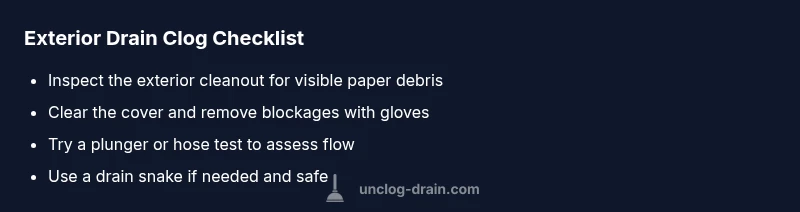
Before you reach for tools, perform a few quick checks to scope the issue without risking injury. Locate the exterior cleanout, remove the grate or cap, and clear obvious debris around the opening so you can access the pipe. Look for visible paper fragments or stringy fibers and remove them carefully without pushing material further into the pipe. Check for standing water or slow drainage on fixtures connected to the exterior line. If flushing a toilet inside results in a backup at the exterior drain, the blockage is downstream of the interior stacks. If you have a garden hose with a gentle spray, you can run water toward the exterior drain through the cleanout to observe flow, but stop if you see backflow or a strong odor. Avoid chemical drain cleaners in outdoor lines; they can damage seals and harm soil health. According to Unclog Drain analysis, mechanical clearing is often safer and more effective for exterior clogs than harsh chemicals.
Diagnostic flow: symptom → diagnosis → solutions
A logical, safety-first approach helps you identify the root cause and choose the right remedy. Start with symptoms: does water back up only when you flush a toilet, or do other exterior outlets show signs of drainage trouble? If only the exterior drain is slow, you’re likely dealing with a paper-based blockage in the outside line. If multiple fixtures are affected, the main sewer line or venting may be involved. Based on this assessment, plan solutions: surface debris removal and hand-clearing for a light, reachable clog; a plunger or a long snake for a deeper blockage; or professional service for persistent or hard-to-reach obstructions. Work from easy to hard, testing drainage after each step. If you encounter sewage odors, strong resistance, or backflow into indoor fixtures, stop and call a plumber immediately. Record your observations (sound, water level, and odor) to share with the technician. Unclog Drain emphasizes documenting the flow and timing to help diagnose the issue quickly.
Step-by-step: removing the blockage
- Prepare safety gear and workspace. Put on sturdy gloves, eye protection, and old clothing. Keep kids and pets away from the exterior area. Tip: work in daylight for better visibility.
- Access the exterior cleanout. Use a wrench to remove the cap if it’s tight, then set the cover aside. Inspect for rust or damage and ensure the area around the pipe is clean. Tip: take a photo before removing to document the starting point.
- Clear visible debris from the opening. Remove leaves, paper fragments, and dirt with your gloved hands or a scoop. Do not shove material back into the pipe. Tip: a small scoop helps you avoid pushing debris deeper.
- Attempt a gentle exterior plunge. Position a tight-fitting plunger over the drain opening and push with steady pressure. If you see water move, pause and re-check for new debris. Tip: ensure a good seal around the opening.
- Use a drain snake or auger. Feed the cable slowly into the pipe, turning it to break or snag the clog, then pull back with debris. Do not force the snake if you meet strong resistance. Tip: lubricate the cable lightly to reduce friction.
- Flush test. Run clean water through the line from the interior or exterior to verify flow. Watch for returning water levels; if they drop slowly, repeat the snake step once more. Tip: avoid high-pressure bursts that could push the blockage further.
- Re-secure the cleanout and clean area. Replace the cap, tighten, and ensure the grate is secure. Rinse away residual soil or debris to prevent re-clogging. Tip: store tools in a dry place for next time.
- Decide on next steps. If water still backs up or you detect persistent odor, contact a licensed plumber. They can clear the line with professional equipment and inspect for tree roots or collapsed pipes. Tip: keep a log of dates and symptoms for your pro visit.
Safety, precautions, and common mistakes
- Safety first: never mix chemical cleaners with outdoor lines; fumes can travel back into your home. Always ventilate the area and wear PPE. If you’re unsure, stop and call a professional.
- Common mistake: using metal tools that could scratch the pipe or damage seals. Prefer plastic or rubber tools and gentle maneuvers.
- Avoid forcing debris; apply steady, moderate pressure to prevent damage or a deeper jam.
- If you smell sewage or see backflow into indoor fixtures during any step, stop immediately and call a plumber.
Prevention and maintenance to avoid future clogs
- Install a durable drain cover or screen to catch toilet paper and solids before they reach the exterior line.
- Use less toilet paper per flush and avoid flushing wipes or non-paper products.
- Schedule periodic exterior cleanout inspections (every 6–12 months) to remove accumulated debris before it becomes a clog.
- Keep the area around the drain clear of leaves, dirt, and soil that can slip into the pipe during rain or irrigation.
- Consider a preventive camera check if you’ve had repeated exterior clogs, to identify misalignments or root intrusion early.
Steps
Estimated time: 60-90 minutes
- 1
Assess safety and prepare workspace
Put on gloves and eye protection, ensure kids/pets are away, and choose daylight for visibility. Clear an area around the cleanout so you can work without tripping over tools.
Tip: Keep a bucket nearby for debris and a towel for spills. - 2
Open exterior cleanout
Loosen and remove the cap, keeping track of any washers or seals. Inspect the inside for obvious paper fragments or trapped debris.
Tip: Take a quick photo before removing the cap as reference. - 3
Clear visible debris
Manually remove leaves, paper, and dirt from the opening with gloved hands or a scoop. Avoid pushing material deeper into the pipe.
Tip: Use a long-reach tool to extend reach without forcing material. - 4
Try a gentle exterior plunge
Seal the opening with a plunger and apply steady pressure to move the clog. Stop if water does not respond or if you notice backflow.
Tip: A good seal is essential; if air leaks, reposition the plunger. - 5
Use a drain snake/auger
Feed the cable slowly into the pipe, turning as needed to break apart fibers. Pull back any debris and wipe the cable clean.
Tip: Do not force the cable when resistance is high—back out and try again from a different angle. - 6
Flush test and repeat if needed
Run clean water and observe flow. If water level remains high, re-run the snake once more and re-test.
Tip: Avoid high-pressure water that could push debris further in. - 7
Re-secure and tidy
Replace the cleanout cap securely. Clean the area and verify the drain cover is properly seated.
Tip: Store tools dry and ready for next time inspection. - 8
Decide on professional backup plan
If water continues to back up after steps, or you smell strong odors, contact a licensed plumber for advanced clearing and inspection.
Tip: Note symptoms, timing, and steps taken to speed up troubleshooting.
Diagnosis: Water backs up from outside drain when flushing toilet or using exterior fixtures
Possible Causes
- highPaper buildup from toilet tissue entering the exterior line
- mediumPartial blockage from sediment, grease, or debris near the cleanout
- lowVenting problems or pipe narrowing further downstream
Fixes
- easyClear surface debris at the cleanout and attempt manual removal of obvious paper
- mediumUse an exterior plunger and then a long drain snake to clear deeper blockages
- hardIf blockage persists, call a licensed plumber to perform professional clearing and camera inspection
Common Questions
What causes an outside drain to clog with toilet paper?
Paper fibers from toilet tissue can travel through the system and accumulate in the exterior line, especially when combined with debris or soil. Over time this creates a partial or full blockage that slows drainage.
Toilet paper fibers can build up in the outside drain and slow or stop flow.
How do I remove paper from an outdoor drain without tools?
Wear gloves and manually clear visible paper fragments from the exterior cleanout. Do not push debris farther into the pipe; remove what you can reach safely.
Put on gloves and pull out the obvious paper by hand, avoiding pushing it deeper.
Are chemical drain cleaners safe for outside drains?
Chemicals are generally not recommended for outdoor lines as they can corrode components and harm soil. Use mechanical methods like plungers or snakes instead.
No—avoid chemicals in outdoor drains and use mechanical methods.
When should I call a plumber for an exterior drain clog?
If blockage persists after basic checks and plunging, or if you detect strong odors or backflow, a licensed plumber should inspect the line and perform a professional clearance.
Call a plumber if it doesn’t clear after basic steps or you smell sewage.
Can water pressure from a hose push the clog out?
Using a hose can help, but avoid high pressure which may push debris further. Use a gentle spray and observe flow carefully.
Gentle hose testing can help, but don’t blast it hard.
What can I do to prevent future clogs?
Install a drain screen, limit toilet paper usage, avoid flushing wipes, and schedule regular exterior cleanout checks to catch problems early.
Use a screen, limit toilet paper, and check the exterior drain periodically.
Watch Video
Key Points
- Identify exterior clog signs early and act safely
- Start with surface debris removal before tools
- Progress from plunger to snake, then professional help if needed
- Avoid chemical cleaners in outdoor drains
- Prevent future clogs with screens and mindful paper use