How to Fix an Outside Drain Clogged: A DIY Guide
Learn how to diagnose and clear an outside drain clogged with leaves, silt, or roots. This practical DIY guide covers safe steps, essential tools, and prevention tips to keep outdoor drains flowing.


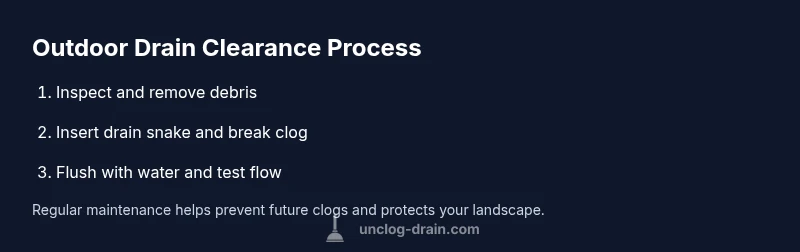
To fix an outside drain clogged, start by locating the access point and removing the grate, then use a manual drain snake or garden auger to break up the blockage. Clear debris, flush with water, and re-test. If clogs persist, consider professional inspection to prevent future damage.
What qualifies as an outside drain clogged and why it matters
According to Unclog Drain, an outside drain handles stormwater, yard runoff, and gutter discharge. When it becomes clogged, it can cause standing water, mosquito breeding, soil erosion, and even foundation issues if left untreated. Typical signs include slow drainage, pooling water along driveways or lawns, gurgling noises, and unpleasant odors near the grate. These drains are connected to underground sewer or storm lines, so a blockage can affect other pathways and, during heavy rain, worsen indoor backups. Before you begin, perform a quick safety check: avoid standing water, beware of any electricity near outdoor outlets, and keep pets and children away from the work area. This guide aims to help you assess the problem, clear obstructions safely, and maintain a clear flow without resorting to harsh chemicals that harm plants or groundwater. A clean outside drain protects your landscape, prevents erosion, and minimizes pest habitat.
Common causes of clogs outside your home
Outdoor drains are exposed to seasonal debris and soil movement. Leaves, grass clippings, and garden waste accumulate at the grate, while silt and sediment settle in the line. Over time, roots from nearby trees can infiltrate pipe joints, creating a dense blockage. Heavy rainfall can push more debris into the system, compressing the clog and making it harder to dislodge. In some yards, misaligned pipes or damaged gratings allow more material to enter, accelerating clog formation. Understanding these causes helps you target the right method and avoid unnecessary damage to the drainage system.
Safety first: assess the situation and prep
Outdoor drainage work involves physical labor near soil, water, and potentially electrical fixtures. Begin by ensuring you wear appropriate PPE: sturdy gloves, eye protection, and closed-toe shoes. Clear the area of children and pets, and set a safe work zone with proper lighting. Inspect the grate for sharp edges and remove any obvious debris around the opening with your gloved hands or a trowel. If you encounter standing water that smells foul, pause and reassess; persistent odors may indicate deeper issues or contamination. Do not use harsh chemical cleaners in outdoor drains, as they can harm plants, soil life, and groundwater. Before you start, map the drain location relative to nearby structures to avoid tripping hazards and to plan the path for hoses or snakes. This prep reduces risk and sets you up for a smooth clearing process.
DIY methods to clear an outside drain clogged
Start by removing the grate and any loose debris with gloved hands or a sturdy brush. Use a flashlight to inspect the opening and identify the type of blockage. If you see leaves or sticks, pull them out and set them aside. For compacted debris, insert a manual drain snake or garden auger into the pipe and rotate gently to break up the clog. Do not force the snake; if you meet resistance, pull back a fraction and re-try. Once you sense movement, slowly push through the clog while applying steady pressure. When the path clears, flush the line with a strong stream of water from a garden hose to push remaining debris toward the main line. Reinsert the grate and test drainage by running a burst of water and observing flow.
When to use specialized tools: drain snake, auger, or plumber's snake
A manual drain snake or garden auger is ideal for exterior clogs caused by leaves, mud, and small roots. Select a snake with a sufficient length to reach the clog without putting stress on joints. If you encounter stubborn roots or a deep obstruction, you may need a more robust plumber's snake or crash the clog with a higher-torque tool. Always wear eye protection and be mindful of your grip to avoid injuries when twisting the snake. If you need to pull the snake out, keep it straight to prevent kinking while removing it from the pipe. After clearing, disinfect tools and wash the grate area to prevent recontamination.
Preventing future clogs and maintenance routines
Prevention is easier than clearing repeated clogs. Regularly remove leaves and debris from the grate, and trim nearby trees or shrubs to reduce root intrusion. Install a fine mesh cover or guard to catch larger debris before it enters the pipe, and clean gutters and downspouts to minimize overflow. Schedule seasonal checks—particularly in autumn and after heavy rain—to clear accumulated sediment and inspect for wear or damage. Consider diverting downspout flow away from the drainage system with a splash block or buried extensions to keep the line flowing freely. Finally, maintain a simple record of when you cleaned the drain so you can identify patterns and address problem areas early.
When to call a professional and what to expect
If clogs persist after mechanical clearing, or you notice recurring backups during rain events, it’s time to call a plumber. A professional can perform a camera inspection to identify root intrusion, cracks, or misalignment and may recommend pipe repair or replacement. Expect a quote that covers diagnostic work, possible rodding, and any needed repairs. For homeowners, this is a sensible next step when DIY methods fail or you’re unsure about the pipe’s condition. The goal is to restore full flow and prevent future failures without risking property damage.
Quick-start maintenance checklist
- Regularly remove debris from the grate and surrounding area.
- Inspect gutters and downspouts to prevent overflow near the drain.
- Use a mesh cover to deter leaves and small objects.
- Test drainage after rain and after clearing to confirm consistent flow.
- Schedule seasonal checks and maintain a log of cleaning activities.
- If in doubt, contact a professional for an assessment to prevent long-term damage.
The Unclog Drain team recommends following this practical checklist to keep outdoor drains functioning smoothly and to minimize future clogs.
Tools & Materials
- Heavy-duty work gloves(Water-resistant, snug fit; protect hands from sharp grate edges and debris)
- Flashlight or headlamp(Hands-free lighting to inspect the drain interior)
- Plastic bucket(For collecting debris and dirty rags)
- Drain snake or garden auger(Choose length appropriate for your drain depth (at least 3–6 meters))
- Grate removal tool or sturdy screwdriver(To lift and secure the grate safely)
- Adjustable pliers or channel-lock pliers(Useful for loosening fittings around the grate or trap)
- Garden hose with spray nozzle(For flushing out debris after clearing)
- Safety goggles(Protect eyes from splashes and debris)
Steps
Estimated time: 45-90 minutes
- 1
Locate and prepare
Identify the exterior drain access point and put on PPE. Remove nearby obstacles and ensure children and pets are clear. If the grate is corroded or stuck, use the grate removal tool to lift it carefully.
Tip: Note the orientation of the grate and any visible blockages for later reference. - 2
Remove the grate and inspect
Use a flashlight to look into the opening. Clear loose leaves and soil with gloved hands or a brush. Collect debris in the bucket and set aside.
Tip: Do not pry hard on the grate; lift straight up to avoid bending the frame. - 3
Insert the drain snake
Begin feeding the snake into the pipe while turning the handle clockwise. Push gently until you meet resistance, then rotate and pull back to break up the clog.
Tip: Keep steady pressure and avoid forcing through a sharp bend to prevent pipe damage. - 4
Clear and flush
Once resistance eases, withdraw the snake and remove loosened material. Attach the garden hose and flush with a strong stream, watching for clear flow and no backflow.
Tip: If water backs up, pause, retrieve the snake, and try again from a slightly different angle. - 5
Re-seat grate and test
Replace the grate securely and run water from a faucet or rain event to test flow. Ensure there is no remaining pooling and the water drains promptly.
Tip: Keep the area dry around the grate to prevent slips after testing. - 6
Assess for recurring issues
If drainage is inconsistent or soon clogged again, inspect for root intrusion or pipe damage. Consider professional inspection if these signs appear.
Tip: Document the issue with photos for reference during a pro visit. - 7
Prevention setup
Install a fine mesh cover, clean gutters, and redirect downspouts away from the drain. Maintain a debris-free zone around the grate.
Tip: Schedule seasonal checks to stay ahead of debris accumulation. - 8
Know when to escalate
Persistent backups or recurring clogs may indicate root intrusion or pipe failure. A professional assessment is advised to avoid further damage.
Tip: Ask about camera inspection and potential trenchless repairs.
Common Questions
Can I use chemical solvents to clear an outside drain clogged?
Chemical solvents are generally not recommended for outdoor drains because they can harm plants and contaminate groundwater. Mechanical clearing with a snake and flushing is safer for most residential setups.
Chemical solvents aren’t recommended for outdoor drains; use a mechanical snake and water flush instead.
What is the best tool for clearing an outdoor drain?
A manual drain snake or garden auger is typically most effective for outdoor clogs caused by leaves, soil, and roots. Ensure the tool length reaches the clog without forcing through tight bends.
A manual drain snake is usually best for outdoor clogs; make sure it’s long enough and used carefully.
How often should I inspect outdoor drains?
Inspect outdoor drains seasonally, with extra checks after heavy rainfall or autumn leaf drop. Regular debris removal and gutter cleaning greatly reduce clog risk.
Check outdoor drains seasonally and after heavy rain to keep them clear.
When should I call a professional?
Call a professional if clogs recur after DIY clearing, if you suspect root intrusion, or if you observe sewage backups. A camera inspection may reveal hidden pipe issues.
If clogs keep coming back or you suspect roots, call a pro for a camera inspection.
Can a clogged outside drain cause water to back up inside the home?
Yes, in severe cases heavy clogs can contribute to backups that reach indoor fixtures during heavy rains. If you notice frequent backups, stop using indoor drains and seek professional help.
A severe outdoor clog can back up indoors during heavy rain; consult a pro if this happens.
Watch Video
Key Points
- Identify and protect the drain access before starting.
- Mechanical clearing with a snake is safer than chemical cleaners outdoors.
- Regular maintenance prevents recurring clogs and soil damage.
- Test drainage after each clearing to confirm success.
- Call a professional if roots or damage are suspected.