Slow Draining Bathroom Sink Pop Up: Troubleshooting Guide
Urgent, practical guide to diagnose and fix a slow draining bathroom sink pop up stopper. Step-by-step fixes, safety tips, and prevention from Unclog Drain for homeowners and DIY enthusiasts.


A slow draining bathroom sink pop up is usually caused by hair, soap scum, or mineral buildup around the stopper and trap. Start by removing the stopper, clearing hair, and flushing the trap; then reassemble and test the drain. If needed, repeat with a cautious approach and call a pro for stubborn clogs.
Understanding the Slow Drain: The Bathroom Sink Pop Up Context
The slow draining bathroom sink pop up is more than a nuisance—it signals buildup around the stopper and trap. Hair, soap scum, toothpaste, and mineral deposits can accumulate behind the pop-up mechanism, restricting water flow as soon as the stopper is open. This is a common DIY problem, and most homeowners can fix it with basic tools. According to Unclog Drain, starting with the stopper and trap inspection often resolves the issue without professional help. With a methodical approach, you’ll not only restore flow but extend the life of your sink by keeping lines clear and smelling fresh.
Small changes in maintenance—like regular stopper cleaning and using a hair catcher—go a long way toward preventing future clogs. The key is to work in a logical sequence: inspect the stopper, clean the linkage, check the P-trap, then rerun water to confirm improved drainage. This approach aligns with Unclog Drain’s practical DIY guidance and keeps disruption to a minimum.
Quick Checks You Can Do Right Now
Before disassembling anything, perform a few fast checks. Remove the stopper and visually inspect for hair tangled around the post. Wipe away soap scum from the top of the stopper and ensure the linkage moves freely. Place a bucket under the P-trap before loosening any connections to catch water. If you see signs of a clogged trap or a slow drain when you run water, proceed to the next steps. Remember: never force components; if something feels bent or cracked, stop and consider replacement. This quick triage often reveals the simplest fix and buys you time before deeper repairs.
By following these early checks, you’ll either confirm a straightforward stopper clean or pinpoint that the trap or linkage needs attention. The goal is to resolve the issue with the least invasive method first, saving time and reducing the risk of leaks.
How the Pop-Up Stopper Affects Drainage
A functioning pop-up stopper controls water flow for sinks and usually fits inside a small housing connected to a lift rod. When hair, soap scum, and mineral deposits accumulate around the stopper or inside the linkage, they impede the seal and slow drainage. A partially blocked stopper can also trap debris in the drain path, creating a micro-occlusion that worsens with every rinse. Conversely, a clean stopper with a free-moving lift rod allows water to flow freely through the drain path. Understanding this dynamic helps you decide whether you should focus on the stopper assembly or move downstream to the trap.
If the water drains slowly only when the stopper is closed, the problem is almost certainly near the stopper or within the linkage. If draining remains slow even with the stopper removed, the blockage is farther down the line—likely in the P-trap or a clog further along the drain. This distinction guides your next steps and reduces guesswork.
Common Causes Behind Slow Drains
- Hair and soap buildup around the stopper post and in the pop-up linkage: the most frequent reason for slow drains.
- Soap scum and mineral deposits inside the drain pathway: gradual layer formation reduces flow.
- A partially closed stopper or misaligned linkage: restricts water exit even when “open.”
- Clogs in the P-trap or drain pipe: often caused by accumulation of hair, toothpaste, and debris.
- Improper installation or wear on gasket seals: can create slow leaks and flow resistance.
- Accumulated gunk behind the stopper housing: a hidden pocket that harbors debris.
Addressing these causes in order—from the stopper to the trap—will cover the vast majority of slow-drain scenarios. Regular maintenance and a simple hair catcher can dramatically reduce recurrence and extend the life of your sink.
Diagnostic Flow Overview
This section outlines the diagnostic path you’ll follow in the adjacent Diagnostic Flow block. Start by inspecting the stopper and linkage for hair buildup or binding. If the stopper and linkage are clean, test the drain with and without the stopper to determine where the obstruction lies. A clogged P-trap is the next likely culprit if water remains slow without the stopper. In that case, disassemble the trap, clear debris, and reassemble. If issues persist after addressing the trap, check downstream pipes for obstructions. Safety note: turn off water if you must disassemble plumbing; wear gloves and use a flashlight to inspect dark spaces. Unclog Drain recommends a stepwise approach to avoid over-tightening fittings and to prevent leaks.
The diagnostic flow helps you differentiate between stopper-related issues and deeper pipe blockages, ensuring you don’t perform unnecessary work. By keeping a small drain-cleaning kit on hand, you can quickly address common blockages and maintain a steady flow.
Step-by-Step Fix: Clean and Reassemble the Stopper
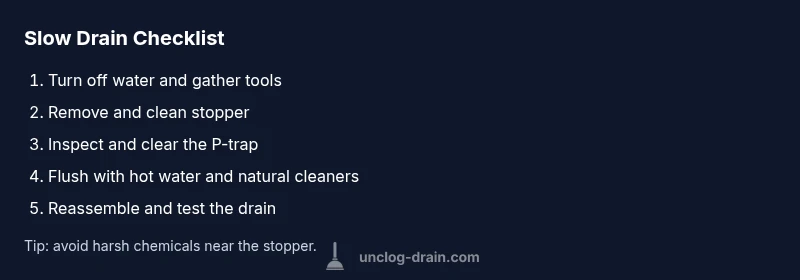
- Gather tools and turn off water if you’ll be disassembling components. 2) Remove the pop-up stopper by loosening the retaining nut or lifting the stopper arm, depending on your model. 3) Clean the stopper surface, the post, and the linkage; remove hair and soap film using a small brush. 4) Inspect the linkage rod and ensure it moves freely; lubricate lightly if needed. 5) Reinsert the stopper, reconnect the lift rod, and test full range of motion. 6) Reassemble the drain and run water to confirm improved drainage. 7) If the flow remains slow, inspect the P-trap and clear any clogs. 8) Re-test thoroughly and check for leaks. Tip: work slowly and keep parts organized so nothing gets lost during reassembly.
Safety, Warnings, and When to Call a Pro
Always work with the water off when disassembling drain components to avoid scalds or leaks. Use gloves and eye protection when handling metal parts to prevent cuts. Do not force a distorted stopper or bent linkage; if you encounter resistance, reassess before applying more force. If water pressure is insufficient after cleaning the trap, or if you notice persistent leaks after reassembly, it’s time to call a licensed plumber. A professional can diagnose hidden issues, such as a venting problem or a damaged P-trap, and ensure the installation remains up to code. Unclog Drain emphasizes safety and proper technique to prevent further damage and costly repairs.
Prevention Tips to Keep Your Sink Flowing
- Clean the stopper and linkage every 1–2 weeks to prevent buildup.
- Use a hair catcher or screen to minimize hair entering the drain.
- Flush drains with hot water and a light amount of baking soda periodically to reduce soap scum.
- Avoid pouring grease or oily substances down the sink. -Check for leaks after every maintenance session and tighten fittings as needed.
- Schedule annual checks of under-sink plumbing to replace worn gaskets or seals before they fail.
Troubleshooting Scenarios: If It Still Drains Slowly
If you have completed the stopper fix and the drain is still slow, the blockage is likely in the P-trap or further down the line. Disassemble the P-trap, clear hair and debris with a bottle brush, and run water through the pipe to flush any remaining material. If flow improves but returns to slow after a day or two, you may have a deeper clog or a venting issue that requires professional equipment. For stubborn clogs, consider using a hand auger designed for small-diameter pipes. Do not use chemical drain cleaners repeatedly near metal parts, as they can corrode components and void warranties. When in doubt, Unclog Drain recommends seeking professional help to avoid damage.
Tools You Might Need for This Job
- Wide-mouth bucket and towels
- Nut driver or pliers for the stopper nut
- Small brush or old toothbrush
- Cleaning rags and mild detergent
- Bottle brush for the trap and pipe openings
- Household enzyme cleaner or baking soda-vinegar method as a gentle flush
- Flashlight for better visibility
Final Quick-Check List
- Stopper moves freely and seats properly.
- Hair and gunk removed from stopper and trap area.
- P-trap cleared and reassembled without leaks.
- Water drains within a few seconds of test run.
- No signs of leaks around the sink fittings after reassembly.
Steps
Estimated time: 30-60 minutes
- 1
Gather tools & safety prep
Collect gloves, bucket, a flashlight, a wrench or pliers, a small brush, and a mild cleaner. Clear the area under the sink and place towels to catch spills. Turn off the water supply if you anticipate significant disassembly.
Tip: Having everything ready saves time and prevents scrambling mid-disassembly. - 2
Remove the stopper
Access the stopper from above the sink or under the sink based on model. Loosen the retaining nut or detach the lift rod, then lift the stopper out. Take careful note of how the parts fit together.
Tip: Take a photo before removing parts for easy reassembly. - 3
Clean stopper & linkage
Scrub the stopper, post, and linkage with a brush to remove hair and soap film. Rinse thoroughly and dry before reassembling. Check that the lift rod moves smoothly.
Tip: Avoid harsh chemicals on metal parts to prevent corrosion. - 4
Inspect the drain path
If accessible, check the drain hole for visible debris. Also inspect the U-trap area for clogs. Use a brush to clear hair and sediment trapped in bends.
Tip: Keep the bucket handy to catch water and debris. - 5
Reassemble & test
Reinsert stopper, reconnect the lift rod, and ensure full movement. Reassemble the plumbing and run cold water to test. Look for leaks at joints.
Tip: Test with multiple drain sizes (fast flow vs. slow) to verify improvement. - 6
If slow, inspect trap & downstream
If the drain remains slow, loosen the trap connections and clean the U-trap. Reassemble and test again, and consider calling a plumber if blockage persists.
Tip: Persistent slow drainage may indicate a deeper clog or vent issue.
Diagnosis: Slow draining bathroom sink with a pop-up stopper
Possible Causes
- highHair and soap buildup around stopper/post
- highBlockage in the P-trap or drain path
- mediumMisaligned stopper or binding linkage
- lowMineral deposits and gunk behind stopper housing
- lowVent-related drainage issue (less common for sinks)
Fixes
- easyRemove stopper and linkage, clean with a brush, and reassemble
- easyDisassemble and clean the P-trap, then flush with hot water
- mediumReplace worn gaskets or seal and ensure proper alignment
- hardInspect venting (if present on the line) for blockages
Common Questions
What is the quickest fix for a slow draining bathroom sink pop up?
Often the fastest solution is to remove and clean the stopper and linkage, then clear the P-trap if needed. Hair and soap film are the usual culprits, and a thorough cleaning resolves most slow-drain issues.
Usually, removing and cleaning the stopper solves it quickly; then check the trap if needed.
Should I remove the P-trap to unclog?
Yes, if you can access it easily. Loosen the nuts, remove the trap, clear debris with a brush, and reassemble. Run water to confirm it drains freely.
If you can reach it safely, clean the trap and reassemble, then test the drain.
Can I use chemical drain cleaners on a pop-up sink?
Chemical cleaners are not ideal for pop-up sinks because they can damage metal components and seals. Mechanical cleaning (stopper, linkage, trap) is safer and often more effective for these systems.
Chemical cleaners aren’t the best choice here; mechanical cleaning works better and is safer for the stopper system.
How can I prevent clogs in a bathroom sink pop up?
Use a hair catcher, clean the stopper weekly, and avoid pouring grease or oils down the drain. Regular flushing with hot water helps reduce soap scum buildup.
Add a hair catcher and clean the stopper regularly to keep drains flowing.
When should I call a plumber?
If multiple DIY attempts fail to restore full drainage or you notice persistent leaks, it’s time to call a plumber. A pro can diagnose hidden issues and ensure proper venting and sealing.
If it won’t clear after several attempts or leaks appear, call a plumber.
Is it safe to disassemble the stopper myself?
Yes, with proper precautions. Turn off water, use gloves, keep track of parts, and reassemble carefully. If you encounter bent parts or broken seals, stop and seek professional help.
It’s usually safe to DIY if you’re careful and organized; stop if anything seems damaged.
Watch Video
Key Points
- Start with the stopper; most clogs are stopper-related.
- Clear the P-trap if the stopper isn’t the sole issue.
- Use a gentle flush (hot water/baking soda) to preserve pipes.
- Always test for leaks after reassembly.
- Regular stopper cleaning prevents future clogs.