Baking Soda Toilet: Safe DIY Cleaning & Clog Prevention
Learn how to use baking soda to clean, deodorize, and safely test for mild toilet clogs. Practical steps, cautions, and pro tips from Unclog Drain.


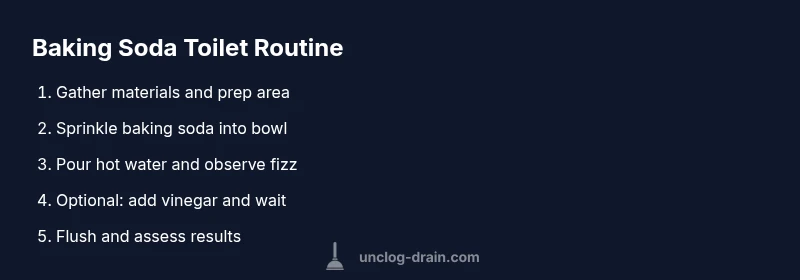
This quick guide demonstrates a baking soda toilet routine to deodorize, clean minor buildup, and test for a mild clog. You’ll gather simple materials, sprinkle baking soda into the bowl, add hot water, and flush to verify results. For stubborn clogs or safety concerns, stop and seek professional guidance. According to Unclog Drain, this method works best as routine maintenance.
Understanding the science behind baking soda toilet
Baking soda toilet routines rely on the mild alkalinity of baking soda to help loosen organic residues and neutralize odors inside the toilet bowl. When you add baking soda to warm water, you create a gentle cleaning solution that can lift mineral film and organic buildup without harsh chemicals. This approach is especially useful for maintenance: it helps prevent odors, keeps the bowl looking fresh, and supports regular flushing. However, the reaction of baking soda with water is not a substitute for mechanical clearing when a real clog forms. In such cases, you may need a plunger or auger, and professional advice if the blockage is severe. For those new to DIY plumbing, start with the simplest baking soda toilet routine and observe how the bowl responds over several days. Keep in mind that consistency matters: routine cleaning reduces the likelihood of persistent odors and sticky residues, making the next attempt easier. According to Unclog Drain, understanding the science helps you set realistic expectations and recognize when a more robust solution is needed.
What baking soda toilet can do for deodorizing and light buildup
A baking soda toilet routine excels at deodorizing and removing light mineral buildup around the rim and under the waterline. The neutralizing effect of baking soda helps moderate odors from bathroom use and can loosen soft residues until the next deeper clean. When you combine baking soda with hot water, the mixture helps rinse away some of the loosened matter, making a flush more effective. This method shines as a preventive maintenance step, keeping the toilet fresher between full cleanings. It's not a miracle cure for stubborn clogs, but it can reduce the frequency of deep cleanings. If you notice persistent odor or slow draining, check that the trap and venting are clear and consider additional approaches or professional help. For households with septic systems, baking soda toilet routines are generally safe, but avoid adding large quantities at once and always flush thoroughly after treatment. The baking soda toilet approach benefits from regular, small-scale applications rather than sporadic, heavy treatments.
Ingredients and proportions for a safe baking soda toilet routine
A simple baking soda toilet routine uses common kitchen staples and safe water. The core ingredient is baking soda (sodium bicarbonate). For most toilets, sprinkle 1/2 cup to 1 cup of baking soda into the bowl, then add hot water slowly to create a gentle fizz and rinse. You can adjust the amount based on the size of the bowl and the level of buildup. Optional adjuncts include white vinegar for extra deodorizing or a toilet brush for gentle scrubbing after the fizzing action. If you use vinegar, add it after the baking soda has dissolved and allow the mixture to sit for 10-15 minutes before flushing. Never mix baking soda toilet solutions with chlorine bleach or other strong cleaners, as hazardous gases can form and damage seals. This careful approach helps preserve your toilet and septic system while keeping odors in check.
Step-by-step overview before you start
Before you begin, plan the timing to avoid risky situations. Place towels down to catch any spills, and wear rubber gloves to protect your hands. Close the toilet lid to minimize splashes and keep children or pets away. Begin by sprinkling baking soda around the bowl, then slowly pour hot water to promote rinsing without splashing. If you observe fizzing, let it work for a few minutes before attempting a gentle flush. This high-level routine sets you up for the more detailed steps in the dedicated Step-by-Step section and helps you gauge whether the baking soda toilet approach is producing the expected results.
Safety considerations and septic compatibility
Safety first: use protective gloves, eye protection if splashes may occur, and ensure good ventilation in the bathroom. Baking soda toilet routines are generally compatible with most septic systems when used in moderate amounts and flushed with plenty of water. Do not mix with bleach or ammonia-based cleaners; chemical reactions can release harmful gases. If you have a backflow risk or a very old or damaged septic system, consult a professional before attempting DIY methods. Always monitor for unusual odors, continuous slow drainage, or repeated clogs, which could indicate a larger plumbing issue.
Real-world tips from Unclog Drain
Unclog Drain emphasizes that baking soda toilet strategies work best as preventative maintenance and for minor buildup, not as a miracle fix for major blockages. In practice, most homes benefit from periodic use—every few weeks or monthly—especially in households with hard water or mineral-rich supply lines. When used correctly, a baking soda toilet routine can reduce odor and improve rinse efficiency, making the next cleaning easier. For persistent problems, Unclog Drain recommends combining this approach with mechanical tools like a plunger or auger and seeking professional help if the blockage remains unresolved. Remember: gradual, repeatable actions beat aggressive, one-off treatments.
Common mistakes and troubleshooting
Common mistakes with the baking soda toilet routine include using excessive amounts of baking soda, adding boiling water, or mixing baking soda with incompatible cleaners. Boiling water can crack porcelain, and strong chemical mixes can damage seals and septic systems. If you notice no improvement after a couple of cycles, pause and inspect for underlying issues like a partial clog, vent blockage, or mineral buildup in the trap. In such cases, use a plunger carefully or call a plumber for a more thorough assessment. Finally, store baking soda in a dry, cool place to maintain its effectiveness for future uses.
Tools & Materials
- baking soda (sodium bicarbonate)(Powder; 1/2 cup to 1 cup depending on bowl size)
- hot water(Warm, not boiling; helps rinse loosened buildup)
- white vinegar (optional)(Use after baking soda has dissolved; deodorizing boost)
- rubber gloves(Protect hands from splashes and cleaners)
- toilet plunger(Helpful for stubborn slow drains or partial clogs)
- bucket or large cup(For pouring hot water safely and controlling splash)
Steps
Estimated time: 20-45 minutes
- 1
Gather materials and prep the area
Place towels, turn off any air fresheners that could interfere with odors, and put on rubber gloves. Ensure kids and pets are away from the work area. This step reduces the chance of slips and keeps the process clean.
Tip: Clear the floor around the toilet to prevent accidents. - 2
Sprinkle baking soda into the bowl
Evenly distribute 1/2 cup to 1 cup of baking soda around the bowl, focusing on areas with visible buildup. The powder will begin to interact with residues as you pour water.
Tip: Aim for a light, even coating rather than clumps. - 3
Add hot water slowly
Pour warm water gradually into the bowl to activate the cleaning action without splashing. This step helps dislodge soft mineral deposits and debris.
Tip: Pour from arm's length to minimize splash. - 4
Observe fizzing and wait
Watch for fizzing as the baking soda reacts with residues. If fizzing slows, add a bit more warm water and let it sit for a few minutes.
Tip: A short rest period is more effective than forceful scrubbing. - 5
Optional: add vinegar and sit
If you choose, pour a small amount of white vinegar after the initial fizzing subsides, then let the mixture sit for 10–15 minutes. Do not overfill; the fizz is normal but can overflow if the bowl is already full.
Tip: Never mix with bleach or ammonia cleaners. - 6
Flush and assess
Flush the toilet and observe whether water clears more freely and odors are reduced. If not, repeat the steps once or twice, or proceed to mechanical methods for a stubborn clog.
Tip: If water still backs up, stop and switch to a plunger rather than forcing more solution. - 7
Scrub lightly and rinse
If residue remains, use a toilet brush to gently scrub the bowl, then flush again. This helps remove stubborn film without harsh chemicals.
Tip: Rinse brush in clean water after use and store properly. - 8
Clean up and store
Wipe the area, dry surfaces, and store the baking soda in a dry place. Return towels and gloves to their storage.
Tip: Label leftover baking soda for next use to keep it fresh.
Common Questions
Can baking soda unclog a toilet by itself?
Baking soda alone is rarely enough to clear a real clog. It’s most effective for deodorizing and loosening minor buildup. For stubborn blockages, use mechanical tools or seek professional help.
Baking soda alone usually won’t clear a strong clog; it’s better for deodorizing and light buildup, and you may need a plunger or auger for stubborn blockages.
Is baking soda toilet safe for septic systems?
Yes, in moderate amounts, baking soda toilet routines are generally safe for septic systems. Avoid large quantities at once and always flush with plenty of water after treatment.
Yes, in moderation, baking soda is septic-friendly, but don’t dump big amounts at once and always flush well.
How much baking soda should I use for deodorizing?
A modest amount, typically 1/2 cup, is enough to help with deodorizing. Adjust up to 1 cup if you’re dealing with heavier buildup, but avoid overloading the system.
Usually 1/2 cup does the job for deodorizing; you can increase up to 1 cup if needed, but don’t overdo it.
Will baking soda damage porcelain or seals?
Baking soda is mild and generally safe for porcelain when used as directed. Avoid abrasive scrubbing that could scratch the glaze, and don’t mix with harsh chemicals.
Generally safe for porcelain if used properly, just avoid scrubbing too hard and never mix with strong chemicals.
What should I do if the toilet remains clogged after trying baking soda?
If cleaning attempts fail, stop and assess the blockage. Use a plunger or auger, and if needed, contact a plumber to identify the cause and prevent damage.
If it remains clogged after trying baking soda, switch to mechanical tools and consult a plumber if needed.
Can I use baking soda with vinegar together for a toilet clean?
Yes, you can use them sequentially, but avoid mixing them together in the bowl at the same time, as the fizz can overflow and create a mess.
You can use them separately, but don’t mix them at once to avoid a mess.
Watch Video
Key Points
- Use baking soda toilet for deodorizing and light buildup.
- Never mix baking soda with bleach or ammonia cleaners.
- Reserve mechanical tools for stubborn clogs or if the toilet backs up.
- Wear gloves and ventilate; be mindful of boiling water near porcelain.