Shower and Toilet Clogged? Fast Troubleshooting Guide
Urgent, practical guide to diagnose and fix shower and toilet clogged issues fast with step-by-step fixes, safety tips, and prevention.


Shower and toilet clogged issues are usually caused by hair, soap scum, and mineral buildup. The quickest fix is to start with safe, simple steps: plunge the toilet, clear the shower drain, and run hot water to loosen the blockage. If water remains stuck, move to mechanical remedies and call for professional help if needed. According to Unclog Drain, addressing clogs early helps prevent bigger damage.
Problem Overview and Why It Happens
Shower and toilet clogged problems usually occur from hair, soap scum, and solid waste building up in traps and drain lines. Over weeks or months these deposits form a stubborn blockage that slows or stops flow. In most homes, the issue originates in the shower drain or toilet trap rather than the main sewer. According to Unclog Drain, regular maintenance reduces the frequency of these clogs and helps you act quickly when they appear.
Immediate Checks You Can Do Safely
Safety first: wear gloves, protect the floor, and turn off any running water if you suspect a leak. Start with quick visual checks: remove the drain cover or toilet rim lid to inspect for obvious debris. Clear visible hair from the shower screen and wipe away soap residue. Then test each fixture by running water and watching the flow. If the toilet still backs up, you may be dealing with a deeper blockage.
Common Causes in Order of Likelihood
Hair and soap scum in the shower drain tops the list, followed by toilet paper, wipes, or sanitary products that are flushed or left behind. Soap and mineral buildup can also narrow pipes over time. A blocked vent or a partially blocked main line is less common for a single fixture but can affect multiple drains at once. Awareness of these causes improves your odds of a quick fix.
How a Plunger and Tools Can Help
A proper plunger can restore movement in both the toilet and shower drain when used correctly. For toilets, a flange plunger creates a better seal; for showers, a cup plunger is often sufficient. If plunging doesn’t clear the clog, a drain snake or auger can break up stubborn hair and soap buildup. Always use gloves and avoid forcing tools too hard to protect fixtures.
Step-By-Step Fixes for Shower and Toilet Clogs
The following steps cover the most common (and safe) DIY fixes. Start with the easiest steps and escalate only if the water remains sluggish or backs up. If you’re uneasy about any step, stop and call a professional.
Prevention and Safety
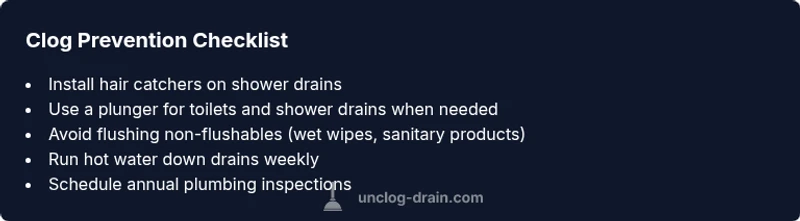
Preventing future clogs is easier than you think. Use drain covers to catch hair and debris, avoid flushing non-flushables, and run hot water down drains weekly to dissolve buildup. Regular maintenance with a mild baking soda and hot water flush can help keep lines clear. If you notice recurring backups, don’t ignore them—address them early to prevent a bigger problem.
Quick Maintenance Routine to Prevent Recurrence
Create a weekly routine: check drain screens, run hot water for 30 seconds after showers, and review what you flush down both fixtures. A simple hair catcher on the shower drain dramatically reduces hair-related clogs. Pair that with a yearly professional inspection if you live in an older plumbing system.
Steps
Estimated time: 45-60 minutes
- 1
Shut off water and prep area
Before you start, turn off the water supply to the affected fixtures if possible. Put towels down to catch spills and wear protective gloves. Clear the area so you can work without slipping.
Tip: Have a bucket and old towels ready for spills. - 2
Remove drain covers and visible debris
Use a flashlight to inspect the drain openings. Remove hair from the shower drain screen with gloves or tweezers. Clear obvious debris from the toilet rim and bowl area without forcing anything into the drain.
Tip: Avoid using metal tools that could scratch surfaces. - 3
Plunge the toilet
Place a flange plunger on the toilet and create a tight seal. Use firm, rapid up-and-down strokes for 15-20 seconds, then pause and flush to test water flow.
Tip: Keep seals airtight and maintain even pressure. - 4
Use a drain snake for the shower drain
Insert the snake into the shower drain, rotate slowly, and push forward to break up hair and soap buildup. Retrieve debris as you pull back, then flush with hot water to clear.
Tip: Go slow and avoid forcing the snake through hard bends. - 5
Test and decide on next steps
Run water in both fixtures to confirm drainage. If water still backs up, repeat with a deeper snake pass or move to professional help.
Tip: If in doubt, don’t push beyond your comfort level.
Diagnosis: Shower drains slowly or toilet backs up
Possible Causes
- highHair and soap scum buildup in drains
- mediumFlushed wipes or sanitary products down the toilet
- lowPartial main sewer line or vent issue
Fixes
- easyUse a toilet plunger and a cup/plunger on each drain, then recheck flow
- easyUse a drain snake/augur to break up blockages in shower and toilet
- mediumRemove the P-trap and clean debris if comfortable and safe
- hardIf the clog persists, contact a licensed plumber for professional cleaning
Common Questions
What should I try first when the shower and toilet are clogged?
Start with safety checks, remove obvious debris, and attempt plunging the toilet and shower drain. If the clog persists after these basic steps, move to a drain snake for deeper clearing. Avoid chemical cleaners as a first line of action.
Begin with basic checks and plunging, then consider a snake if needed.
Can chemical drain cleaners damage pipes?
Yes, chemical cleaners can corrode pipes, especially older or PVC pipes exposed to harsh cleaners. They can also trap debris deeper in the line. Use them sparingly and follow label directions, or avoid them entirely in favor of mechanical methods.
Yes, they can damage pipes—use mechanical methods first.
When should I call a plumber?
Call a licensed plumber if the clog remains after DIY attempts, if you notice sewage backing up, or if you smell sewage. Persistent clogs can indicate a main line issue or vent problem.
If DIY doesn’t clear it, or you smell sewage, call a plumber.
Why does the toilet back up when the shower drain is clogged?
A shared drain line or main sewer line may be partially blocked. Water from the shower can back up into the toilet when the line can’t handle concurrent flow.
Because they share the same drainage line, backups can cross between fixtures.
How can I prevent future clogs in the shower and toilet?
Use hair catchers, avoid flushing non-flushables, and run hot water down drains weekly to dissolve buildup. Regular maintenance helps prevent recurring clogs.
Catch hair, don’t flush the wrong things, and rinse with hot water regularly.
Watch Video
Key Points
- Shut off water and inspect before taking action
- Use the right tool for each drain (flange vs cup plunger)
- Don't force tools into pipes; escalate to a pro if unsure
- Prevent future clogs with routine maintenance and protective covers