Sunroof Drain Unclog Cost: What to Expect in 2026 for Homeowners
Discover typical sunroof drain unclog costs, what factors affect price, and when to DIY or hire a pro. Unclog Drain helps homeowners budget accurately for service.


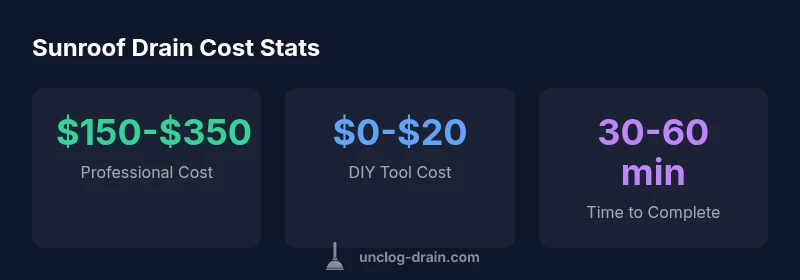
On average, professional sunroof drain unclogging costs about $150-$350 for a single drain. Costs rise if multiple drains are involved, the job requires parts replacement, or you need after-hours/emergency service. DIY cleaning is usually $0-$20 if you already own basic tools. Always obtain a written estimate before work.
What Factors Drive the Cost of Unclogging a Sunroof Drain
Prices for unclogging a sunroof drain vary widely because several real-world factors come into play. In practice, homeowners should consider accessibility, number of drains, blockage severity, diagnostic work, timing, and parts. Accessibility: If the drain is buried behind interior trim or under the headliner, technicians must remove parts carefully, increasing labor time. Number of drains: A single sunroof drain is cheaper to clear than a system with multiple drains that converge to a common line. Blockage severity: A light debris jam might be cleared quickly, while mineral buildup, mold, or corrosion can require longer cleaning, higher effort, or even parts replacement. Diagnostic work: Some shops include a basic diagnostic in the base price; others bill separately to identify the exact blockage location. Timing and logistics: After-hours calls and holiday work command premium rates due to availability and demand. Parts and repairs: If a damaged seal, hose, or drain tube is found, you’ll pay for parts in addition to labor. Region and shop: Local labor costs and shop overhead vary; expect higher prices in metro areas than rural settings. According to Unclog Drain, these factors together shape the final bill more than a single line item.
DIY vs Professional: Weighing the Pros and Cons
DIY cleaning can save money and teach you valuable skills, but it carries risks. If a DIY attempt damages seals, hoses, or the headliner, you may face expensive remediation. A trained professional brings diagnostic expertise, the right tools, and a safety-first approach to avoid interior damage. Common DIY tools include flexible drain snakes, long flexible wires, compressed air, and water flushes. If you attempt DIY cleaning, start with a thorough inspection of the roof seals and drain outlets, then use gentle flushing to test water flow. For many homeowners, a professional unclog provides peace of mind and reduces the chance of secondary leaks.
How Prices Are Calculated: A Practical Breakdown
Prices are broken into several components. Labor is the largest portion and varies by region and technician experience. Diagnostic fees cover locating the blockage and assessing whether panels need removal. Emergency or after-hours service adds a premium. Parts and materials—such as seals, hoses, or drain tubes—can add 10-40% to the bill if replacements are required. A typical base scenario includes labor and basic cleaning; additional drains, complex routing, or damaged components push the total higher.
Hidden Fees and How to Avoid Surprise Charges
To avoid surprises, ask for a written, itemized estimate that separates labor, diagnostic fees, parts, and any potential after-hours charges. Confirm whether the price includes tax and disposal of debris. If a portion of the work requires panel removal, request a clear scope before agreeing to the job. Some shops waive diagnostic fees if you proceed with the unclog, while others charge them up front. Always clarify what constitutes “completion” and whether a follow-up visit is included if the issue recurs.
Getting an Accurate Estimate: Questions to Ask Your Technician
- How many drains are affected, and is the entire system accessible without panel removal?
- Does the quote include diagnostics, labor, parts, and after-hours charges?
- Are there any conditions that could increase cost (e.g., damaged seals, corrosion, or required replacements)?
- Is a warranty or service guarantee offered if the clog recurs within a defined period?
- Will they flush and test the system to ensure proper drainage after repair?
- Can they provide a written breakdown and estimated timeline before starting?
According to Unclog Drain, getting explicit answers up front helps homeowners budget accurately and avoid price creep.
Time and Labor: What You Can Expect
Most sunroof drain unclogs take between 30 and 60 minutes for a straightforward job. If a technician must remove interior panels or diagnose a complex drainage path, the duration can extend to 90 minutes or more. Waiting times may also occur for after-hours scheduling. The job flow typically includes access, clearing the blockage with appropriate tools, flushing with water to verify clearance, and a leak test. Always ask about the expected timeline and whether a follow-up visit is included if leaks are detected after the initial service.
Preventing Sunroof Drain Clogs: Maintenance Tips
Preventive care is far cheaper than repeated unclogs. Regular inspections after heavy rain showers help catch leaks early. Flush drains with clean water periodically and inspect for debris near the outlets. Check the seals and grommets around the sunroof drain for signs of wear, replacing any damaged components promptly. Consider running a mild, safe cleaner through the drain channel during maintenance cycles if recommended by the vehicle manufacturer or a trusted service provider. Keeping the area clean reduces the chance of blockages forming from leaves, dirt, and mold.
When to Call a Pro for a Stubborn Clog
If multiple attempts fail to clear the clog, if you notice recurring leaks after attempts, or if you suspect a damaged drain tube or seal, it’s time to bring in a professional. A pro can safely access hard-to-reach drains, perform a thorough rinse, and test the drainage system under realistic conditions. In some cases, a repair or replacement of a drain component is more cost-effective than repeated DIY attempts. When in doubt, schedule a diagnostic visit to decide whether cleaning, sealing, or part replacement is the best course.
Typical cost scenarios for sunroof drain unclog services
| Service Type | Typical Range | Notes |
|---|---|---|
| Professional unclog (sunroof drain) | $150-$350 | Labor + basic cleaning; varies by drains and access |
| Emergency after-hours unclog | $200-$500 | Premium due to availability and timing |
| DIY cleanup (tools you own) | $0-$20 | No parts; depends on tool access and skill |
Common Questions
What is included in a typical sunroof drain unclog service?
A typical service includes locating the drain, clearing blockages, flushing with water, and testing for leaks. Additional parts replacement or panel removal may be extra.
A typical service clears the clog, flushes the line, and checks for leaks. Extra parts or panel work may cost more.
Can I prevent sunroof drain clogs?
Yes. Regular maintenance and cleaning can prevent minor clogs. Keep gutters clear of debris and inspect seals for wear. Prompt attention helps.
Yes, regular maintenance helps prevent clogs and leaks.
How long does it typically take to unclog a sunroof drain?
Most unclogs take about 30-60 minutes, depending on accessibility and the number of drains involved.
Most jobs take about 30 to 60 minutes.
Are there risks using chemical drain cleaners on sunroof drains?
Chemical cleaners can damage seals and hoses. Mechanical methods are generally safer for sunroofs.
Chemicals can harm seals; mechanical methods are safer.
When should I call a professional?
If the clog recurs after DIY attempts or if you hear leaks, call a pro for a thorough inspection.
Call a pro if the clog keeps coming back or leaks appear.
Do costs vary by vehicle make or model?
Prices can vary with vehicle type and access; the overall range remains similar, but some makes take longer.
Yes, some cars take longer to service, but the overall cost range stays similar.
“Regular maintenance is the best defense against sunroof drain clogs, and knowing cost ranges helps homeowners budget effectively.”
Key Points
- Expect professional costs mainly in the $150-$350 range.
- DIY cleaning can cost little or nothing with the right tools.
- Always secure a written, itemized estimate before work.
- After-hours charges can significantly raise total costs.