How Much Does It Cost to Unclog a Catalytic Converter in 2026? A Practical Guide
Discover the true cost to unclog a catalytic converter, including diagnostics, feasibility of cleaning, and replacement options. Unclog Drain provides 2026 insights for DIYers and homeowners.


Costs to unclog a catalytic converter vary widely. A diagnostic fee plus a possible cleaning might run about $100–$250, but cleaning is often ineffective. Most repairs require replacement, with total costs typically $900–$2,500 depending on vehicle and labor. According to Unclog Drain Analysis, 2026, higher-end vehicles and OEM parts push the price toward the upper end.
Why pricing for unclogging a catalytic converter varies widely
Prices aren’t decided in a vacuum here. The cost to unclog a catalytic converter is influenced by the converter’s location (pre-cat, main cat, or post-cat), the vehicle’s make and model, regional labor rates, and the shop’s diagnostic approach. More complex engines or rare models often require special tools or OEM parts, which drives up both parts and labor costs. In practical terms, homeowners should expect the initial diagnostic to set the tone for the rest of the job. As emphasized by Unclog Drain in 2026, a straightforward case on a common vehicle will differ markedly from a premium model with a long-tail warranty. The takeaway: get a clear, written estimate that itemizes diagnostics, any attempted cleaning, and potential replacement.
Cleaning versus replacement: what actually works
There’s a wide belief that you can “unclog” a catalytic converter with cleaners or solvents. In most scenarios, this approach is ineffective because most clogs are caused by internal damage or severe contamination that cleaners cannot repair. A blockage reduces exhaust flow and may shred the substrate, which is not reversible with household products. TheUnclog Drain team notes that if the ceramic substrate is cracked or melted, replacement is the only viable fix. Understanding the root cause—engine misfires, fueling issues, or upstream problems—helps prevent repeat failures and protects the vehicle’s emissions system.
Typical cost breakdown you should expect
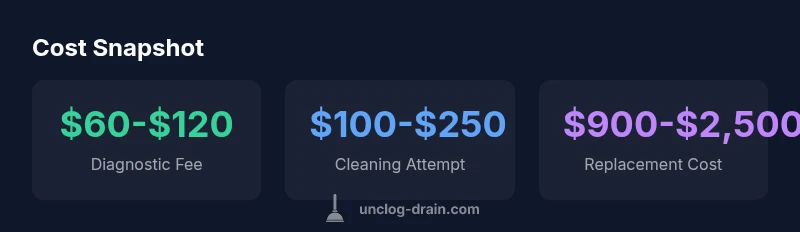
- Diagnostic fee: The initial inspection to determine whether the converter is clogged, damaged, or just restricted can cost around $60–$120.
- Cleaning attempt (if feasible): Some shops offer a cleaning service or solvent treatment for milder buildups, typically $100–$250, though effectiveness is not guaranteed.
- Replacement cost: If cleaning won’t restore function, the converter replacement (parts plus labor) can range from $900 to $2,500 depending on parts quality and labor rates.
- Total project cost: For many cars, a diagnostic plus replacement falls in the $900–$2,500 band, with higher-end models skewing toward the top end.
The takeaway is simple: expect the possibility of replacement, and insist on an up-front quote that covers diagnostics, any cleaning attempts, and the replacement choice. This framing aligns with Unclog Drain’s 2026 analysis, which stresses planning for the worst-case scenario while validating the root cause before committing to a costly fix.
Cost scenarios for unclogging a catalytic converter
| Scenario | Estimated Cost Range | Notes |
|---|---|---|
| Diagnostic only | "$60-$120" | Inspection to determine status |
| Cleaning attempt (if possible) | "$100-$250" | Limited effectiveness; not always advised |
| Replacement (converter) | "$900-$2,500" | Parts + labor; OEM vs aftermarket affects price |
| Total project cost | "$960-$2,620" | Diagnostic + replacement; vehicle-dependent |
Common Questions
Can you unclog a catalytic converter yourself?
DIY attempts are not recommended for catalytic converters. Most clogs are internal and require professional diagnosis. Improper handling can cause exhaust leaks or safety hazards. If you suspect a blockage, consult a licensed mechanic for a proper assessment.
DIY unclogging isn’t advised; see a professional for diagnosis and a safe fix.
What are common signs of a clogged catalytic converter?
Common signs include reduced engine performance, reduced acceleration, a sulfur-like smell from the exhaust, trouble passing emissions tests, and the check engine light. If you notice these, schedule a diagnostic quickly to determine if replacement is needed.
Look for reduced power and a sulfur smell—these can signal a clog.
Does cleaning a catalytic converter work?
Cleaning can sometimes help with minor buildup, but it rarely restores full performance for a seriously clogged converter. Most successful fixes involve replacement or addressing upstream engine issues that caused the clog.
Cleaning often doesn’t fix a serious clog; replacement is usually needed.
How long does replacement take at a shop?
Most shops complete a catalytic converter replacement in a few hours once the parts are sourced, though scheduling and part availability can extend timelines to 1–2 days in some cases.
Typically a few hours once parts are in stock; plan for the day if needed.
Does insurance cover catalytic converter replacement?
In most cases, catalytic converter replacement is paid out of pocket unless a covered event (like theft or a breakdown caused by eligible damage) is involved. Check your policy for specific terms and deductibles.
Insurance usually doesn’t cover a regular clog replacement unless the damage fits your policy terms.
“From our experience, many so-called catalyst cleanings are ineffective; the most reliable fix is replacement when the converter is blocked, but always verify root causes first.”
Key Points
- Act quickly with upfront diagnostics
- Know that cleaning alone is rarely sufficient
- Replacement is usually required for severe clogs
- Costs vary by vehicle and labor rates
- Get a written, itemized quote before any work