How to Unclog Grease in Pipes: A Safe DIY Guide for Homes
Learn safe, step-by-step methods to unclog grease in pipes without harsh chemicals. This DIY guide covers hot water flushes, plungers, snakes, enzymes, and prevention tips for homeowners.


To unclog grease in pipes, you’ll clear the blockage with hot water flushes, mechanical tools, and enzyme-based cleaners. Start with simple steps—hot water and dish soap—before progressing to a drain snake or plunger. Avoid caustic chemicals on older pipes and wear gloves and eye protection. This guide walks you through safe, effective methods.
Understanding Grease Blockages in Pipes
Grease problems start in the kitchen sink, bathroom drains, and in the main line where fats, oils, and grease (FOG) accumulate. When you pour fatty liquids down the drain, they coat the inside of pipes, creating a sticky layer that traps food particles, hair, and soap scum. Over time this reduces the pipe diameter, slows drainage, and invites more gunk to build up. The result is a stubborn clog that can cause backups and sanitary risks.
According to Unclog Drain, most grease-related clogs form when you repeatedly flush small amounts of grease that solidify on the pipe walls. The Unclog Drain Analysis, 2026 notes that once a grease film forms, it becomes a magnet for debris; water alone may not remove it. The key to unclog grease in pipes is to interrupt the solidification cycle with hot water, mechanical action, and occasional cleaners that break down fats without harming pipes. Pipes vary: metal pipes tolerate hotter water; older PVC may be more sensitive to high heat. Always start with the gentlest method, and escalate if drainage remains sluggish.
Next, we’ll outline a practical, step-by-step plan that balances safety and effectiveness. This guide emphasizes safe, non-caustic approaches and explains why certain techniques work for grease buildup. You’ll learn when to stop, when to call a professional, and how to prevent future clogs.
Step 1: Prepare and Assess the Situation
Before you begin any drain work, set up a clean workspace and protect nearby surfaces. Gather tools and materials, put on gloves and eye protection, and make sure there’s adequate ventilation. Inspect visible pipes for leaks or damage; if you notice unusual smells or standing wastewater, pause and consider calling a professional. A quick assessment helps you choose the right method and prevents accidental spills.Once you’ve prepared, clear the area around the sink or drain and remove any debris from the surface. If you’re dealing with a multi-fixture slowdown (kitchen sink and main line), proceed with caution because the blockage could be deeper in the system. In many homes, a grease-related clog starts small and propagates if ignored, so early intervention is worth the effort. From a safety perspective, never mix unknown chemicals and never mix baking soda/vinegar with commercial cleaners. Keep kids and pets away from the work zone.
As you proceed, keep a log of which methods you tried and the results. This helps you decide whether to continue DIY attempts or contact a professional. The goal is to restore steady drainage while protecting the integrity of your pipes and venting system.
Step 2: Hot Water Flush and Dish Soap Strategy
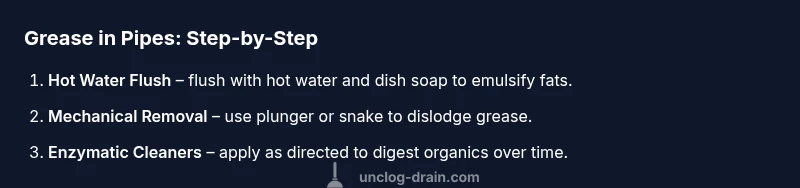
A hot water flush is often the first, gentlest tactic for grease buildup. Boil a large pot of water, or use hot tap water if you know the system can tolerate it. Slowly pour the hot water down the drain in stages, pausing briefly to let the heat loosen the fat coating on the pipe walls. Add a squirt of dish soap to help emulsify fats and lubricate the flow, then flush again with more hot water. If a solid fat chunk is present near the opening, you may need to repeat the process several times.
This approach is especially effective for mildly congested pipes and can prevent the need for harsher methods. However, avoid exposing PVC pipes to boiling water for extended periods, as repeated exposure could stress the material. If the clog persists after a few rounds, proceed to mechanical methods in a controlled fashion. Remember: patience is essential when using heat-based methods to unclog grease in pipes.
Pro tip: Use a bucket to catch any overflow, and keep towels ready to manage splashes. If you notice steam or a strong chemical smell, stop and reassess—ventilation is important for safety and comfort.
Step 3: Mechanical Removal with Plunger or Drain Snake
If heat and soap fail to restore flow, mechanical removal is the next logical step. Start with a cup plunger or flange plunger designed for sinks. Create a tight seal around the drain opening and use strong, vertical plunging motions to push and pull the blockage. If the water doesn’t move after several attempts, switch to a drain snake (auger) to reach deeper grease buildup. Insert the snake slowly, rotate it to break up the clog, and pull back the distal material.
Use caution when using a drain snake in a sink to avoid scratching or bending pipes. If you encounter a solid obstruction and the snake won’t budge it may be a sign of a more robust grease accumulation or a secondary blockage, in which case stop and consider professional help. Always disconnect the device and clean up after finishing to prevent spreading any residues.
Tip: Work slowly and feel for changes in resistance. A gradual reduction in resistance usually indicates the clog is breaking up and water will begin to flow again.
Step 4: Enzyme-Based Cleaners and Natural Alternatives
Enzyme-based cleaners are a popular non-caustic option for ongoing maintenance and minor clogs. These cleaners use enzymes or bacteria to digest organic material, including fats and oils. They are typically safer for pipes than chemical cleaners and can be a good preventative measure if you have recurring grease issues. Follow the label directions carefully, pour the recommended amount into the drain, and allow the solution to work for the time specified. Do not mix enzymatic cleaners with other cleaners or chemicals.
Natural alternatives like baking soda and vinegar can provide some relief for surface-level grime; they should not be relied upon for deep grease blockages. If using these methods, pour baking soda down first, follow with vinegar, and flush with hot water after the fizzing subsides. The goal is to avoid chemical reactions that could cause pressure buildup or pipe damage. Enzyme cleaners are often favored for their targeted biodegradation of fats in the pipe network, including the main drain in some homes.
This approach is best used as part of a regular maintenance routine to reduce the risk of future grease accumulation rather than as a one-off solution for a stubborn clog. Consistent use can help keep minor blockages from becoming full-blown clogs over time.
Step 5: When to Stop and Call a Pro
DIY can solve many grease-related clogs, but there are clear signs you should stop and seek professional help. If you experience persistent slow drainage after multiple attempts, backups in other fixtures, sewage odors, or water backing up into the sink while using other drains, these are strong indicators of a deeper problem that requires professional equipment and expertise. Pro plumbers can assess main lines, vent stacks, and pipe integrity to prevent further damage. Do not force tools when you feel unusual resistance or suspect a compromised pipe.
As a rule of thumb, if more than one fixture is affected, if you’re dealing with older pipe materials, or if a DIY approach has already failed twice, call a pro to avoid costly damage and ensure a proper resolution. The aim is to restore reliable drainage with solutions that won’t create new issues down the line. When in doubt, a quick consultation with a licensed plumber can save time and money in the long run.
Step 6: Preventive Practices to Keep Grease Out of Your Pipes
Prevention is the best cure for grease-related clogs. Use a solid metal or mesh screen over kitchen and bathroom drains to catch solid fats and food particles before they enter the pipes. Dispose of cooking grease in a sealed container and throw it in the trash rather than pouring it down the drain. Regularly flush drains with hot water and a mild dish soap, followed by a clear water rinse. Consider periodic enzyme-based maintenance treatments to keep organic matter in check. If you have a garbage disposal, run it with cold water to push solids through and avoid introducing grease into the disposal system.
In apartment or multi-family homes, coordinate with neighbors or building management to ensure consistent grease management across all units. Finally, monitor for slow drainage and address it early to prevent a larger issue from developing. The more you keep grease out of the pipes, the less likely you are to encounter clogs that disrupt daily routines.
Step 7: Quick Troubleshooting Checklist
- Is the drain only slow after a specific activity (cooking, dishwashing)? If yes, target the grease source and flush thoroughly.
- Did you hear gurgling or notice backups in other fixtures? Pause and consider a professional assessment.
- Are you using non-caustic methods? Avoid mixing cleaners and never use caustic agents on aging pipe systems.
- Is the water flow improving after each step? If not, reassess and consider escalation to mechanical methods or professional help.
- Have you implemented preventive measures? Screens, proper disposal, and routine maintenance help avoid recurrence.
Tools & Materials
- rubber gloves(Protect hands from grime and cleaners)
- safety goggles(Eye protection against splashes)
- cup or flange plunger(For initial suction and dislodging)
- drain snake / auger(Reach deeper into the pipe to break up grease)
- bucket(Catch waste and spills)
- dish soap(Help emulsify fats during hot-water flush)
- pot of hot water(Use safely and test pipe tolerance)
- enzymatic drain cleaner(Non-caustic option for ongoing maintenance)
Steps
Estimated time: 30-60 minutes
- 1
Prepare workspace and safety gear
Set up a clean, ventilated area. Put on gloves and goggles, and ensure you have all tools within reach. This reduces mess and protects you during the process.
Tip: Double-check seals on the drain and keep a towel handy for spills. - 2
Heat and flush the drain
Boil water and slowly pour it down the drain in stages. Add a squirt of dish soap to help emulsify fats as you flush.
Tip: Pause between pours to let heat work on the grease coating. - 3
Plunge the blockage
Use a cup or flange plunger to create suction and push the clog away from the opening. Repeat multiple times if needed.
Tip: Maintain a good seal and avoid overloading the sink with water. - 4
Use a drain snake
If plunging fails, insert the snake and rotate to break up the grease mass deeper in the pipe. Retrieve debris and flush again with hot water.
Tip: Go slowly to feel progress without damaging the pipe. - 5
Apply enzymatic cleaner
Pour the recommended amount of enzyme-based cleaner and let it work according to label instructions to digest organic matter.
Tip: Do not mix cleaners with other chemicals. - 6
Final check and cleanup
Run hot water for several minutes to ensure smooth flow. Clean up tools and dispose of waste properly.
Tip: Record what worked for future maintenance.
Common Questions
Can I use baking soda and vinegar to unclog grease in pipes?
They may help mildly for surface grime but rarely clear a solid grease blockage. They should be used as a preventive aid rather than a primary cure for stubborn clogs.
Baking soda and vinegar can help minor grime, but they usually won't clear a solid grease blockage on their own.
Is hot water safe for PVC pipes?
In most homes, hot water is safe for PVC, but repeatedly using very hot water can stress connections. Start with warm to hot water and monitor for signs of stress.
Hot water is generally safe for PVC, but avoid extreme temperatures repeatedly. Start warm and test.
Should I use chemical drain cleaners for grease?
Most caustic cleaners are not recommended for grease clogs and can damage pipes or traps. Opt for non-caustic cleaners or enzymatic solutions and rely on mechanical methods for stubborn blockages.
Avoid caustic cleaners for grease and use enzymes or mechanical methods first.
How long do enzymatic cleaners take to work?
Enzymatic cleaners usually take hours to days to show full effect, depending on blockage size and flow. Always follow the product label for timing.
Enzymatic cleaners work over hours to days; follow the label for timing.
When should I call a plumber?
If multiple fixtures are affected, if backups persist after several attempts, or if you notice sewage odors, unusual gurgling, or visible pipe damage, call a professional.
Call a plumber if DIY attempts fail or you notice backups, odors, or pipe damage.
Can grease in pipes cause sewer line damage?
Yes, neglected grease buildup can contribute to sewer line issues, especially in main lines. Regular maintenance reduces this risk.
Grease buildup can affect sewer lines; maintain drains to reduce risk.
Watch Video
Key Points
- Identify grease buildup early to prevent major clogs
- Prioritize non-caustic methods first (hot water, soap, enzymes)
- Mechanical means (plunger, snake) are effective next steps
- Know when to call a pro to avoid pipe damage
- Adopt preventive practices for long-term drainage health