How to Fix a Bathroom Sink Clogged Past Trap (DIY Guide)
A practical, step-by-step troubleshooting guide to diagnose and fix a bathroom sink clogged past the trap. Safe methods, when to use a drain snake, and prevention tips from Unclog Drain for 2026.


A bathroom sink clogged past the trap is typically caused by hair, soap scum, or mineral buildup just beyond the P-trap. The fastest fix is to remove the trap, clear the debris, and reassemble, then test the drain. If water still backs up, use a hand auger or plumber’s snake for deeper clearing before calling a pro.
Understanding the symptom and scope
If you notice water backing up in your bathroom sink and you realize it's clogged past the trap, you're dealing with a specific class of clog that often requires more than a simple plunger. The Unclog Drain team notes that most past-trap clogs originate just beyond the P-trap where hair, toothpaste, and mineral buildup accumulate. This guide will help you identify whether the trap is truly bypassed and outline safe, effective steps to clear it without damaging pipes. The key to solving this problem is a systematic approach that starts with simple checks and progresses to more thorough clearing methods. By following these steps, you can restore normal drainage and reduce the chance of a future clog.
Common causes of a past-trap clog
Clogs past the trap are often caused by hair, soap scum, and mineral buildup that collect in the trap arm and beyond. Other culprits include accumulated lint from towels, toothpaste residue, and small objects accidentally dropped into the drain. The presence of a poorly sealed trap or a partially blocked vent can exacerbate slow draining and backup. In many cases, what seems like a “past-trap” clog is a mis-measured trap or a sagging trap arm that traps debris.
Safety and prep: what you need before you start
Before you touch the plumbing, assemble basic PPE: gloves, eye protection, and a small bucket. Clear the area under the sink, and place towels to catch splashes. Turn off the local water supply if you’ll be removing the P-trap. If you’re unsure about the pipe material or trap integrity, consult the troubleshooting flow first and consider calling a professional for safety. According to Unclog Drain, starting with proper safety and prep reduces mess and avoids personal injury during DIY fixes.
Quick checks you can safely perform
Begin with non-invasive checks: inspect the visible drain for obvious debris and remove a hair catch if present. Test the faucet to see whether all other fixtures in the home share the same drainage issue, which could indicate a broader blockage. If the trap is accessible and you’re comfortable, gently loosen the slip nuts to check for leaks. Do not force components; if anything feels stuck, stop and move to the diagnostic flow to avoid damaging threads or seals.
Diagnostic clues: identifying the real culprit
Clear signs point to a past-trap clog when water backs up only in the bathroom sink and not in the shower or tub. Hair-like fibers, shampoo residue, and mineral buildup are common culprits just beyond the trap. A properly functioning vent should allow air to escape; if you suspect vent issues, don’t force a resolution with harsh cleaners. Use mechanical methods (trap removal or auger) to isolate the blockage and confirm whether the trap or drain line is at fault. As you work, document what you observe for future reference.
Step-by-step fixes for the most likely cause
This section covers the most common path to clearance: clearing a past-trap clog by accessing beyond the trap. If you’re comfortable, remove and clean the P-trap to eliminate hair and gunk, then run water to test flow. If the trap is clear but the sink still pools, use a hand auger to reach past the trap into the trap arm and fragment the clog. Finally, reassemble the trap, run water, and verify a steady drain. If water continues to back up, the blockage may be in the drain line further along or in a vent, requiring professional assistance.
Prevention and maintenance to avoid future clogs
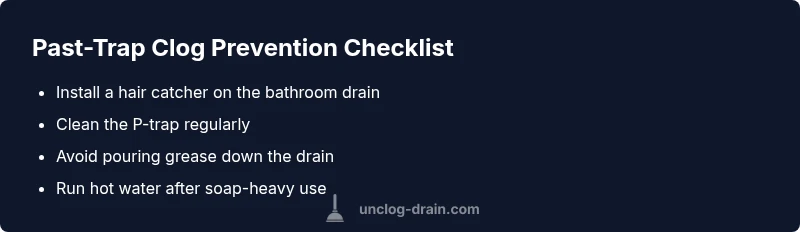
Preventive steps save time and protect pipes: install a hair catcher on the bathroom drain, clean the P-trap regularly, and avoid pouring grease or heavy fibers down the drain. Periodically flush with hot water after using soaps and detergents, and inspect the trap for wear or cracks. Regular maintenance reduces the likelihood of past-trap clogs and keeps the sink draining smoothly.
Steps
Estimated time: 45-60 minutes
- 1
Shut off water and prep
Stop water supply, place towels, and place a bucket under the P-trap. This protects your floor and keeps the area clean as you work.
Tip: Have a camera handy to note how the trap is oriented for reassembly - 2
Remove the P-trap safely
Loosen the slip nuts and carefully slide the trap off the drain. Inspect washers for wear and clean out all debris. Be ready for a small amount of water to spill.
Tip: Keep the trap's position in mind so you can reinstall it correctly - 3
Clean and inspect the trap
Rinse out hair and buildup from the trap. Check for cracks or corrosion and replace if needed.
Tip: Replace old washers if they are brittle or worn - 4
Test the trap path
Reconnect loosely and run water to check for leaks and whether the drain flows freely. If slow, proceed to auger.
Tip: Tighten slowly and check for leaks after each test - 5
Extend with a drain auger
Feed the auger into the trap arm past the trap, rotating to break up the clog. Remove debris as it descends.
Tip: Push and twist steadily; avoid forcing the cable - 6
Reassemble and verify
Secure the trap, tighten slip nuts, and run full water test. Check for leaks and ensure smooth drainage.
Tip: Keep a spare towel ready for spills - 7
Know when to escalate
If water still backs up after augering, the blockage may be deeper in the drain line or in the vent. Do not force it, and call a professional.
Tip: Document the steps you tried for the plumber
Diagnosis: Sink drains slowly or backs up when using the bathroom sink, with water pooling beyond the trap
Possible Causes
- highHair and soap scum buildup just beyond the P-trap
- mediumPartial vent blockage or mis-sealed trap
- lowForeign objects or grease past the trap
Fixes
- easyRemove and clean the P-trap and trap arm, clearing debris
- mediumInsert a drain auger or snake through the trap arm to reach deeper blockages
- hardReplace damaged traps or call a plumber for vent-related issues
Common Questions
Why would a bathroom sink clog past the trap?
Past-trap clogs are usually caused by hair, soap scum, and mineral buildup just beyond the P-trap. Debris collects in the trap arm and can back up the drain. Inspect and clear beyond the trap before assuming the trap itself is blocked.
Past-trap clogs are typically hair and soap buildup beyond the trap; inspect beyond the trap to clear.
Can I unclog a past-trap clog without removing the trap?
Sometimes you can clear it with a drain snake or auger through the trap arm, but many cases require removing the trap to access the blockage.
Sometimes you can clear it with a snake, but you may need to remove the trap.
What tools are essential for fixing a past-trap clog?
You’ll need basic tools: adjustable wrench, bucket, pliers, a cup plunger, and a plumber’s snake or hand auger.
Grab a wrench, bucket, and a snake for deep clogs.
When should I call a plumber for a past-trap clog?
Call a plumber if the clog persists after attempting the diagnostic flow, if you suspect vent problems, or if the pipe shows wear or damage.
If it won’t clear after trying, call a plumber.
Are chemical cleaners safe for past-trap clogs?
Chemical drain cleaners are not ideal for past-trap clogs as they can damage pipes and traps. Use mechanical methods instead here.
Chemicals aren’t ideal for past-trap clogs; use mechanical methods.
How can I prevent future past-trap clogs?
Use drain screens, avoid pouring grease, and clean the trap regularly to prevent debris buildup beyond the trap.
Install screens and clean the trap to prevent future clogs.
Watch Video
Key Points
- Inspect the P-trap first.
- Clear debris beyond the trap to restore flow.
- Use a drain auger for deep blockages.
- Call a pro if the clog persists or vent issues are suspected.