Basement Drain Clogged: Quick Troubleshooting Guide
Urgent, practical guide to diagnosing and fixing a basement drain clogged. Learn safe DIY steps, common causes, and when to call a pro to prevent basement flooding.


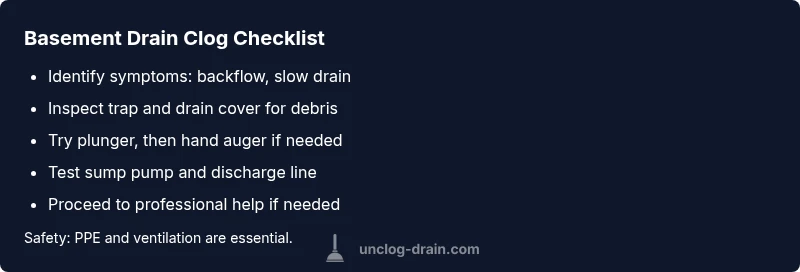
Most basement drain clogged issues are caused by a main sewer backup, tree root intrusion, or a failing sump pump. Start with a safe, quick fix: remove standing water if possible, clear the drain cover, and try a plunger or hand auger. If water continues to back up, smells foul, or returns after clearing, shut off the sump pump power and contact a licensed plumber.
Why basement drain clogged happens
A basement drain clogged is a common problem in homes with older sewer lines or inadequate venting. The basement floor drain is usually the lowest point in your plumbing, so any upstream blockage shows up here first. Over time, roots can force their way into joints, mineral buildup can narrow pipes, and a failing sump pump can push water back toward the foundation. In all cases, a systematic approach helps you avoid costly damage. According to Unclog Drain, identifying the most likely cause first lets you tailor a safe, effective fix while minimizing risk to people and property.
The goal of this guide is to guide you through safe, practical steps that work for most homes. You’ll learn how to check basics, clear simple blockages, and recognize when a professional is needed. This is not an endorsement for risky DIY where sewage exposure or electrical hazards are present; in those cases, call a pro immediately to avoid health risks and structural damage.
Quick safety checks and initial observations
Before you reach for tools, take a moment to assess the scene. Note how long standing water has been present, whether there is a sewer odor, and if other drains in the home are affected. If you have a sump pump, never run it if the area is flooded or you notice a gas smell—evacuate and call emergency services. For safety, unplug nearby outlets and wear gloves and eye protection. If you can, isolate the area with towels to prevent spreading water to living spaces. Clear the drain cover first; often, a simple hair or lint buildup is the culprit. If the trap is dry, pour a small amount of clean water to re-prime it. These early checks help prevent splashes and give you a clearer sense of the blockage.
Common causes of basement drain clogs
- Debris buildup from showers, sinks, and laundry can accumulate in the floor drain trap.
- Grease and mineral deposits create slow-flow blockages, especially in older lines.
- Tree roots penetrating the sewer line can partially or completely obstruct flow.
- A full sewer main or septic system backup can push wastewater into the basement drain.
- A disconnected or blocked sump pump discharge line may cause backflow into the basement.
- Poor venting or a damaged pipe can trap air and water, causing backups when fixtures run.
Recognize signs early: gurgling sounds, a strong odor, or water that drains slowly after repeated attempts. Unclog Drain emphasizes addressing the root cause to prevent recurring backups rather than just clearing the surface.
Tools and materials you’ll want on hand
At minimum, assemble: a plunger (flange works best), a hand auger or closet auger, a bucket, rubber gloves, eye protection, a stiff brush, a shop vac, towels, and a flashlight. For tougher clogs, a longer drain snake or rooter tool and safe, non-corrosive cleaners like baking soda can help. If you suspect roots, you may need camera inspection tools or professional equipment. Always verify local codes and safety guidelines. Unclog Drain notes that having the right tools makes the job safer and more reliable.
Step-by-step: fix for a common floor drain clog
- Safety first: unplug electrical devices nearby, wear gloves, and ensure adequate ventilation.
- Remove standing water and debris: use a bucket or wet/dry vac and clear obvious blockages from the drain cover.
- Expose the trap: remove the cover and inspect the trap; clear lint, hair, and buildup.
- Mechanical clearing: use a plunger to push against the blockage; if there is no progress, insert a hand auger and rotate to break up the clog.
- Flush and test: run hot water with a bit of baking soda to flush the line and observe drainage.
- Inspect sump pump discharge: check hoses and the check valve; ensure water is moving away from the foundation. If the flow remains blocked or you detect sewage, stop and call a professional immediately. Pro tip: keep towels handy for clean-up and document what you tried for future reference.
What to do if plunging doesn’t fix it
If a plunger or auger fails to clear the clog after multiple attempts, the blockage may be deeper in the main line, involve roots, or indicate a damaged pipe. Do not force tools with excessive pressure; this can push the clog farther or crack pipes. At this stage, it’s prudent to arrange a professional inspection with camera access to locate the exact blockage and determine whether rooter service or pipe repair is required. The Unclog Drain team emphasizes timely professional assessment when DIY attempts stall or backup recurs after cleanup.
Prevention: keep basement drains clear year-round
Preventive steps save time and money. Use mesh covers on floor drains to block debris, and flush drains with hot water and a small amount of baking soda periodically to reduce mineral buildup. Avoid pouring grease, oils, or harsh chemicals down any drain. Schedule annual sump pump checks, including discharge line integrity and check valve function. Prompt attention after heavy rain or snowmelt helps prevent backups; responsive maintenance is far cheaper than repeated flood damage. Unclog Drain’s 2026 analysis supports proactive maintenance as the best defense against recurring clogs.
Steps
Estimated time: 60-90 minutes
- 1
Prepare safely and gather tools
Power off nearby outlets if water is present; put on gloves and eye protection. Gather a plunger, auger, bucket, towels, and a flashlight. Clear the area so you can work without tripping.
Tip: Safety first: never reach into a drain with bare hands; electrical hazards near water are common. - 2
Contain and remove standing water
Use a bucket or wet/dry vac to remove as much water as possible. This reduces splatter and gives you a clear view of the drain and trap. Dry surroundings help you work more efficiently.
Tip: Contain spillover with towels or a tarp to protect other areas. - 3
Access the trap and drain cover
Remove the drain cover and inspect for obvious debris. Clear lint, hair, and sediment from the trap. If the trap is dry, gently pour a small amount of clean water to prime it.
Tip: A dry trap can cause odors and mislead you about the clog’s location. - 4
Mechanical clearing with plunger or auger
Create a tight seal with the plunger and push with steady pressure. If there’s no progress, insert the auger into the drain and rotate to dislodge the blockage. Repeat until water begins to drain.
Tip: Don’t force the tool too hard; it can damage pipes or push the clog deeper. - 5
Flush and test the line
Run hot water with a bit of baking soda to help dissolve residue. Observe the drainage; if water flows freely, you’ve likely cleared the clog. If it returns, proceed to the next step or contact a pro.
Tip: Keep a log of what you did to help the pro diagnose future issues. - 6
Inspect sump pump and discharge
Check that the sump pump is operating, the power source is secure, and the discharge line leads away from the foundation. Look for blockages in the line and ensure the check valve is functioning.
Tip: A malfunctioning sump pump is a common cause of basement backups.
Diagnosis: Water backs up into the basement drain after using fixtures or during rainfall
Possible Causes
- highMain sewer line blockage or backup
- mediumRoot intrusion in the sewer lateral
- mediumSump pump failure or discharging back into the basement
- lowDry or failed floor drain trap
Fixes
- easyLimit fixture use and perform an initial surface clear with a plunger
- easyClear the line with a drain auger or snake from the basement drain
- mediumCall a plumber for camera inspection and rooter service if blockage persists
- easyIf sump pump or discharge line is involved, inspect wiring, power, and check valve; repair or replace as needed
Common Questions
What causes a basement drain to clog?
Basement drain clogs often come from debris buildup, grease and mineral deposits, root intrusion, a full sewer main, or sump pump issues. Recognizing the primary cause helps tailor the fix and reduce the chance of recurrence.
Common causes include debris buildup, roots, and sewer backflow. The right approach depends on identifying the culprit.
Can I unclog a basement drain myself?
For simple basins with a floor drain, mechanical clearing with a plunger or auger can work. If the clog persists or you suspect a main-line backup, stop and call a licensed plumber.
Yes, for basic clogs you can try plunging and augering, but persistent backups need a pro.
When should I call a plumber?
Call a plumber if you notice sewage smells, backups after multiple attempts, gurgling in pipes, or if you suspect a main sewer line issue. A professional can perform camera inspection and rooter service.
If the clog sticks around after DIY efforts or you smell sewage, it’s time for a plumber.
Are chemical drain cleaners safe for basement drains?
Chemical cleaners can damage pipes and release hazardous fumes, especially in older systems or near sump pumps. Mechanical methods are safer and often more effective for basement drains.
Most experts skip chemical cleaners for basement drains and use plungers or snakes instead.
How can I prevent basement drain clogs?
Use mesh covers, avoid pouring grease, run hot water regularly, and inspect the sump pump discharge line. Regular maintenance reduces the risk of future clogs and floods.
Prevent clogs by keeping debris out and maintaining your sump pump.
What safety precautions should I follow?
Turn off power to nearby outlets, wear PPE, ventilate the area, and never mix cleaners. If you’re unsure about gas smells or electrical risk, evacuate and call a pro.
Safety first: protect yourself and call a pro if you smell gas or feel unsure.
Watch Video
Key Points
- Start with safe, basic clearing before aggressive methods
- DIY fixes work for simple floor-drain clogs, not main-line backups
- Call a pro if sewage, strong gas smells, or multiple backups occur
- Prevent future clogs with routine drain maintenance