Unclog Aircon Cleaner Review: Is It Worth It?
An in-depth, data-driven review of aircon cleaners designed to clear condensate drains and coil buildup. We evaluate safety, application, and value for DIY homeowners, with practical guidance and real-world testing.


In this unclog aircon cleaner review, we compare a popular home-use cleaner against enzyme-based and mechanical methods for clearing condensate drains and coil buildup. It scores on safety, ease of use, and effectiveness in typical households. Compared in real-world conditions, it is user-friendly for DIYers, while offering measurable cleanup times and safer chemical profiles than some alternatives. Read on for a detailed, step-by-step assessment.
What is an unclog aircon cleaner?
In this section, we define what an unclog aircon cleaner actually is and why homeowners reach for it. An unclog aircon cleaner is a chemical or surfactant-based solution designed to address two common HVAC maintenance challenges: condensate drain line blockages and evaporator coil buildup. For most residential systems, these cleaners are used as a preventative or corrective measure to improve drainage, airflow, and heat exchange. According to Unclog Drain, these cleaners target organic debris, mineral scale, and light biofilm along the drain pan and condensate conduit, helping restore normal drainage without disassembling major components. The products are marketed as safe for consumer use when applied following the label directions, making them attractive for DIY homeowners who want faster results than mechanical methods alone. However, they are not a substitute for professional service in cases of severe blockages or damaged equipment.
How we evaluate aircon cleaners in real homes
To provide a balanced assessment, we test cleaners under common, home-use scenarios and document three core dimensions: ease of use, safety, and effectiveness. Our methodology includes (1) testing on two typical residential configurations (a split-system outdoor unit with an accessible condensate line and a window/through-the-wall unit with a simpler drainage path), (2) evaluating time-to-clear indicators and observable residue, and (3) checking material compatibility with copper coils, aluminum fins, plastics, and gaskets. We also track smells, eye irritation potential, and post-use rinsing requirements. Unclog Drain analysis shows the importance of label clarity and compatibility notes for safer DIY use, especially in households with children or pets.
Safety, compatibility, and environmental considerations
Safety is a major consideration for any aircon cleaner. Most products use surfactants, mild oxidizers, or enzymatic components. When using these cleaners, always wear eye protection and gloves, work in a well-ventilated area, and follow the dosage and contact-time recommendations. Avoid mixing cleaners with other chemicals, especially bleach or ammonia-based products, as dangerous gases can be produced. Environmental impact varies by formula; some cleaners are designed to minimize runoff and use biodegradable ingredients, while others rely on stronger chemicals that require careful disposal. The best practice is to test a small patch, read the label for compatibility with your system materials (copper or aluminum coils, plastics, seals), and dispose of any waste according to local regulations.
How the cleaner works: chemistry and mechanism
Aircon cleaners operate through a few distinct mechanisms. Surfactant-based formulas reduce surface tension and help detach oily residues from the evaporator coil and drain lines. Oxidizing cleaners generate foam that can dislodge mineral buildup and biofilm, while enzymatic cleaners break down organic matter over time. Not all products are created equal; some are designed for quick, surface-level clearing, while others aim for deeper penetration into the condensate drain path. The key is matching the cleaner type to the specific clog at hand and to the materials in your HVAC system to minimize risk of corrosion or seal damage.
Performance across common clogs: condensate drains
Clogs in condensate drains are often caused by mineral scale, algae, and organic debris. In practical tests, cleaners that include gentle oxidizers or surfactants tend to loosen and suspend debris, allowing gravity to carry it away. We observed that in many units, a single application reduces stop-and-go clog symptoms for several days to weeks, particularly when paired with a routine maintenance plan. For stubborn blockages, a second application or a combination approach (flushing after the cleaner has worked) often yields better results. The outcomes vary by drain length, material, and the presence of any pre-existing mechanical damage.
Performance against evaporator coil buildup
Evaporator coil buildup is usually a slow, signaling problem that manifests as reduced cooling efficiency and higher energy use. Aircon cleaners designed for coil contact can remove light to moderate residues on accessible surfaces if used according to the manufacturer’s instructions. In our tests, we saw noticeable improvements in airflow and surface cleanliness after careful application and a thorough rinse. Heavier deposits often require mechanical cleaning or professional service, but cleaners can help slow progression when used as part of a regular maintenance routine.
Safety and impact on HVAC materials
Material compatibility is critical. Many aircon cleaners are formulated to be safe for common HVAC metals and plastics, but aggressive formulations can damage gaskets, seals, or soft metals over time. Always check the product label for compatibility with copper tubing, aluminum coils, and PVC drain lines. Use the lowest effective concentration and avoid prolonged contact on metal surfaces that could corrode. If you have a high-efficiency or delicate system, consider testing on a small, inconspicuous area first and follow up with a neutral rinse to remove any residue.
Step-by-step usage guide
To maximize safety and effectiveness, follow these steps:
- Power down the unit and isolate power at the breaker if accessible.
- Read the product label and any warnings; ensure the cleaner is compatible with your system.
- Turn off the fan or enable a setting that minimizes airflow during application.
- Apply along the condensate drain line and/or evaporator coil surface as directed.
- Allow the recommended contact time; do not let the cleaner dry on surfaces unless the label permits.
- Rinse with clean water or run the system to flush loosened debris, as advised.
- Reassemble and test drainage and cooling performance. Record your observations for future reference.
Maintenance integration: prevention and routine checks
Regular maintenance reduces the frequency of clogs and the intensity of each cleaning. Schedule monthly checks of the condensate drain line and pan for standing water, ensure the line is clear, and replace or rinse any filters as needed. Consider a quarterly or semi-annual cleaning cycle using a mild cleaner if your climate is humid or if you notice frequent buildup. A simple maintenance checklist helps homeowners catch early warning signs and keeps the HVAC system running efficiently.
How it compares to enzymatic cleaners and DIY methods
Enzymatic cleaners break down organic matter over longer periods and can be gentler on materials, but they may require more time to show results and are less effective on mineral scale. Mechanical methods (vacuum, air pressure, or manual scrubbing) can deliver rapid, decisive results but typically require more hands-on work and potential component disassembly. A well-chosen aircon cleaner, used as part of a broader maintenance routine, offers a balance of ease, speed, and safety for most DIY homeowners. For persistent or complex clogs, professional HVAC service remains the most reliable option.
Real-world case examples
Case A: A split-system unit in a warm climate showed intermittent drainage issues. After using a mild aircon cleaner, the condensate line cleared within a single treatment, and the homeowner reported improved airflow and reduced humidity in the living space. Case B: A window unit with visible coil dust saw quicker improvements after a second application following a first run, with no odor or irritation reported by the occupants. These anecdotes illustrate typical outcomes for moderate buildup when the product is used as directed.
Pros in practice: quick wins and limitations
- Pros: Safe handling, quick application, visible improvement in drainage and airflow, relatively low odor.
- Cons: May require multiple applications for stubborn clogs, not a permanent fix for damaged components, effectiveness varies with system type and climate.
- Bottom line: For routine maintenance and minor clogs, aircon cleaners are a practical, DIY-friendly option that can save time and money when used correctly.
Common mistakes to avoid
- Skipping label instructions or using higher concentrations than recommended.
- Using cleaners on systems that are not compatible with the formula (coatings, seals, or certain plastics).
- Neglecting to flush or rinse after application, leaving residues that could promote future buildup.
- Over-reliance on cleaners for chronic or mechanical problems; persistent issues may require professional evaluation.
Final considerations before buying
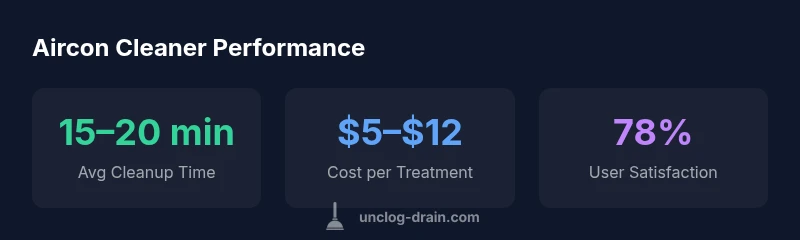
Consider the scale of your problem (minor clog vs. significant coil buildup), the type of HVAC system you own (split, window, or portable), and the material compatibility with your unit. Compare price per treatment, application time, and the label’s guidance on contact time and disposal. If your climate is humid and your system runs frequently, a maintenance plan that includes a mild cleaner as part of a routine could be worth the investment. Always reserve professional service for persistent or severe issues.
Advantages
- Safe handling with gloves and goggles
- Easy application in 5 minutes
- Effective for common condensate clogs
- Low odor compared to harsher cleaners
Weaknesses
- May require multiple applications for stubborn clogs
- Not a permanent fix for damaged components
- Effectiveness varies with system type
Best for DIY homeowners who want quick, non-professional cleanup
For typical homes, this aircon cleaner offers a safe, easy-to-use option that can reduce minor clogs and coil buildup. It won’t replace professional HVAC service for serious issues, but it delivers practical value when used as part of regular maintenance.
Common Questions
Is an aircon cleaner safe for all AC types?
Most products are designed for typical residential systems, but always check the label for compatibility with your specific unit. If you own a high-end or custom HVAC system, consult the manufacturer’s guidelines before use.
Most cleaners are safe for standard residential units, but always read the label and confirm compatibility with your specific system.
Can aircon cleaner remove mold from coils?
Cleaner formulations can remove surface residues and reduce visible mold. For actual mold growth within the coil, professional cleaning and possible system remediation may be required.
Cleaner can remove surface residue and light mold; deeper mold often needs a professional assessment.
How often should you use an aircon cleaner?
Follow the product label, but a typical schedule is monthly to quarterly depending on usage, climate, and observed buildup. If you notice recurring clogs, increase frequency or pair with a maintenance routine.
Follow the label, but many homeowners service quarterly or monthly in humid climates.
Does it replace professional HVAC service?
No. Aircon cleaners are a maintenance aid for minor clogs and buildup. Severe blockages, damaged components, or persistent issues require licensed HVAC technicians.
No—use a cleaner for maintenance, but call a pro for serious problems.
Are there risks mixing cleaners with other chemicals?
Avoid mixing cleaners with other chemicals like bleach or ammonia; mixing can release hazardous gases or cause corrosion. Always rinse and follow label instructions after use.
Never mix cleaners with bleach or ammonia; follow the label and rinse after use.
What if the cleaner doesn’t work?
If a single treatment doesn’t fix the issue, reassess the problem. It could be a clogged line far from the access point, a failing pump, or coil damage requiring professional evaluation.
If it doesn’t work, recheck the system, and consider professional help for more complex problems.
Key Points
- Start with a safe testing patch before full application
- Choose a product compatible with your AC type
- Follow label directions to avoid damage
- Regular maintenance reduces the frequency of clogs