How to Unclog a 1/2 PVC Pipe: Step-by-Step
Step-by-step guide to unclog a 1/2 inch PVC pipe using safe, practical DIY methods—from plungers and mini-augers to baking soda-vinegar flushes and maintenance tips.


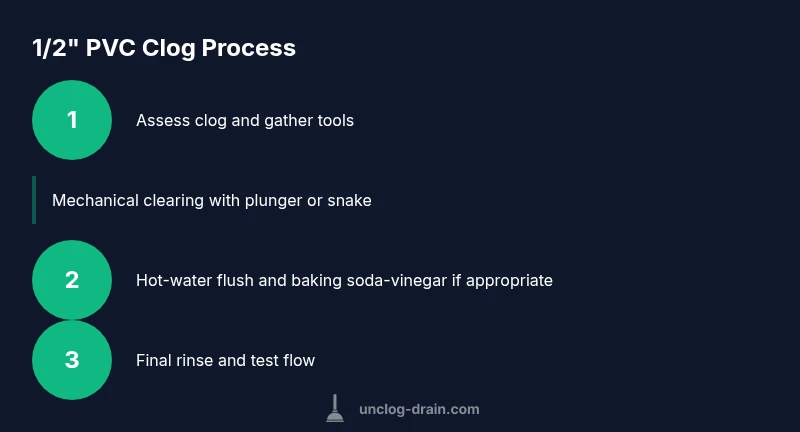
To unclog a 1/2 inch PVC pipe, start with a mechanical approach designed for small-diameter lines (plunger or drain snake), then try a gentle hot-water flush and a baking soda–vinegar treatment. If the clog persists, repeat the flush or switch to a safe liquid auger before resorting to harsh cleaners.
Understanding 1/2-Inch PVC: Why Clogs Form
In many homes, a 1/2 inch PVC pipe is used for branch lines, sinks, and some bathroom fixtures. When you search for how to unclog 1 2 pvc pipe, you're looking for a method that respects small-diameter pipes while delivering real flow restoration. Clogs form from soap scum, hair, mineral buildup, and debris that get trapped at joints or bends. PVC is forgiving, but it can warp if you use harsh solvents, so start with mechanical methods and gentle flushing. According to Unclog Drain, methodical clearing preserves pipe integrity and reduces repeated blockages. Understanding where clogs typically develop (trap, P-trap, elbow, or straight run) helps you pick the right tool and technique. This section lays the groundwork for choosing the safest, most effective approach.
Safety and Preparation Before You Start
Before you reach for tools, take a few safety steps. Put on gloves and eye protection. Work in a well-ventilated area and avoid mixing cleaners in a closed space. If you’re dealing with a wall or floor drain, turn off nearby appliances or water supply to limit mess. Place towels or a bucket to catch spills and protect yourself from splashes. According to Unclog Drain, preparation reduces accidents and gives you clear visibility to pinpoint the clog’s location. Gather the essential tools now so you won’t have to search mid-task, and check for any signs of damage in the pipe run that might require professional help.
Mechanical Clearing: Plungers, Snakes, and Small-Diameter Tools
Start with a mechanical approach designed for small-diameter lines. A cup plunger with a flange works best for PVC pipes, creating a tight seal around the opening. If the drain is accessible, cover the overflow opening to prevent air leaks and maintain pressure. A small-diameter drain snake or flexible auger can reach around bends without damaging the pipe. Use slow, steady push-pull motions rather than brute forcing the tool, which can crack PVC. If you’re dealing with a vertical run, work from the cleanout if present. The goal is to dislodge the clog and restore a clear path rather than grind material into the pipe wall. Tip: keep the tool lubricated with a little water to reduce friction.
Chemical Alternatives: Safe Use of Drain Cleaners (When Appropriate)
Chemicals can damage PVC if used aggressively, so consider them only after mechanical methods fail. Choose non-corrosive, low-chemistry formulas or enzyme-based cleaners that plug-safe. Always read the label for compatibility with PVC and the pipe diameter. Never mix drain cleaners with bleach or ammonia, as dangerous fumes can form. If you decide to use a chemical, apply the product per the manufacturer’s directions and give the pipe time to work before flushing with water. Unclog Drain emphasizes opting for safer options first and avoiding repeated chemical exposure to joints and seals.
Flushing and Rinsing: The Hot Water and Baking Soda Method
After the clog loosens, flush with hot, but not boiling, water to carry debris away. A kettle or pot can heat water to around 120–140°F (49–60°C) for a steady flush. Pour in cycles while the drain is open to create a gentle surge that helps clear particles. Baking soda and vinegar can be used as a mild, mechanical aid, but do not rely on fizzing alone to remove a stubborn clog. This method is best for mineral buildup and organic debris and should be followed by a final hot-water flush. Always monitor the flow and stop if you notice leaks or a bad odor indicating deeper blockage.
Troubleshooting If the Clog Persists: When to Retry or Change Tactics
If you still see slow drainage after initial clearing, re-check the trap, cleanout, and any elbows for residual buildup. Retry the mechanical method with a different tool geometry or adjust your plunger technique by sealing the drain more effectively. Another option is a flexible auger with a longer reach, designed for 1/2 inch pipe runs. If these steps fail after two attempts, reassess the likely location of the blockage and consider professional inspection or camera survey to confirm a deeper issue or an obstruction in the main line.
Maintenance to Prevent Future Clogs in 1/2-Inch PVC
Preventing clogs saves time and prevents recurring headaches. Regularly flush lines with hot water after heavy use, avoid pouring oils or coffee grounds down small-diameter pipes, and install a screen or hair catcher at the sink trap. Periodically inspect joints and traps for leaks, and replace any aging PVC components before a small leak becomes a big problem. Schedule a quick yearly check and cleanouts if you have a busy kitchen or bathroom area. The Unclog Drain team recommends establishing a routine maintenance checklist to keep drainage paths clear.
Tools & Materials
- Cup plunger with flange(Choose a narrow cup plunger for 1/2-inch pipes)
- Small-diameter drain snake / flexible auger(6–12 ft length depending on reach)
- Bucket(To catch water and debris)
- Old towels or rags(Protect surrounding area)
- Rubber gloves(Waterproof protection)
- Safety goggles(Protect eyes from splashes)
- Hot water kettle or pot(Heat water to ~120–140°F (49–60°C))
- Baking soda(For mild fizzing flush)
- White vinegar(Combine with baking soda for gentle cleaning)
- Dish soap (optional)(Acts as a lubricant for tools)
Steps
Estimated time: 30-60 minutes
- 1
Assess the clog and gather tools
Inspect the affected pipe area and identify whether you can access the clog from a nearby cleanout or trap. Gather all required tools so you won’t scramble mid-task. Confirm you’re working with a true 1/2 inch PVC line to avoid using the wrong tool geometry.
Tip: Lay out tools in a dry, clean workspace to prevent slipping or misplacing components. - 2
Prepare the area and seal the drain
Place a bucket under the drain to catch spills. If your fixture has an overflow, seal it with a rag or stopper to increase plunging pressure. Put on gloves and goggles to protect yourself from splashes.
Tip: A dry run with the plunger can help you feel the seal better before applying pressure. - 3
Use the plunger or small-diameter snake
Start with a cup plunger, creating a tight seal over the drain and using steady up-and-down motions. If using a snake, feed it slowly and rotate to grab or dislodge debris. Avoid aggressive jerks that could crack PVC seals.
Tip: Keep the water level just high enough to cover the plunger for optimal suction. - 4
Flush and cycle to clear debris
After mechanical action, run hot water in short bursts to push debris through. If you used baking soda and vinegar, flush with water after fizzing has subsided. Continue until the water runs clear and the flow is steady.
Tip: Do not rush; allow the water to travel the length of the pipe and observe for any reoccurrence of resistance. - 5
Reassess and test drainage
Remove tools, check the trap for any remaining blockages, and run water to confirm clearance. If water still pools or drains slowly, repeat the mechanical method with a different tool approach or consider a longer auger.
Tip: Always test with a real-flow scenario (e.g., a sink or basin) to verify clearance. - 6
Clean up and prevent future clogs
Wipe down tools, dispose of debris, and store equipment for next time. Implement preventive steps such as screens, proper disposal habits, and periodic hot-water flushes to minimize future clogs in 1/2 inch PVC lines.
Tip: Create a simple maintenance routine to run monthly or quarterly.
Common Questions
What tools work best for unclogging a 1/2 inch PVC pipe?
For most 1/2 inch lines, a cup plunger with a flange and a small-diameter drain snake are effective. Use these mechanically first, then flush with hot water. Avoid oversized tools that can damage PVC.
A small plunger and a narrow snake usually do the job. If needed, try a longer snake or repeat with a different technique.
Can I use chemical drain cleaners on PVC pipes?
Harsh chemical cleaners can degrade PVC joints and seals. If you must use a chemical, choose a safer, non-acidic product and follow the label strictly. Prefer mechanical clearing and hot-water flushing first.
Avoid harsh cleaners; they can damage PVC. Try mechanical methods and safe rinsing before chemicals.
How long should I run hot water after clearing a clog?
Run hot water in short cycles for 1–2 minutes at a time, observing flow. Repeat as needed until the drain drains freely. Do not use boiling water as it can stress PVC joints over time.
Run hot water for a minute or two, then test the drain and repeat if needed.
Is baking soda and vinegar effective for PVC clogs?
Baking soda and vinegar can help with light mineral buildup or organic debris, but it won’t remove stubborn clogs. Use it as a supplement to mechanical clearing and hot-water flushes.
It's good for light buildup, but not a substitute for clearing stubborn clogs with a snake or plunger.
When should I call a plumber?
Call a plumber if the clog recurs, you can’t locate or reach it, you smell gas or see leaks, or if you suspect a main-line issue. A professional can perform camera inspection and assess pipe integrity.
If the clog keeps coming back or you suspect a main-line issue, call a professional.
How can I prevent clogs in the future?
Use strainers, avoid pouring oils or coffee grounds down drains, and flush with hot water regularly. Periodically inspect traps and joints for leaks and replace aging PVC components.
Install strainers and run hot water regularly to prevent buildup.
Watch Video
Key Points
- Use mechanical clearing first to protect PVC integrity
- Choose tools suited for 1/2 inch pipes to avoid damage
- Hot water and baking soda can aid flushing, not replace clearing
- Avoid harsh chemical cleaners on PVC and follow safety guidelines
- Prevent future clogs with screens and regular maintenance