How to Unclog a Furnace Drain: DIY Step-by-Step Guide
Learn how to safely unclog a furnace condensate drain, prevent future clogs, and restore proper drainage with a clear, step-by-step DIY guide from Unclog Drain.


You can unclog a furnace drain by safely clearing the condensate line, inspecting the trap, and testing the system. Start by turning off power to the furnace, locating the condensate drain within the furnace cabinet, and choosing a safe clearing method (avoid chemical drain cleaners). Gather basic tools and follow the step-by-step process to prevent future clogs.
What is a furnace condensate drain and why it clogs
A furnace condensate drain is a small pipe or channel that removes moisture produced during combustion and cooling in many residential furnaces and air conditioning systems. When the line becomes blocked by mineral buildup, algae, debris, or a misaligned slope, water can back up, triggering an overflow pan, a safety shutoff, or high humidity in the home. The phrase furnace drain clogged often describes this exact situation, which can disrupt heating performance and invite moisture-related issues. Regular inspection helps you catch a clog before it becomes a bigger problem and protects your warmer and living space from water damage.
Signs your furnace drain is clogged
Look for a slower drain flow, standing water in the condensate pan, or an overflowing condensate line. If you hear gurgling sounds in the drain, notice an increase in humidity around the furnace, see staining on ceilings or walls near the unit, or receive a furnace fault code related to condensate flow, the drain is likely clogged. A visible buildup in the pipe or trap also points to a blockage. Addressing these signs early can prevent equipment damage and mold growth.
How the condensate drain system works
Most condensate drains consist of a white PVC or similar pipe that carries moisture from the furnace or evaporator coil to a drain or condensate tray. A P-trap or trap primer helps keep the line full and prevent sewer gas from backing up. An overflow switch or alarm may trigger if the drain backs up, stopping the furnace to protect the home. Water flow should be steady and uninterrupted; any interruption indicates a clog or a problem in the drainage path.
Common causes of clogs and what they mean
Mineral scale from hard water can accumulate inside the drain line, especially in older homes or systems with frequent cycling. Biofilm and algae can form in moist environments, while debris from nearby plumbing work or pest activity may find its way into the line. A poor slope or a kinked section can trap water and sediment, accelerating buildup. Understanding these causes helps you implement effective prevention and reduces the odds of future furnace drain clogged scenarios.
Safety considerations before you start
Before touching any furnace components, power down the system at the furnace switch and, if possible, at the breaker. Wear safety goggles and gloves to protect against splashes and sharp edges. Work in a well-ventilated area to avoid fumes and keep children and pets away. If you smell gas or suspect a gas line issue, leave the area and contact your utility company or a professional immediately. Do not use harsh chemical drain cleaners in condensate lines, as these can damage equipment and pose safety risks.
Diagnostic checks you can perform safely
Visually inspect the accessible portion of the drain for blockages, kinks, or corrosion. Check the trap and cleanout port for debris. Perform a controlled test by slowly pouring water into the line or running a small amount of water from the condensate drain to observe flow. Listen for a smooth flow with minimal backflow. If you see standing water or backflow, the line is likely clogged and requires clearing.
Tools and materials overview
When tackling a furnace drain clog, you need a safe setup designed for drainage work. The typical toolbox includes safety goggles, gloves, a flashlight, a bucket, a wet/dry vacuum, a flexible drain snake, and old towels. These items let you inspect, clear, and test the line without introducing hazards. See the Tools and Materials block for a complete list and details on essential versus optional tools.
Step-by-step overview of the unclog process
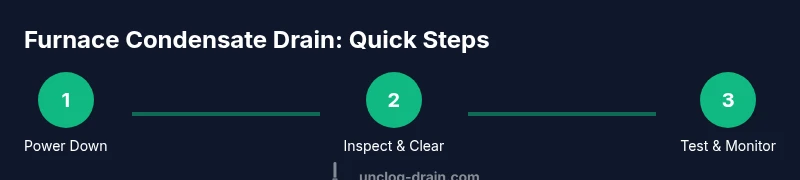
The unclog process follows a logical flow: power down the furnace, locate the drain, clear the line, inspect the trap and cleanout, flush the line with water, and then power the system back up while monitoring for leaks or renewed blockage. This approach minimizes risk and lets you verify that the condensate drain is functioning correctly before putting the system back into service.
The Step-by-Step: Step 1 Power down and locate the condensate drain
Begin by turning off the furnace at the switch and, if available, at the service panel. Locate the condensate drain pipe inside the furnace cabinet; the pipe is usually white PVC and runs toward a floor drain or outdoor outlet. Take a photo of the drain path for reference, then prepare your tools and workspace. This step reduces the risk of electrical shock and prevents water from spraying during the clearing process.
The Step-by-Step: Step 2 Clear the line safely
Remove the access cap or cleanout plug and inspect the interior. Use a flexible plumber's snake to break up any obvious blockage, moving slowly to avoid damaging the pipe. If you use a wet/dry vacuum, position the hose at the end of the drain and apply gentle suction to draw out debris. Do not force the snake if it meets resistance; back off and reassess.
The Step-by-Step: Step 3 Inspect the trap and fittings
Check the P-trap for sediment or buildup that can trap water and cause backflow. Clean the trap carefully with a brush or cloth and reseal connections with plumber's tape as needed. Reinstall any caps or plugs securely but not overtightened. A loose connection is a common source of renewed leaks after a clearing.
The Step-by-Step: Step 4 Refill, test, and monitor
Reassemble the system and slowly run water into the drain to confirm continuous flow. Watch for any backflow or leaks around joints and the trap. If the line clears and water drains smoothly, power the furnace back on and monitor the area for several days to ensure no reoccurrence. Keeping a log helps you detect slow drainage early.
Maintenance and prevention tips to avoid future clogs
Install a small trap primer if your system lacks one to keep the trap full and reduce air gaps that promote odors. Use a 1 to 2 inch slope toward the drain to maintain good flow and avoid standing water. Annual inspections and periodic flushing with clean water or approved enzyme cleaners can minimize mineral buildup. Keep the drain area clean and free of debris to maintain optimal function.
When to call a professional for a furnace drain issue
If you smell gas, notice persistent backups after clearing, observe visible cracks in pipes, or lack the confidence to safely perform steps, call a licensed HVAC technician. A pro can verify that the condensate line, trap, and control systems are functioning correctly and diagnose any persistent blockages or related issues beyond basic cleaning.
Real-world scenarios and lessons learned
In older homes with hard water, condensate lines tend to clog more frequently due to mineral buildup. A homeowner who keeps a regular inspection schedule and flushes the drain yearly reports fewer emergencies and less flooding risk. Learning to spot warning signs early saves time and reduces costly repairs.
Quick-reference DIY condensate drain checklist
Keep a ready-to-go checklist: power down, locate drain, inspect for visible blockages, clear line with snake or vacuum, recheck trap and cleanouts, flush with water, power up, and monitor. This routine helps you respond quickly to clogs and prevent water damage or furnace shutdowns.
Safety reminder and next steps
Always prioritize safety when working with furnace components. If anything feels uncertain, stop and call a pro. Regular maintenance reduces the chance of future clogs and keeps your furnace operating safely and efficiently.
Tools & Materials
- Safety goggles(Protect eyes from splashes and debris)
- Insulated gloves(Keep hands dry and safe)
- Flashlight(Bright light to inspect lines)
- Bucket or basin(Catch water and debris)
- Wet/dry vacuum (shop vac)(Effective for debris in line)
- Flexible drain snake or auger(Clear blockages in line)
- Plastic tubing or squeeze bottle(Flush line with water if needed)
- Old towels or rags(Contain spills and protect surfaces)
- Adjustable wrench or pliers(Loosen fittings if needed)
- Dish soap or mild cleaner(Aid rinsing and lubrication)
- Vinegar or enzyme drain cleaner (optional)(Safer alternative; avoid harsh chemicals)
Steps
Estimated time: 45-60 minutes
- 1
Power down the furnace and locate the condensate drain
Turn off the furnace at the switch and, if possible, at the breaker. Locate the condensate drain pipe inside the furnace cabinet; it is usually white PVC and leads toward a floor drain or an outdoor outlet. Photograph the path for reference and prepare your tools. This reduces the risk of electrical shock and water spray during the clearing.
Tip: Take a quick photo of the drain path before touching anything. - 2
Clear the line safely
Remove the access cap or cleanout plug and inspect for debris. Use a flexible snake to break up blockages, moving slowly to avoid damaging the pipe. If using a vacuum, position the hose at the drain end and apply gentle suction. Do not force the snake if resistance is strong; back off and reassess.
Tip: Never use chemical drain cleaners in condensate lines. - 3
Inspect the trap and fittings
Check the P-trap and cleanout connections for sediment or corrosion. Clean the trap with a brush and reseal joints with appropriate sealant or plumbers tape. Reinstall caps or plugs snugly; loose connections are a common source of renewed leaks after clearing.
Tip: Ensure all connections are tight but not overtightened. - 4
Flush, test, and monitor
Slowly run water into the drain to verify continuous flow. Watch for backflow or leaks around joints. If drainage is smooth, power the furnace back on and monitor for several days for any signs of repeating clogging. Keep a simple log to track performance.
Tip: Record any backflow events to spot patterns early.
Common Questions
Why does a furnace condensate drain clog?
Condensate lines clog due to mineral buildup from hard water, algae growth, debris, and poor line slope. Regular checks help prevent buildup and backflow.
Condensate lines clog from minerals, algae, debris, or bad slope. Regular checks prevent buildup and backflow.
Can I use store-bought drain cleaners in my condensate line?
Store-bought cleaners may corrode the drain or damage furnace components. Use mechanical clearing methods and safe flushing instead.
Store cleaners can harm the system. Prefer mechanical clearing and safe flushing.
Is a clogged condensate drain a safety hazard?
Yes, it can cause water damage, mold growth, and furnace shutdown or error codes. Prompt clearing reduces risk.
Yes, it can lead to water damage, mold, or furnace shutdown if not addressed.
How often should I inspect the condensate drain?
Inspect at least once a year and after severe weather or system changes. Flush periodically if you have hard water.
Check at least yearly and after changes; flush if water is hard or tends to clog.
What should I do if backflow returns after clearing?
Stop and call a professional. Recurrent backflow may indicate deeper issues in the drain or trap.
If backflow comes back, stop and call a pro.
Can I perform furnace drain work in a rental home?
Yes, but ensure safety and legality. If you’re unsure, contact a licensed HVAC technician or property manager.
If you rent, it’s best to involve a licensed pro or your property manager.
Watch Video
Key Points
- Power down first and protect yourself before working on the drain
- Use safe clearance methods and avoid chemical cleaners
- Inspect and clear the trap and cleanouts thoroughly
- Flush with water and test drainage to confirm clearance
- Prevent future clogs with regular maintenance