Will bio clean unclog a drain? A practical troubleshooting guide
Urgent guide: can bio cleaners unclog drains safely, when they work, and how to troubleshoot common issues effectively.


Bio cleaners can help with certain slow-draining scenarios, but they are not a universal fix for hard clogs. The answer to will bio clean unclog a drain depends on clog type, pipe layout, and product formulation. For best results, try a targeted approach and verify effectiveness with a safe test flow.
Will bio clean unclog a drain: a quick, first-look assessment
If you're wondering will bio clean unclog a drain, start with the simplest checks. The Unclog Drain team often sees mixed results because bio enzymes and bacteria-based cleaners work best on organic buildup in drainage lines, not on solid blockages like hair, grease, or foreign objects. In many homes, a slow drain is caused by organic buildup in the trap or pipe, where bio cleaners can gradually break down the sludge over hours to days. According to Unclog Drain analyses, these products are most effective when used as part of a regular maintenance routine rather than as an emergency cure. If you have a persistent clog, document the symptoms (sound, water level, time to drain) and proceed with a structured troubleshooting flow.
A practical starting question for homeowners is whether the clog is organic and within the reachable portion of the drain. If a kitchen sink drains slowly because grease and food particles accumulate in the trap or P-trap, bio cleaners may provide some relief after repeated treatments. For bathroom sinks with hair buildup, you may see slow improvement with ongoing use, but bio cleaners alone rarely dislodge solid blockages. This is the moment to move beyond the quick fix and use a confirmed workflow to avoid wasting time and money.
Note: Unclog Drain recommends verifying the clog type before committing to repeated enzyme treatments. This ensures you aren’t treating a problem that requires mechanical removal or professional service.
The science behind bio cleaners and how they work
Bio cleaners rely on microorganisms that digest organic clog-forming materials like soap scum, hair, and food residues. When these enzymes and bacteria multiply, they slowly liquefy solid debris and improve flow. In theory, this process can restore drainage without harsh chemical reactions. In practice, results depend heavily on contact time, water temperature, and the presence of pre-existing pipe damage. If your pipe conditions are old or corroded, simply adding more cleaner may not fix a clogged line. The Unclog Drain team emphasizes that bio cleaners are most effective as a preventive tool and as a complement to mechanical methods—not as a sole solution for stubborn clogs.
When bio cleaners are most effective and when to avoid them
Bio cleaners excel in maintenance scenarios: slow drains, recurring buildup, and prevention of future clogs in organic-heavy plumbing. They are a good first choice for routine maintenance in households with long drain lines or infrequent use. Avoid relying on bio cleaners for metal-to-plastic transitions, vertical drops with gravity-sealed traps, or drains with known mineral buildup. Also avoid using them after pouring hot water, bleach, or other harsh chemicals, as these can kill the beneficial microbes and reduce effectiveness. For occasional slow drains, a monthly treatment can help, but do not expect instant relief from a fully blocked pipe.
How to perform a safe, test-driven approach to bio cleaners
Begin with a small dose according to the product label and wait the recommended contact time. In many cases, a 6–8 hour window or overnight soak yields the best results for organic buildup. Then run hot tap water or a flow test to observe improvements. If no improvement is evident after several cycles, you may be dealing with a non-organic obstruction or a pipe issue that requires mechanical cleaning or a professional visit. The key is to document symptoms and not mix incompatible cleaners that could harm pipes or reduce microbial effectiveness.
Practical steps for using bio cleaners in everyday maintenance
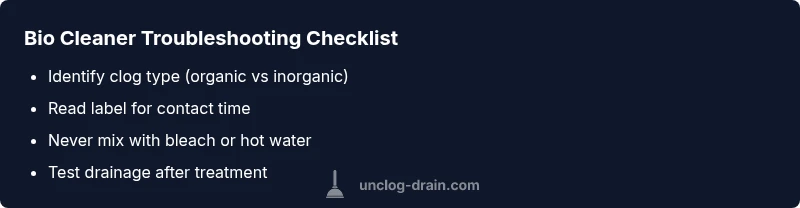
- Read the label for active organisms, contact time, and dosage.
- Use bio cleaners as part of a routine maintenance schedule, not as a one-off emergency fix.
- Do not mix products with chlorine bleach or high-heat water.
- If you have metal pipes or long runs, consider a maintenance plan rather than relying on the cleaner to clear a stubborn clog.
- Track results with a simple drain test every week to confirm continued improvement.
Steps
Estimated time: 45-90 minutes
- 1
Confirm clog type and safety
Identify whether the blockage is organic or inorganic. Check the trap area for visible buildup and ensure power off if working near electrical outlets under the sink. This helps determine if a bio cleaner is appropriate.
Tip: If you’re unsure, start with maintenance steps instead of forcing a chemical approach. - 2
Read product instructions
Carefully follow the label: dosage, contact time, and any precautions. Do not mix with other cleaners or hot water unless recommended by the manufacturer.
Tip: Keep the bottle where kids and pets cannot access. - 3
Apply cleaner and wait
Pour the recommended amount into the drain and allow the product to sit for the suggested period; avoid running water during this window to maximize contact with organic matter.
Tip: Use a timer to avoid over-waiting or under-treating. - 4
Test drainage
Run hot water for several minutes to assess improvement. A gradual return to normal flow is a good sign; partial improvement may indicate remaining organic buildup.
Tip: Document the time to drain to track progress over days. - 5
Supplement with mechanical methods
If drainage is still slow, use a plunger or hand-cranked drain snake to physically remove clog components.
Tip: Always use proper protective equipment and maintain a stable stance when plunging. - 6
Evaluate needs for professional help
If there is persistent backing up, foul odor, or multiple fixtures affected, contact a licensed plumber to inspect for deeper issues.
Tip: Document symptoms and any noises or water levels for the technician.
Diagnosis: Clogged or slow-draining sink/toilet after attempted bio cleaner treatment
Possible Causes
- mediumOrganic buildup that is partially broken down but not fully cleared
- highNon-organic obstruction (hair, soap scum, mineral scale) preventing flow
- lowPoor product contact time due to short run of water or pipes not allowing microbes to reach buildup
Fixes
- easyExtend contact time by leaving cleaner in the drain overnight and flush with hot water
- mediumCombine with mechanical methods (plunger or snake) if the blockage remains
- mediumInspect trap for visible buildup and clean if accessible; replace if damaged
Common Questions
Will a bio cleaner help with a truly stuck clog or a solid object blockage?
Bio cleaners are generally not effective for solid obstructions like a diverted toy or thick hair clumps. They work best on organic buildup. If a solid object is blocking the drain, mechanical methods or professional assistance are usually required.
Bio cleaners don’t usually fix solid blockages; you may need a plunger or snake or a plumber.
How long should I wait to see improvements after using a bio cleaner?
Most bio cleaners require several hours to overnight contact time plus follow-up flushing. If there is no improvement after a full cycle, reassess the clog type and consider mechanical means.
Give it several hours to a day, but don’t rely on it for urgent fixes.
Can bio cleaners damage my pipes?
When used as directed, bio cleaners are generally safe for typical home plumbing. However, harsh chemical mixing or overuse can disrupt pipe seals or bio balance. Always follow label directions.
Used correctly, they’re safe, but avoid mixing with bleach or other cleaners.
Should I avoid using hot water with bio cleaners?
Some bio cleaners recommend room temperature or cool water to maximize microbial activity. Hot water can kill the microbes and reduce effectiveness. Check the product label for specifics.
Check the label; hot water can kill beneficial microbes in some products.
When is a professional plumber necessary?
If the clog recurs after multiple treatments, the drain backs up across multiple fixtures, or you smell foul odors, call a licensed plumber for an inspection and possible pipe cleaning.
If it keeps coming back or affects multiple fixtures, call a pro.
Can bio cleaners prevent future drain clogs?
Yes, when used as part of a regular maintenance plan, bio cleaners can reduce organic buildup over time and improve overall drain health. Pair with proactive practices like hair management and proper disposal.
They can help prevent buildup when used routinely.
Watch Video
Key Points
- Start with diagnosing organic vs non-organic blockage
- Bio cleaners work best for routine maintenance, not emergencies
- Combine with mechanical methods when needed
- Avoid mixing cleaners that can harm pipes
- Call a professional when symptoms persist