Unclog Sink with Baking Soda: A DIY Guide
Learn how to unclog a sink using baking soda and hot water. This educational, practical guide from Unclog Drain covers why it works, safety, step-by-step procedures, maintenance, and prevention tips for homeowners and DIY enthusiasts.


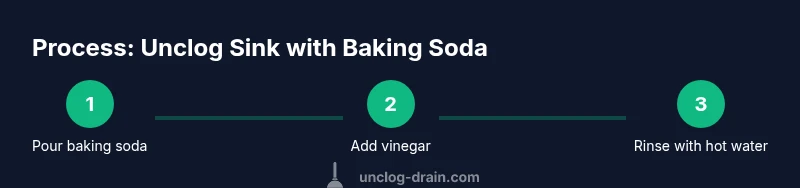
Goal: unclog a sink using baking soda and hot water, a safe DIY method. Start with 1/2 cup baking soda, then 1 cup white vinegar, and wait 15 minutes before flushing with hot water. For stubborn blocks, repeat or add gentle agitation with a plunger. Avoid mixing with bleach and always vent to prevent fumes.
Why baking soda is a smart first-line unclogging agent
Baking soda, or sodium bicarbonate, is inexpensive, non-caustic, and widely available. For many household sinks, stuck residues from soap, hair, grease, and mineral buildup form a soft plug that slows drainage. When you unclog sink with baking soda, you combine a gentle alkaline powder with water to begin breaking down gunk so the pipe can drain again. This approach minimizes exposure to harsh chemicals and is gentle on most pipes when used as directed. According to Unclog Drain, starting with baking soda gives you a predictable, low-risk way to test whether the clog is a simple organic block or something more stubborn. If the drain improves after this treatment, you’ve avoided stronger methods and extra cost. If there is no improvement after a full cycle, you can move to additional steps, including heat flushing, plunger action, or a mechanical auger. Remember that you must maintain caution around hot water and matching pipe materials. In most kitchens and bathrooms, baking soda can clear light clogs without damaging plumbing, and it also doubles as a maintenance tool to reduce future buildup.
This approach aligns with practical DIY principles: use common household products, monitor results, and escalate only if needed. The Unclog Drain team emphasizes patience and measurement—two traits that help beginners avoid overreaction and unnecessary purchases. For homeowners, this means you can often inspect the drain, try a safe, low-cost remedy, and decide whether professional help is needed based on observable progress. This gentle method also minimizes environmental impact compared to harsher chemical cleaners, making it a sensible first step for daily maintenance and occasional clogs.
Overall, the strategy is simple to execute, cost-effective, and aligns with the broader goal of preserving pipe health while reducing waste. If you’re asking how to unclog sink with baking soda, the answer is: start with the basics, observe the results, and advance only when necessary. The Unclog Drain perspective highlights that most minor blockages respond well to this approach, especially when followed by a hot-water flush and careful monitoring of drainage over the next few hours.
note
Tools & Materials
- 1/2 cup baking soda(Have a measuring cup ready; keep near the sink)
- 1 cup white vinegar(Optional but recommended for best fizz)
- Hot water / boiling water(Kettle or pot; 1-2 liters for flushing)
- Rubber gloves(Protect hands during pouring and flushing)
- Drain plunger (optional)(Helpful for stubborn blocks)
- Old towel or small bucket(Catch splashes and keep area tidy)
- Pliers or wrench (for trap inspection)(Only if you plan to inspect or clean the P-trap)
Steps
Estimated time: 30-45 minutes
- 1
Clear area and remove standing water
Scoop out excess water so you can see the drain clearly and avoid overflow during the treatment. This also makes it easier to observe any changes after the baking soda and vinegar cycle.
Tip: Use a small cup to transfer water into a bucket; wipe the sink dry before starting. - 2
Pour baking soda into the drain
Measure 1/2 cup baking soda and pour it directly into the drain, aiming for the center so the powder distributes evenly around the clog.
Tip: If you can remove the plug or screen, add baking soda in the trap area for better contact. - 3
Add vinegar and cover the drain
Pour 1 cup white vinegar into the drain, then cover with a damp cloth or the drain plug to trap the fizzing action near the clog.
Tip: Covering helps keep the reaction localized and can improve effectiveness. - 4
Wait 15 minutes
Allow the fizz to work on the buildup. This contact time is critical for breaking down organic material and allowing the blockage to loosen.
Tip: Set a timer so you don’t rush the process. - 5
Flush with hot water
Boil water and slowly pour 1-2 liters down the drain to rinse away loosened material and clear the passage.
Tip: Pour gradually to avoid splashing and pressure build-up; adjust to pipe material. - 6
Test the drain
Run hot water from the faucet for 30-60 seconds to check drainage. If slow, repeat steps 2–5 once more.
Tip: If the drain remains slow, proceed to a mechanical method rather than forcing it with excessive force. - 7
Use a plunger if needed
If the clog persists, apply a cup plunger over the drain and pump with steady pressure to dislodge the blockage.
Tip: Create a good seal and push straight down; avoid twisting to maximize suction. - 8
Clean up and sanitize
Wipe the area, wash hands, and run a final hot-water flush to ensure everything is clear and sanitary.
Tip: Sanitize the sink area to prevent residue from attracting new clogs.
Common Questions
Can baking soda alone unclog a sink?
Baking soda alone can help with light clogs caused by soap scum or hair, but it is usually more effective when used with vinegar and hot water.
Baking soda alone can help with light clogs, but for tougher blockages, use vinegar and hot water as well.
Will this method damage PVC pipes?
Used as directed, baking soda with vinegar and hot water is typically safe for standard PVC pipes. Avoid boiling water if you have older or delicate plumbing.
It's generally safe for PVC, but avoid boiling water if your system is older or delicate.
What if the clog remains after steps?
If the drain stays clogged after one or two attempts, try a plunger or plumber's snake. If water backs up, stop and call a professional.
If it stays blocked after trying, use a plunger or auger, and seek help if it doesn't clear.
Should I use hot or boiling water?
Hot water is usually enough to flush loosened debris; boiling water can damage some pipes or disposals. Use hot water unless your setup specifies otherwise.
Hot water is typically sufficient; boiling water can harm certain pipes.
Is this method suitable for kitchen or bathroom sinks?
Yes, this method works for both kitchen and bathroom sinks with organic buildup; adjust quantities slightly for longer, narrower traps.
It works for both kitchen and bathroom sinks; tailor amounts as needed.
Watch Video
Key Points
- Prepare the area and gather supplies first
- Baking soda + vinegar can loosen many organic clogs
- Boiling water flushes loosened material effectively
- If symptoms persist, stop and seek professional help
- Regular maintenance prevents future clogs