How to Unclog a Keurig: DIY Cleaning Guide
Learn safe, step-by-step methods to unclog a Keurig using descaling and cleaning tips from Unclog Drain. This practical guide covers needles, brewer internals, and prevention.


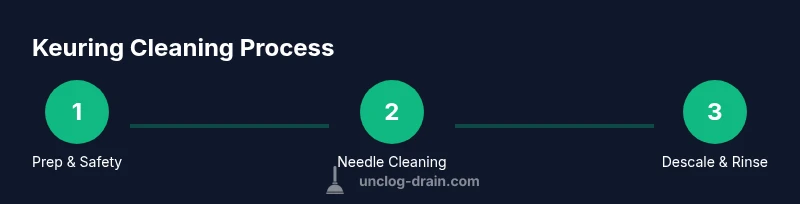
Unclog keurig by thoroughly cleaning the brewer’s needle, descaling the internal pathways, and flushing with fresh water. Start by unplugging the machine, removing the water reservoir, and gathering descaler or white vinegar, a measuring cup, a paperclip or Keurig cleaning tool, and a soft cloth. This 6-step approach restores flow and helps prevent future clogs.
What causes Keurig clogs and why cleaning matters
Little coffee grounds, mineral buildup, and oils from coffee can accumulate in the brewer's internal pathways. Over time, these deposits restrict water flow and trap grounds, causing slow pours or partial brews. Regular cleaning and descaling reduce mineral scale and keep the brew head and needle clear. The Unclog Drain team has observed that routine maintenance dramatically lowers clog frequency in home brewers. In this section, we'll explore the common culprits and how cleaning actions help restore performance.
Common culprits
- Mineral scale from hard water gradually narrows pathways.
- Coffee oils and fine grounds cling to screens and ports.
- Stagnant water can encourage mold or mineral buildup if not flushed.
Why cleaning matters
- Regular descaling restores flow and improves brew quality.
- Clearing the needle prevents blockage that stops water from passing.
- A clean brewer lasts longer and reduces the risk of leaks or malfunctions.
Brand note: Unclog Drain emphasizes that consistent care, not quick shortcuts, yields reliable performance and fewer clogs over time.
Safety and prep: before you start
Safety comes first when cleaning a Keurig. Always unplug the unit and remove the water reservoir before starting any maintenance. Place the brewer on a dry, stable surface and have a towel handy to catch drips. Use cold or lukewarm water for rinsing, avoiding hot water that can warp plastics and create steam burns. If you have a removable screen or needle part, set it aside gently so nothing falls into the machine. A clean, organized workspace reduces the chance of accidents and makes the process smoother. The Unclog Drain team recommends wearing gloves if you handle any internal components and keeping small parts in a labeled container to prevent misplacement.
Cleaning basics: needles, screens, and ports
Your Keurig’s brew head and needle are the main culprits for clogs. Start by inspecting the needle port for coffee grounds or mineral residue. Use a paperclip or the Keurig cleaning tool to gently loosen debris, never forcing material that could bend or break parts. Wipe exterior surfaces with a damp cloth and inspect the drip tray for mineral film buildup. If your model has a screen or filter, remove and rinse it under running water. Dry all parts before reassembly to prevent moisture traps that can harbor mold. Remember to keep parts in their original orientation to avoid misalignment during reassembly.
Descaling and flush cycles: how to descale safely
Descaling dissolves mineral buildup that standard rinsing misses. Use a descaler product (or white vinegar if your machine allows it) according to manufacturer directions. Fill the reservoir with the descaling solution and run multiple cycles without a coffee pod to force the solution through every channel. After descaling, run several cycles with clean water to flush out any residual descaler taste. Many models recommend letting the solution sit for a few minutes in the reservoir to maximize mineral dissolution before continuing the rinse. This step is critical for long-term performance and flavor quality, as mineral buildup is the most common cause of slow flow and weak brews.
Clearing stubborn clogs: needle care and alternate methods
If debris remains after initial cleaning, focus again on the needle and ports. Gently reinsert your cleaning tool to loosen any stubborn particles and flush with hot water (not boiling) to lift residues. In cases of stubborn mineral buildup, a short soak of removable parts in a mild descaler solution can help, followed by thorough rinsing. For models with self-cleaning cycles, you can sometimes run a dedicated cleaning cycle if your manual supports it. If the clog persists after multiple attempts, consider consulting the manufacturer’s service guidelines or a local appliance technician. The goal is to avoid forcing water through blocked channels, which could damage seals or the pump.
Thorough rinsing and testing: verify flow and taste
After cleaning and descaling, flush the system with several full reservoirs of fresh water. Check that the water flows freely through both hot and cold cycles if your model supports it. Brew a plain cup of water to verify there’s no off-taste and that the flow is steady. If air pockets linger, time some extra spins with water and a final test cup. This final rinse helps remove lingering cleaning agents and confirms a clean, ready-to-use brewer.
Preventive maintenance to avoid future clogs
Prevention is easier than remediation. Establish a simple maintenance routine: descale every few months or according to water hardness, rinse the brew head after each use, and periodically clean the interior needle and screens. Use filtered or low-mineral water when possible to reduce scale buildup. Keep your Keurig covered and stored away from moisture when not in use. Document your maintenance steps so you can repeat them consistently and avoid missing crucial actions that lead to clogs.
Troubleshooting quick notes and next steps
If you still experience slow pours after a thorough cleaning and descaling, recheck for loose parts or misalignment during reassembly. A blocked pump or cracked seals can mimic clog symptoms and may require professional service. Do not force cycles or run hot water into clogged channels if resistance is felt. When in doubt, contact customer support or a certified appliance technician for a safe, accurate assessment.
Tools & Materials
- Descaling solution (or white vinegar)(Follow product instructions; do not mix cleaners and always use the recommended ratio.)
- Plain water for rinsing(Cold or lukewarm; avoid hot water on plastic components.)
- Measuring cup(To measure descaler and water accurately.)
- Paperclip or Keurig cleaning needle(Used to clear the needle entrance and exit ports.)
- Soft microfiber cloth(For exterior wipe-down and drying components.)
- Small bowl or container(To collect used descaling solution during cycles.)
- Towel or cloth for spills(Protect surfaces during cleaning.)
- Gloves (optional)(For hand protection when handling parts)
Steps
Estimated time: 40-60 minutes
- 1
Unplug and prep the brewer
Ensure the Keurig is unplugged and the reservoir is removed. Move the unit to a dry work area, place towels down, and clear space for parts. This prevents splashes and protects electrical components during cleaning.
Tip: Always unplug before touching internal parts to avoid electric shock. - 2
Empty reservoir and inspect
Pour out any remaining water, remove the drip tray if present, and visually inspect for debris or mineral film. A quick check helps tailor your cleaning approach to the current buildup.
Tip: Take photos of parts before disassembly to ensure correct reassembly. - 3
Prepare the descaling solution
Mix descaler with water according to the product label, or prepare a vinegar solution only if your model tolerates it. Pour the solution into the reservoir and have your cup ready to collect the first rinse.
Tip: Do not mix descaler with bleach or other cleaners. - 4
Run the descaling cycle without a pod
Power the machine and run the brew process without inserting a pod. Let the solution run through all internal channels, then discard the liquid and repeat with plain water to flush residues.
Tip: Keep a measuring cup handy to catch the liquid as it flows. - 5
Clear the needle and ports
With the machine unplugged, use a paperclip (or Keurig cleaning tool) to gently push through the needle’s entrance to remove trapped grounds. Rinse and wipe surfaces thoroughly.
Tip: Be gentle to avoid bending the needle or damaging seals. - 6
Rinse with fresh water cycles
Run 2–4 full cycles of clean water to remove any taste from descaling agents. After the final rinse, check that the water pours freely and consistently.
Tip: If you still smell cleaning agents, repeat another rinse cycle. - 7
Test brew and finish
Brew a plain cup of water first, then a coffee cup to verify flow and flavor are back to normal. Reassemble any removed parts and wipe the exterior.
Tip: If flow remains slow, there may be a deeper issue requiring service.
Common Questions
Can I use vinegar to descale a Keurig?
Vinegar can be used if your model allows it; otherwise use a manufacturer-approved descaler to avoid harming seals. Always follow the product’s instructions.
Yes, but only if your model supports vinegar; otherwise use the recommended descaler and follow the label directions.
How often should I descale a Keurig?
Descale every few months or based on water hardness and usage. If your water is very hard, you may need to descale more often.
Descale every few months or as needed based on how hard your water is and how often you use the brewer.
Is it safe to use a paperclip to clear the needle?
Yes, when the unit is unplugged and you are careful not to bend the needle. Use gentle motions to remove visible debris.
Yes, as long as you unplug first and work gently to avoid bending the needle.
What if descaling doesn’t fix the clog?
Check for mineral buildup in other pathways, inspect seals, and consider professional service if the pump or internal channels remain blocked.
If descaling fails, inspect other internal parts and don’t force cycles; you may need a technician.
Can I unclog a Keurig without descaling?
Cleaning the needle and removing debris can improve flow, but descaling addresses mineral buildup that often causes clogs.
Cleaning the needle helps, but descaling tackles mineral buildup that common clogs come from.
How long does a full cleaning take?
A thorough cleaning typically takes about an hour, depending on model and how stubborn the clog is.
About an hour for a full cleaning, depending on your model and buildup.
Watch Video
Key Points
- Unclog Keurig by cleaning the needle and descaling the system.
- Descale and rinse in multiple cycles for best results.
- Regular maintenance reduces future clogs and extends brewer life.
- Always unplug and handle components with care during cleaning.
- Use manufacturer-approved cleaners to protect seals and warranties.