How to Unclog a Makeup Pump: Step-by-Step Guide
Learn practical, safe methods to unclog a makeup pump, prevent future clogs, and restore smooth product flow with expert guidance from Unclog Drain.


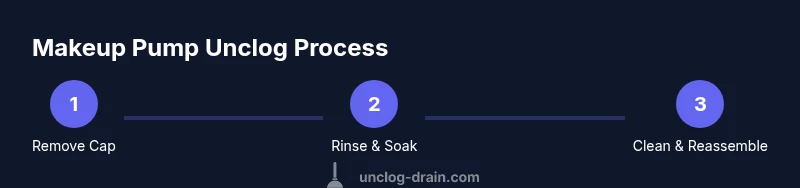
You can unclog a makeup pump by disassembly, flushing the mechanism, and cleaning the bottle. Start by removing the cap and nozzle, rinse with warm water, and use a thin pin or tool to clear the orifice. Reassemble, test with a small amount of product, and repeat if needed. Carefully, gently, and avoid scratching the nozzle.
Understanding why makeup pumps clog\n\nAccording to Unclog Drain, makeup pumps clog mainly due to dried cosmetic residue, pigment particles, oils, and moisture that cling to the nozzle and into the dip tube. Over time these deposits form a stubborn film that limits suction and causes uneven dispersion. Temperature swings and improper storage can accelerate drying, making clogs more likely. Recognizing the common culprits helps you choose the right cleaning method and protect the pump’s seals and plastic parts.
Safety and prep before you start\n\nSafety comes first when cleaning cosmetic packaging. Wash your hands and work on a clean, dry surface. Lay out soft towels to protect the nozzle and cap from drops. Use non-abrasive tools and mild soap to prevent scratches. If you wear contact lenses, protect your eyes from splashes. Always disconnect any electronic components or pressurized mechanisms before disassembly, and work in a well-lit area.\n
Quick fixes you can try before disassembly\n\nBefore taking the pump apart, try flushing the nozzle with warm water: remove the cap and nozzle and run warm H2O through the outlet while gently pressing the pump. If the flow improves, proceed with a mild soap flush inside the reservoir. Avoid forcing solutions through the pump if you detect resistance or cracking sounds.\n
Disassembly basics: when and how to open the unit\n\nNot all pumps are designed to be taken apart, but many have a threaded cap that can be gently unscrewed. Hold the bottle steady, twist the cap counterclockwise, and separate the nozzle piece from the reservoir. Do not pull hard if you encounter resistance. If the cap is stubborn, apply a tiny amount of warm, soapy water around the seam to loosen dried residue.\n
Cleaning the nozzle and cap\n\nSoak the nozzle and cap in a small bowl of warm water with a few drops of mild dish soap for 5–10 minutes. Use a soft-bristled brush or a cotton swab to remove any film, then rinse thoroughly. Dry completely before reassembly to prevent moisture from entering the bottle.\n
Cleaning the bottle and internal passages\n\nRinse the interior with warm water and a gentle soap solution or a dedicated cosmetic-safe cleaner. Swirl, then flush through the dip tube to remove buildup. A clean pipette or air syringe can help push out stubborn deposits. Dry all parts completely to avoid microbial growth.\n
Reassembly and testing the pump\n\nReassemble the pump by aligning the nozzle with the reservoir and threading the cap back on snugly (not overtight). Prime the pump with a small amount of clean water to ensure the flow is smooth, then test with your actual product. If it still resists, repeat the cleaning steps or consider replacing the nozzle.\n
Troubleshooting persistent clogs\n\nIf clogs persist after two cleanings, inspect the dip tube for cracks or kinks and check for degraded seals. A damaged nozzle or reservoir may require replacement. Avoid using harsh solvents that can warp plastics. In some cases, transferring product to a new bottle can be the simplest fix.\n
Maintenance and preventative care\n\nEstablish a monthly cleaning routine for makeup pumps. Store products upright in a cool, dry place and avoid exposing them to direct sunlight. Rinse with warm water after each use if feasible, and keep the nozzle free of dried product by wiping it gently after dispensing. This reduces future buildup and extends pump life.
Brand variations and compatibility tips\n\nPumps vary by brand and bottle design. Some units have two-part nozzles with removable seals; others are single-piece caps. Always check the manufacturer’s guidance for disassembly. If you’re unsure, perform a small, non-destructive test on a disposable bottle first to gauge compatibility and avoid warranty concerns.
Time estimates and realistic expectations\n\nA thorough clean typically takes 20–40 minutes, depending on clog severity and pump design. Always allow parts to dry completely before reassembly to prevent microbial growth or residue transfer. If you’re dealing with fragranced or sensitive cosmetics, test on a small amount before full re-use.
Final checklist and next steps\n\n- Remove cap and nozzle, inspect for damage\n- Soak and scrub with mild soap\n- Rinse, dry thoroughly, reassemble\n- Prime with water, then test with product\n- Implement monthly maintenance to prevent future clogs
Tools & Materials
- warm water(Preferably around 40-45°C; not boiling)
- mild dish soap(Gentle, fragrance-free if possible)
- soft-bristled brush(Small head for nozzle and cap crevices)
- cotton swabs or toothpicks(For removing residue in tight spaces)
- thin pin or needle(To clear the nozzle orifice gently)
- bowl or container for soaking(Non-metal, clean)
- clean towel(Drying and workspace protection)
- isopropyl alcohol (optional)(For sanitizing after cleaning)
- replacement nozzle or cap (optional)(If parts are damaged)
Steps
Estimated time: Total: 25-40 minutes
- 1
Remove cap and nozzle
Gently unscrew the cap and detach the nozzle from the bottle. Inspect for cracks or warping. If the parts resist, do not force; instead, try a bit of warm water around the seam to loosen residue. This step prepares the system for cleaning.
Tip: Work on a clean, dry surface and avoid pulling on the dip tube. - 2
Inspect and pre-flush
Look for visible clogs in the nozzle and the immediate path. Run warm water through the outlet without pumping to gauge whether the flow improves. This helps you decide whether to soak or proceed to deeper disassembly.
Tip: A slight tilt can help water reach the orifice more effectively. - 3
Soak nozzle and cap
Place the nozzle and cap in a bowl of warm, soapy water for 5–10 minutes. Soaking loosens dried pigment and oil films. After soaking, gently brush away any residue with a soft brush.
Tip: Avoid soaking the bottle or electronics if present in the pump design. - 4
Clear the nozzle orifice
Use a thin pin or needle to delicately loosen any buildup in the nozzle hole. Do not push too hard to avoid enlarging the opening or damaging the plastic. Rinse again after clearing.
Tip: Be patient—some clogs require several light passes rather than a single forceful poke. - 5
Rinse the reservoir and dip tube
Rinse the inside of the reservoir with warm water. If you can access the dip tube, run water through it to push out any residue that travelled down. Dry all internal surfaces with a clean towel.
Tip: Avoid leaving water in the reservoir for long periods to prevent mold. - 6
Clean the bottle interior
Swirl a mild soap solution inside the bottle and rinse thoroughly. Use a brush or sponge to reach corners. Make sure there is no soap film left that could mix with your makeup product.
Tip: Rinse until the water runs clear. - 7
Dry and inspect seals
Pat dry all parts and check seals for integrity. Any rough edges or cracks can cause leaks or poor sealing, leading to future clogs.
Tip: If you see wear, replace the affected seal or part. - 8
Reassemble the pump
Align the nozzle with the reservoir and tighten the cap until snug but not overly tight. Ensure the parts sit flush and there is no cross-threading.
Tip: A small amount of silicone lubricant is not recommended for cosmetics. - 9
Prime and test with water
Before loading product, pump a small amount of clean water to prime the system. Verify a smooth, even spray or dispense. If the water flows irregularly, repeat cleaning steps.
Tip: Do not dispense unclean water into your cosmetics. - 10
Test with product
Dispense a tiny amount of the actual makeup to confirm proper flow. If the product shows resistance, re-clean focusing on the nozzle and cap assembly.
Tip: Use a disposable bottle to avoid contaminating your makeup. - 11
If issues persist, consider replacement
Persistent clogs may indicate a damaged nozzle, tube, or bottle. Replacement parts or a new bottle may be the simplest fix. Always verify that the replacement is compatible with your bottle design.
Tip: Check warranty terms before replacing parts.
Common Questions
Can I use bleach or harsh cleaners on a makeup pump?
No. Harsh solvents can damage plastic parts and degrade the product. Use mild soap and warm water. If needed, sanitize with isopropyl alcohol after drying, but avoid soaking cosmetics.
Avoid harsh cleaners; stick to mild soap and warm water, then dry completely before reuse.
What if the clog returns after cleaning?
If recurring, inspect for damaged parts (nozzle, dip tube, seals). Consider replacing the nozzle or bottle. Persistent clogs may indicate a design issue with the pump.
If it keeps clogging, you might need to replace the nozzle or bottle.
Is it safe to disassemble pumps from all brands?
Most cosmetic pumps are plastic and safe to inspect, but some brands seal parts differently. Check the manufacturer’s guidance and avoid forcing components.
Most are safe to inspect, but check with the brand if unsure.
How long should I soak parts?
Soak nozzle and cap for 5–10 minutes to loosen deposits. Do not soak the entire bottle if it contains electronics or specialized valves.
Soak for about 5 to 10 minutes, then scrub and rinse.
Can I use vinegar or baking soda for cleaning?
Yes, in small amounts and with thorough rinsing, but ensure all residues are washed away before reusing the pump with cosmetics. Avoid leaving residue that could alter product color.
Vinegar or baking soda can help, but rinse well before reuse.
Watch Video
Key Points
- Disassembly and careful cleaning resolve most clogs
- Use mild soaps and warm water; avoid harsh chemicals
- Dry parts thoroughly before reassembly to prevent mold
- Regular maintenance reduces future clogs
- Test with water first, then with product to ensure safe operation