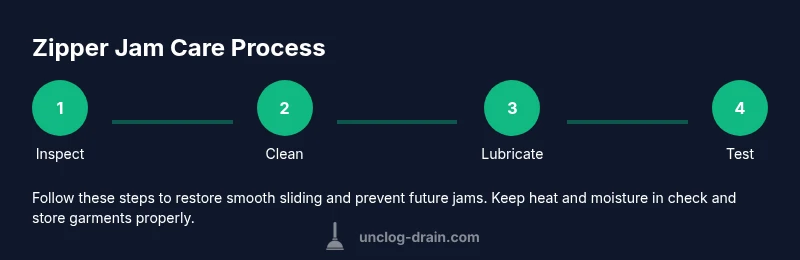
Unclog a Zipper Dried Sweat: A Practical DIY Guide
Learn how to unclog a zipper dried sweat on jackets, bags, or pants with safe, practical steps. Clean, lubricate, and test to restore smooth sliding and prevent future jams.


You will unclog a zipper dried sweat by safely cleaning the slider and teeth, loosening residue, and lubricating for smooth operation. Gather mild soap, warm water, a soft brush or cotton swabs, a dry cloth, and a light lubricant. Follow the step-by-step instructions to restore easy sliding without damaging fabric or hardware.
Why dried sweat causes zipper jams
Dried sweat can turn a normally smooth zipper into a stubborn jam, especially on athletic wear, denim, or bags that are frequently exposed to body heat. The mineral salts in sweat, combined with tiny fabric fibers and dust, can accumulate around the teeth and slider. Over time, this mixture creates friction that prevents the slider from moving freely. According to Unclog Drain, the root of many everyday zipper jams is not a fault of the zipper design but residue buildup on metal or plastic teeth. Recognizing the signs—stiffness, catching at the teeth, or a zipper that won’t close evenly—helps you choose a safe, low-risk cleaning approach rather than forcing the slider. This guide focuses on gentle techniques that remove dried sweat without harming the fabric or the zipper hardware, preserving function and extending the life of your garment or bag.
Assessing zipper type and potential damage
Zippers come in several formats: coil (sometimes called seamless), toothed (metal or plastic), and hidden/guaranteed sliders. Start by inspecting the teeth alignment and slider. A bent slider or misaligned teeth will jam more easily. If you notice sign of damage, proceed with caution: forcing a damaged zipper can make repair more expensive. In many cases, a clean, well-lubricated zipper will regain movement, but if the teeth are visibly bent or missing, replacement is the safer option. By identifying the type and condition, you’ll tailor your cleaning and lubrication steps to the exact hardware.
Safety considerations and workspace preparation
Work in a well-lit, clean area. Protect fabric with a soft towel or cloth to catch drips. If you’re cleaning a garment, it may help to unzip fully and turn the item inside out for easier access. Wear minimal gloves if you have sensitive skin to avoid irritation from cleaning agents. Keep pets and children away from the work zone. This prep minimizes accidental staining and reduces the risk of accidental damage during the process.
Quick clean approach for minor jams
For light residue, start with a simple wipe. Dampen a cloth with warm soapy water and gently rub along the teeth and slider. Remove any visible particles, fiber, or dried sweat. After cleaning, dry the zipper thoroughly with a separate cloth. A quick wipe can restore movement if the jam is superficial and the teeth are aligned. Be careful not to oversaturate the fabric, which could lead to swelling or further sticking.
Deeper cleaning for stubborn residue
When residue persists, use cotton swabs dipped in a mild soap solution to reach inside the teeth. Clean around the slider with care, making short passes rather than aggressive scrubbing. If grime remains, a gentle alcohol wipe can help dissolve oils, followed by a wash with soap and warm water. Always dry completely after cleaning to prevent moisture from causing rust or corrosion on metal teeth.
Lubrication options and application technique
Lubrication is key to a smooth glide. For metal or plastic teeth, graphite powder or a silicone-based lubricant spray works best. Apply a small amount to the teeth and slide the zipper back and forth several times to distribute evenly. Wipe away any excess to avoid dirt attraction. Avoid petroleum-based oils, which can attract grit and worsen sticking over time. Lubrication should be light and targeted, not a heavy coating.
Realigning teeth and reseating the slider
If you notice misalignment, gently realign the slider with your fingers or a pair of fine tweezers. Make sure the slider is centered over the teeth and resumes even engagement as you move it. Take care to avoid bending teeth further. Recheck the fabric near the zipper to ensure nothing is caught; a small snag can reopen the jam and negate your cleaning efforts.
Testing, adjustment, and ongoing care
Test the zipper in both directions after cleaning and lubrication. If it still sticks, repeat the cleaning and lubrication steps, giving the solution more time to settle. Allow any lubricant to dry fully before heavy use. For athletic wear or bags that see frequent sweat exposure, consider periodic maintenance—clean, dry, and lubricate every few months to prevent future jams. With consistent care, you’ll extend the life of zippers and avoid costly replacements.
Tools & Materials
- Soft cloth or microfiber cloth(To wipe residue and dry the zipper)
- Mild dish soap(Dilute in warm water)
- Cotton swabs or soft toothbrush(For targeted cleaning between teeth)
- Tweezers or small pliers(To remove trapped debris carefully)
- Small spray bottle(Apply cleaning solution evenly)
- Graphite powder or silicone-based lubricant spray(Lubricate teeth after cleaning)
- Isopropyl alcohol (70%) or white vinegar(Optional degreaser for tough residue)
Steps
Estimated time: 20-45 minutes
- 1
Inspect the zipper
Carefully examine the zipper—look for bent teeth, fabric caught in the teeth, or a misaligned slider. Identify whether the jam seems superficial or persistent before proceeding.
Tip: Take a close look from both sides of the zipper to catch half-formed snags. - 2
Secure workspace and protect fabric
Turn the garment inside out if possible to access the zipper. Lay a clean cloth underneath to catch drips and keep surrounding fabric dry.
Tip: Working on a flat surface prevents additional snags. - 3
Wipe away surface sweat and residue
Dampen a cloth with warm soapy water and gently wipe along the teeth and slider. Remove any visible residue that could pull on the slider.
Tip: Avoid soaking the fabric; just use damp cloth. - 4
Soften dried sweat with cleaning solution
Use cotton swabs with a mild soap solution to reach the inside of the teeth. Repeat as needed until the area feels clean and smooth.
Tip: Rinse swabs frequently to avoid transferring grime. - 5
Move the slider gently to free the jam
Slowly move the slider back and forth a few millimeters while applying light pressure. Stop if you feel binding; forcing it can bend teeth.
Tip: Use short, steady motions rather than long pulls. - 6
Lubricate the teeth lightly
Apply a small amount of graphite powder or a silicone-based lubricant to the teeth. Avoid over-application which can attract dirt.
Tip: Work the lubricant in by moving the slider a few times. - 7
Realign teeth and reseat the slider
If teeth appear misaligned, realign with gentle pressure using fingers or tweezers. Reposition the slider to ensure even engagement along the teeth.
Tip: Check for fabric caught in the slider during realignment. - 8
Test, adjust, and finish
Test the zipper on each motion direction. If it still binds, repeat cleaning and lubrication steps. Allow any lubricant to dry before full use.
Tip: Avoid heavy pulls until you confirm smooth operation.
Common Questions
What causes a zipper jam after sweating?
Sweat residues, minerals, and fabric fibers can accumulate around the teeth, creating friction that traps the slider. Regular cleaning and gentle lubrication reduce this buildup.
Sweat residue plus fibers cause friction that traps the slider; clean and lubricate gently to restore movement.
Can I use household oils on a zipper?
Petroleum-based oils can attract dirt and degrade fabric. Use silicone-based lubricants or graphite powder for metal or plastic teeth and test first.
Avoid petroleum oils. Use silicone-based lubricant or graphite powder for best results.
Is it safe to use alcohol on a zipper?
Isopropyl alcohol can help dissolve residue but may dry out fabric or plastics. Use sparingly and rinse with mild soap afterward.
Alcohol can help, but use it sparingly and rinse later.
What if the teeth are bent?
Bent teeth require careful realignment with gentle tools or replacement. If unsure, consult a professional or replace the zipper.
If teeth are bent, resist forcing and consider replacement.
How can I prevent zipper jams in the future?
Keep zippers clean, store clothing with zippers closed, and lubricate periodically. Avoid carrying sharp objects near zippers.
Keep zippers clean and lubricated to prevent future jams.
Watch Video
Key Points
- Identify the type of jam before attempting fixes
- Clean thoroughly, then lubricate lightly
- Avoid forcing the slider to prevent damage
- Regular maintenance helps prevent future jams