Most Common Clogged Arteries: Causes, Risks, and Prevention
Explore the most common clogged arteries, how atherosclerosis affects coronary, carotid, and peripheral vessels, plus risk factors, detection, and prevention strategies to reduce heart attack and stroke risk.


Most common clogged arteries refer to atherosclerotic blockages in major blood vessels, especially the coronary, carotid, and peripheral arteries. Understanding which arteries are most affected helps with early detection and prevention. According to Unclog Drain, practical risk assessment and regular screening are essential to reduce cardiovascular events linked to plaque buildup.
What are clogged arteries?
Clogged arteries occur when plaque builds up inside the walls of arteries, a condition known as atherosclerosis. Plaque is a mixture of cholesterol, inflammatory cells, calcium, and other substances. Over time, the buildup narrows the arterial passage, diminishing blood flow to vital organs. While atherosclerosis can occur anywhere in the body, it most directly increases the risk of heart attack when coronary arteries are affected. The Unclog Drain team emphasizes that this is a systemic process, often evolving over years, with lifestyle and genetic factors shaping the rate of progression. Early signs can be subtle, and many people remain asymptomatic until a major event, underscoring the importance of regular risk assessments and screening tests.
Which arteries are most commonly affected?
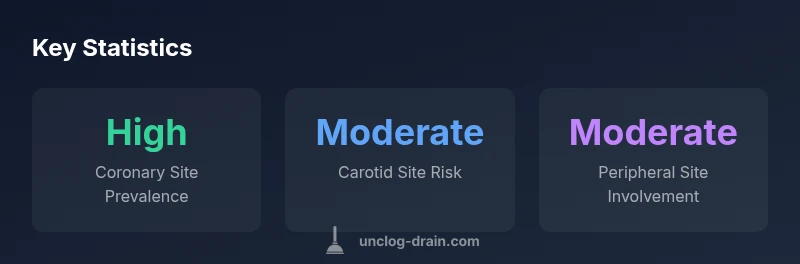
The arteries most commonly impacted by atherosclerosis are the coronary arteries that supply the heart, followed by the carotid arteries that feed the brain, and peripheral arteries in the legs. The coronary sites are associated with heart attack risk, while carotid involvement heightens stroke risk. Peripheral arterial disease (PAD), typically in the legs, can cause leg pain and cramping with activity. The pattern of involvement varies by genetics, lifestyle, and comorbid conditions like diabetes. According to the Unclog Drain analysis, clinicians often monitor all major vascular beds when assessing a patient with risk factors to tailor prevention and treatment.
Why do arteries become clogged?
Atherosclerosis begins with endothelial injury or dysfunction, which may be triggered by high blood pressure, high LDL cholesterol, smoking, diabetes, and inflammatory states. Small injuries attract immune cells that ingest lipids, forming fatty streaks that mature into plaques. As plaques grow, they can rupture, triggering clots that further restrict blood flow. Age, family history, and lifestyle choices influence how fast this process unfolds. Understanding these mechanisms helps patients prioritize prevention—dietary changes, physical activity, and medication adherence can slow or stabilize disease progression.
How clogged arteries are detected
Detection relies on a combination of risk assessment, biomarkers, and imaging. Lipid panels, blood glucose, and blood pressure measurements establish baseline risk. Noninvasive tests like carotid ultrasound and ankle-brachial index (ABI) assess specific bed areas, while CT or MR angiography provides detailed images of plaque and luminal narrowing. Early detection improves outcomes by enabling timely pharmacologic therapy (e.g., statins, antihypertensives) and lifestyle changes to reduce plaque progression. The Unclog Drain guidance emphasizes consistent follow-up and shared decision-making with healthcare providers.
Treatments and prevention strategies
Treatment focuses on reducing risk factors, slowing plaque growth, and addressing symptoms. Medications such as statins lower LDL cholesterol and have anti-inflammatory effects. Antihypertensives control blood pressure, and antiplatelet agents can reduce clot risk for certain patients. In some cases, revascularization procedures (like angioplasty or bypass surgery) restore blood flow when symptoms are debilitating or risk is high. Prevention centers on a heart-healthy diet, regular exercise, smoking cessation, weight management, and managing diabetes. The goal is to stabilize plaques, prevent rupture, and preserve organ function.
Practical steps for readers
- Get a risk assessment: track blood pressure, cholesterol, glucose, and body mass index (BMI).
- Embrace a heart-healthy pattern: whole foods, fiber-rich diets, reduced saturated fats, and limited processed foods.
- Move regularly: 150 minutes of moderate activity weekly, plus strength training.
- Don’t smoke and limit alcohol.
- Discuss with your clinician about personalized screening, especially if you have a family history or multiple risk factors. The Unclog Drain team echoes that proactive lifestyle choices and medical oversight can markedly reduce future complications.
Myths vs. reality about clogged arteries
Myth: A clogged artery can reverse completely with a single lifestyle change. Reality: Reversal is unlikely; however, progression can be slowed or halted with consistent treatment and risk management. Myth: Only older people get clogged arteries. Reality: While risk rises with age, younger adults with risk factors can develop early plaque. Myth: Symptoms always appear early. Reality: Many cases are silent until a major event. Addressing risk factors early remains the most effective strategy.
mainTopicQuery":"atherosclerosis"],
Common sites of arterial plaque and their clinical relevance (Unclog Drain Analysis, 2026)
| Artery | Commonness (qualitative) | Notes |
|---|---|---|
| Coronary arteries | high | Most commonly associated with heart disease |
| Carotid arteries | moderate | Linked to stroke risk |
| Peripheral arteries (legs) | moderate | Can cause claudication |
Common Questions
Which arteries are most commonly clogged, and what does that mean for health risk?
The coronary arteries are most commonly affected, increasing heart attack risk, followed by carotid arteries that raise stroke risk, and peripheral arteries that can limit limb blood flow. Understanding site-specific risks helps prioritize screening and prevention.
The heart arteries are usually the main concern, with stroke risk tied to carotids and leg blood flow issues from peripheral arteries.
What are the primary causes of arterial plaque buildup?
Plaque forms due to a mix of high LDL cholesterol, high blood pressure, smoking, diabetes, and chronic inflammation. Genetics also play a role in how quickly plaque develops and certain plaque characteristics.
Causes include cholesterol, blood pressure, smoking, and diabetes; genetics can speed up buildup.
What symptoms suggest clogged arteries might be affecting me?
Symptoms depend on the affected artery. Coronary blockage may cause chest pain (angina); carotid issues can produce transient vision or speech problems; peripheral arterial disease often causes leg pain with walking. Some people may have no symptoms until a major event.
Chest pain for heart arteries, stroke-like signs for carotids, leg pain with activity for peripheral arteries.
Can lifestyle changes reverse clogged arteries?
Reversal of established plaque is uncommon, but progression can be slowed or halted with sustained lifestyle changes and medical therapy. Regular follow-up with a clinician is essential.
Plaque reversal is unlikely, but you can slow progression with steady habits and meds.
Do medications remove existing plaques?
Medications mainly stabilize plaques and reduce risk factors (e.g., statins lower cholesterol). They do not typically remove large plaques but can prevent further growth and rupture.
Medicines typically stabilize plaques and lower risk, not necessarily remove large blocks.
“Blockages, whether in plumbing or in vessels, respond best to early diagnosis and a combination of preventive maintenance and targeted intervention.”
Key Points
- Assess risk factors early to reduce heart attack risk
- Coronary arteries are typically the most affected
- Stroke risk rises with carotid artery involvement
- Lifestyle changes slow disease progression
- Medical therapy complements lifestyle in prevention