Difference Between Clogged Pores and Blackheads: Explained
Explore how clogged pores differ from blackheads, with signs, causes, and practical treatment tips. Unclog Drain offers evidence-based skincare guidance for clearer, healthier skin.


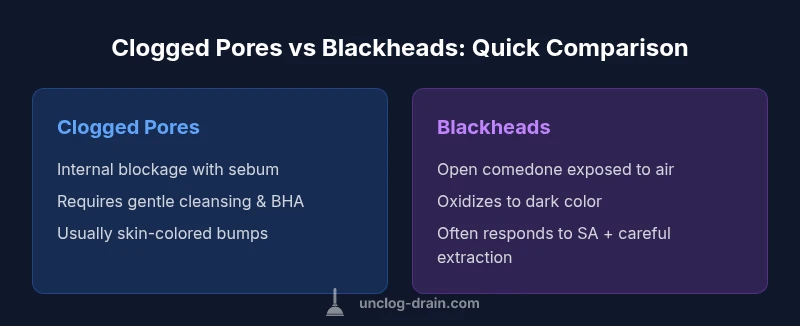
Short answer: Clogged pores are internal blockages from excess sebum and dead skin cells; blackheads are visible open comedones where the blockage meets air and oxidizes. The two are related but distinct, which matters for choosing cleansers, exfoliants, and whether professional extraction is appropriate.
What Causes Clogged Pores and Why It Matters
According to Unclog Drain, understanding the difference between clogged pores and blackheads is essential for effective DIY skincare. Pores are tiny entry points into the skin’s oil glands, and when sebum (the skin’s natural oil) combines with dead skin cells, it can form a plug inside the hair follicle. This internal blockage is what clinicians commonly call a clogged pore. While it can be painless, it often invites inflammation or repeated blockages if left unmanaged. Environmental factors, hormonal changes, and daily product choices all influence how readily pores clog. Recognizing this problem as a pore health issue—rather than a single blemish—helps you tailor routines that target the root cause: excess oil production, dead skin buildup, and keratinocytes that prematurely shed. The “difference between clogged pores and blackheads” is not merely semantic; it shapes how you cleanse, exfoliate, and protect your skin over time.
How Blackheads Form Differently
Blackheads are a subset of clogged pores with a distinctive opening that remains exposed to air. When the pore’s opening stays open, the buildup oxidizes, turning the plug dark gray or black. This visible trait arises from melanin and oxidation rather than dirt alone. Hormonal fluctuations, excessive sebum, and irregular exfoliation all contribute to blackhead formation. Unlike closed comedones (whiteheads), blackheads present on the surface, which makes them easier to spot but sometimes harder to remove without triggering irritation. Treating blackheads often requires a combination of cleansing, chemical exfoliation, and careful extraction by a professional when needed, to minimize trauma to the surrounding skin.
Distinguishing Signs and Symptoms
Clear signs help distinguish clogged pores from blackheads, though there is overlap. Clogged pores may feel like small bumps under the skin, often skin-colored or slightly white, and can be persistent without obvious dark centers. Blackheads appear as dark specks or tiny openings on the skin’s surface, most commonly on the nose, chin, and forehead. Location, texture, and visibility guide your routine: pore-blockage care emphasizes oil-regulating cleansers and gentle exfoliation, while blackhead-focused care relies on penetrating exfoliants and occasional professional extraction. For anyone new to skincare, tracking differences in how your skin responds to cleansers and exfoliants over several weeks helps confirm whether you’re dealing with clogged pores or blackheads.
Common Misconceptions About Pores and Blackheads
A frequent myth is that all blackheads are simply dirty pores. In reality, oil production, skin cell turnover, and pore structure drive formation; cleansing alone cannot collapse stubborn plugs. Another misconception is that scrubbing aggressively will remove blackheads; this can irritate skin and worsen breakouts. Gentle, consistent routines tend to yield better outcomes than sporadic, harsh treatments. By understanding the nuances—such as how open versus closed comedones form—you can choose products that target the right mechanism and reduce recurrence.
Skin Types and Pore Behavior Across Demographics
Oily and combination skin types tend to experience more frequent pore blockage due to higher sebum output, while dry skin may develop clogs more slowly but still benefit from regular exfoliation and moisturization. Age, climate, and lifestyle also affect pore health; hormonal changes around puberty, pregnancy, or menopause can alter oil production, increasing the risk of clogged pores and blackheads. Your skin’s baseline health matters: sensitive skin may react to certain acids, and people with a history of eczema need gentler formulations. Tailoring routines to your skin’s tendencies—rather than chasing a universal standard—helps keep pores clear without irritation.
Step-by-Step: Treating Clogged Pores Safely
Begin with a gentle cleanse twice daily using a non-stripping formula to avoid over-drying your skin. Incorporate a salicylic acid (BHA) exfoliant a few times per week to dissolve the plug inside pores and reduce dead skin buildup. Avoid harsh scrubs that can damage the protective barrier. After cleansing and exfoliating, apply a lightweight, non-comedogenic moisturizer to maintain hydration. If you wear sunscreen, choose a formula that won’t clog pores. For extra help, consider retinoids at night to accelerate cell turnover, but start slowly to minimize irritation. Consistency matters more than intensity, especially for preventing future clogs.
Step-by-Step: Treating Blackheads Safely
Targeted exfoliation is especially useful for blackheads. Use salicylic acid-based products to penetrate the pore opening and loosen the debris. When a blacklist requires extraction, seek professional help or skin care professionals to minimize skin trauma. If attempting home removal, place a warm compress on the area to soften the plug, use clean tools, and apply gentle pressure—never forceful pulling. Retinoids can complement these steps by promoting cell turnover and preventing future blockages. Pair these practices with non-comedogenic moisturizers and sunscreen to protect the skin’s barrier during treatment.
At-Home Care vs Professional Treatments
For many, a well-structured at-home routine is enough to control clogged pores and blackheads. Regular cleansing, routine exfoliation with BHA, and non-comedogenic moisturizers can reduce plug formation and maintain skin clarity. In cases of stubborn blackheads, professional options include manual extraction by a trained esthetician or dermatologist, chemical peels, and devices that provide deeper pore cleansing. These treatments carry benefits but also risks, such as irritation or scarring, especially if performed improperly. Weigh your skin’s sensitivity and tolerance before trying aggressive methods, and seek professional advice when in doubt.
Diet, Environment, and Lifestyle Impacts on Pore Health
Diet and environment subtly influence pore health. Hydration, a balanced diet rich in antioxidants, and limited high-glycemic foods can support skin resilience, though evidence varies by individual. Environmental factors like humidity, pollution, and sun exposure affect oil production and inflammation, so protecting skin with a barrier-friendly routine is wise. The Unclog Drain analysis suggests that consistent routines—spanning cleansing, exfoliation, and moisture management—help minimize pore blockage over time, especially when combined with a stable lifestyle. Always pairing skincare with adequate sleep and stress management can further reduce flare-ups and improve skin texture.
Selecting Skincare Products: Active Ingredients to Look For
Key ingredients make a difference in addressing clogged pores and blackheads. Salicylic acid (BHA) penetrates oily pores to loosen debris. Retinoids promote turnover and prevent buildup, supporting both conditions. Niacinamide helps regulate oil production and improve barrier function, reducing irritation risk. Clay masks can absorb excess oil without over-drying if used sparingly. Non-comedogenic moisturizers preserve hydration without clogging pores, and sunscreen protects against photodamage that can worsen pore visibility. When choosing products, start with lower concentrations to build tolerance and gradually increase as needed.
Maintenance and Prevention: Keeping Pores Clear Over Time
Prevention is the long-term aim. Establish a consistent routine that balances cleansing, exfoliation, and moisture without compromising the skin’s barrier. Avoid harsh scrubs and over-washing, which can trigger rebound oil production or irritation. Regular exfoliation should be tempered to prevent sensitivity, with adjustments based on skin response and seasonal changes. Maintain a simple routine during travel or stress periods to prevent lapses, and monitor for signs of irritation that require product adjustments. With patience, most people can maintain clearer pores and a healthier complexion over time.
Comparison
| Feature | Clogged Pores | Blackheads |
|---|---|---|
| Definition | Internal blockage from sebum and dead skin cells | Open comedone; blockage exposed to air and oxidizes |
| Cause & Development | Excess oil + keratin buildup inside follicles | Open pore allowing oxidation; often hormonally driven |
| Visual Cues | Skin-colored bumps; may be whiteheads if closed | Dark speck or center on pore opening |
| Location & Prevalence | Anywhere with oil glands; common in oily skin | Nose, chin, and forehead are typical hotspots |
| Treatment Focus | Cleansing, non-irritating exfoliation; BHA focus | Penetrating exfoliation; careful extractions when necessary |
| Risks & Considerations | Irritation from over-cleansing; recurrence possible | Improper extraction can scar; seek professional help |
Advantages
- Clarifies treatment approach for different pore issues
- Prevents over-treatment or under-treatment
- Guides ingredient selection and product pairing
- Supports targeted prevention strategies
Weaknesses
- May require ongoing observation of skin changes
- Can cause confusion if signs are misread
- Some treatments overlap, leading to decision fatigue
Treat clogged pores and blackheads with a tailored routine: cleanse and exfoliate for clogged pores, and targeted extractions or stronger exfoliants for blackheads.
Accurate distinction helps tailor products and routines. Start with a gentle cleansing and a salicylic acid routine, then adjust based on skin response. For persistent issues, seek professional guidance.
Common Questions
What is the difference between clogged pores and blackheads?
Clogged pores refer to internal blockages caused by sebum and dead skin cells. Blackheads are open comedones where the blockage is exposed to air and oxidizes. Distinguishing them helps tailor cleansing, exfoliation, and treatment strategies.
Clogged pores are internal blockages; blackheads are open and darkened due to oxidation. Distinguishing them guides your routine.
Can clogged pores turn into blackheads?
Yes, if the pore opening becomes exposed to air and oxidizes, a clogged pore can appear as a blackhead. Regular gentle exfoliation helps prevent both conditions by keeping pores clear.
Yes. A clogged pore can become a blackhead when the opening is exposed to air.
What ingredients help clogged pores vs blackheads?
Salicylic acid helps unclog pores by penetrating oil-filled follicles. Retinoids promote turnover to prevent buildup, and niacinamide supports barrier function. For blackheads, a combination of exfoliation and gentle extraction may be used under guidance.
Salicylic acid helps with both conditions; retinoids and niacinamide support prevention and barrier health.
Is exfoliation necessary for both conditions?
Exfoliation helps remove dead skin and debris that clog pores and contribute to blackheads. However, over-exfoliating can irritate skin, so balance and patch tests are important.
Yes, but be gentle and avoid overdoing it.
When should I see a dermatologist for pores or blackheads?
Seek professional advice if you have persistent or inflamed lesions, severe clogged pores, cystic acne, or if at-home routines don’t improve condition after several weeks.
If it persists or worsens, consult a dermatologist.
Are pimples related to clogged pores or blackheads?
Pimples can arise from clogged pores or inflammatory responses around hair follicles. Treating the underlying blockage and controlling bacteria help prevent pimples.
Pimples relate to clogged pores and inflammation; control with careful routine.
Key Points
- Identify pore type early to tailor treatment
- Use salicylic acid exfoliation for both conditions
- Avoid aggressive extractions; seek professional help if needed
- Pair exfoliation with non-comedogenic moisturizers
- Monitor changes and adjust routines gradually