Clogged vs Unclogged Catalytic Converter: A Practical Comparison
A practical comparison of clogged vs unclogged catalytic converters, with symptoms, diagnosis steps, and repair options to help you decide between cleaning and replacement.


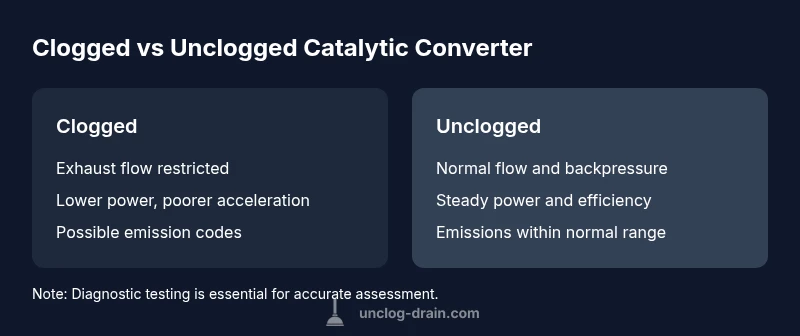
Clogged vs unclogged catalytic converter describes two states of the exhaust catalyst in a vehicle. A clogged converter restricts flow, reduces power, and can trigger emission codes; an unclogged unit maintains normal backpressure and emissions performance. Diagnosis typically starts with a scan tool and visual inspection, then professional cleaning or replacement guidance. This quick comparison helps homeowners decide whether symptoms warrant DIY checks or a pro evaluation.
What clogged vs unclogged catalytic converter means
According to Unclog Drain, the phrase clogged vs unclogged catalytic converter describes two states of the exhaust catalyst in modern vehicles. The Unclog Drain team found that many drivers assume a clogged converter is the same as a clogged drain, but the mechanics are different: buildup or obstruction inside the converter changes how exhaust gases flow, which in turn impacts performance and emissions. When you hear terms like backpressure, reduced power, or rough running, you’re hearing signals about whether the converter is impeded or functioning properly. Understanding this distinction helps homeowners decide whether symptoms are temporary or require professional intervention. In practical terms, a clogged state typically shows persistent symptoms, while an unclogged converter should maintain smooth power delivery and compliant emissions under normal driving conditions.
How a catalytic converter works
A catalytic converter sits in the exhaust stream after the engine and before the muffler, housing a ceramic substrate coated with precious metals. As hot exhaust gases pass through, chemical reactions occur on the substrate surface that reduce harmful pollutants such as hydrocarbons, carbon monoxide, and nitrogen oxides. The design relies on a balance between sufficient flow and effective treatment; if flow is too restricted, backpressure increases and engine performance can suffer. Modern vehicles also use upstream oxygen sensors and a downstream sensor to monitor efficiency. A healthy converter maintains steady backpressure and clean emissions, while a clogged unit disrupts that balance, harming performance and potentially triggering diagnostic trouble codes.
Signs of a clogged catalytic converter
Detecting a clogged catalytic converter relies on a combination of observable symptoms and symptoms that sensors report. A vehicle may experience a noticeable loss of power and acceleration, especially at higher speeds, or a rough idle and occasional stalling when the engine is under load. Fuel economy often declines as the engine works harder to push exhaust through a restricted pathway. You might also see a check engine light or emissions-related fault codes, and in some cases an unusual exhaust odor or a rattling noise from under the vehicle. These signs should prompt a diagnostic check rather than guessing at a fix.
Causes of clogging and buildup
Clogs rarely appear out of nowhere; they develop from deposits, contaminants, and misuse over time. Internal ceramic substrate breakage can create obstructions, while oil or coolant entering the exhaust stream from engine leaks can lead to sticky deposits that restrict flow. Excess fuel that hasn’t fully burned can leave carbon deposits, and frequent short trips prevent the converter from reaching operating temperature, encouraging buildup. Exhaust leaks or faulty oxygen sensors can also skew readings and hasten clog formation. Understanding these causes helps homeowners address the root problem rather than chasing temporary symptoms.
Diagnostics: determining clogged vs unclogged
Diagnosing a clogged vs unclogged catalytic converter involves a structured approach. Start with a vehicle scan to check for emission-related codes and misfire indicators, then visually inspect the exhaust system for damage or loose clamps. If safe, a basic backpressure check or temperature comparison across the converter can reveal flow restrictions. Persistent symptoms with normal initial tests suggest a deeper issue that may require professional flow tests or a more thorough inspection of the substrate. In all cases, correlating symptom history with emissions data provides the most reliable guidance.
DIY checks you can perform safely
DIY checks can rule out obvious external problems, but never attempt risky actions that could damage the converter. Begin with a cool engine and a visual inspection of the exhaust area for rust, leaks, or loose connections. Listen for unusual exhaust sounds at idle or during acceleration, and note any smells inside the cabin after a cold start. Do not attempt aggressive cleaning methods that use solvents or expose the substrate to heat or abrasion. If you observe persistent symptoms after basic checks, seek professional guidance.
Cleaning vs replacement: what to expect
Some shops offer catalytic converter cleaning, but effectiveness depends on the clog type and location. Light deposits may respond to professional cleaning, restoring some exhaust flow, while stubborn blockages often require replacement to restore performance and emissions compliance. Replacement ensures reliability, but upfront costs and installation complexity can be higher. The decision should weigh vehicle age, usage patterns, and the potential emissions impact of continued running with a degraded converter. The goal is long-term reliability rather than a quick fix.
Costs and value considerations
Costs for addressing a clogged converter vary by vehicle, region, and chosen method, but the primary considerations are reliability and emissions compliance. A temporary fix or cleaning may be cheaper in the short term but could lead to recurring problems if deposits recur. Replacement generally provides the most consistent performance and compliance, offering long-term value even if the upfront price is higher. When evaluating options, consider your vehicle’s safety, environmental impact, and future maintenance plans.
Prevention and maintenance
Preventive measures reduce the likelihood of clogging. Favor longer drives that allow the exhaust system to reach operating temperature, and address oil leaks or coolant issues promptly to prevent contamination. Regular maintenance of oxygen sensors and fuel systems helps prevent deposits that can contribute to clogs. Use quality fuels and follow the manufacturer’s service schedule to maintain optimal exhaust flow. If symptoms appear, address them early with a professional assessment to avoid irreversible damage to the catalytic converter.
When to seek professional help
Professional assessment is advised when symptoms persist after basic checks or when diagnostic tools point to the exhaust system. A certified mechanic can perform a thorough diagnosis, evaluate for internal damage, and determine whether cleaning, mapping, or replacement is needed to restore performance and emissions compliance. In many regions, emissions standards and inspection requirements add urgency to timely service. The Unclog Drain team emphasizes safety and reliability over quick, DIY fixes for catalytic converter issues.
Comparison
| Feature | Clogged catalytic converter | Unclogged catalytic converter |
|---|---|---|
| Exhaust backpressure impact | High backpressure reduces flow | Normal backpressure maintains steady flow |
| Power and acceleration | Reduced power and sluggish acceleration | Restore or maintain expected power |
| Fuel efficiency | Lower fuel economy due to extra engine work | Normal or improved fuel economy when flow is unrestricted |
| Emissions compliance | May trigger codes or fail emissions tests | Typically compliant and stable emissions |
| Maintenance risk | Higher risk of overheating and damage | Lower risk with proper function |
| Best for | Deposits or minor restrictions likely to respond to cleaning | Long-term reliability and emissions integrity |
Advantages
- Clarifies decision factors for DIY vs professional service
- Guides when cleaning may be appropriate
- Encourages emissions-compliance and safety
- Promotes proactive diagnosis before replacement
Weaknesses
- DIY fixes can be risky and may cause further damage
- Cleaning is not a guaranteed fix for all clogs
- Replacement is a larger upfront investment
- Risk of misdiagnosis leading to unnecessary repairs
Professional assessment is typically the most reliable path; replacement is often the best long-term fix for a truly clogged catalytic converter.
In most cases, a clogged catalytic converter requires professional intervention. DIY cleaning is rarely a lasting solution. The Unclog Drain team recommends a formal diagnostic first, then a decision on cleaning versus replacement based on symptom persistence and emissions results.
Common Questions
What is the difference between a clogged and an unclogged catalytic converter?
A clogged converter restricts exhaust flow, harming performance and emissions readings. An unclogged converter allows normal flow and keeps emissions in check. Proper diagnosis is essential to determine which state applies.
A clogged converter blocks flow and hurts performance; an unclogged converter flows normally and stays compliant. Get a proper diagnosis to decide the right fix.
Can you unclog a catalytic converter yourself?
DIY attempts are often ineffective and can cause damage to the catalyst or exhaust system. In many cases, professional cleaning or replacement is needed for lasting results.
Home methods rarely fix the issue; a professional assessment is usually the safer path.
What causes a catalytic converter to clog?
Deposits from oil or coolant leaks, fuel that hasn’t burned completely, carbon buildup, and operating the vehicle on short trips can lead to clogs. External damage can also contribute.
Oil leaks, fuel deposits, and carbon buildup are common culprits.
How is a clogged catalytic converter diagnosed?
Techs use a combination of emissions codes, visual inspection, and tests that assess exhaust flow. Persistent symptoms with normal readings may indicate a deeper clog.
Mechanics check codes and flow to pinpoint the problem.
What are typical remedies and costs?
Remedies include cleaning or replacement, with cost driven by vehicle type and region. Cleaning may be cheaper upfront but is not always durable; replacement offers long-term reliability.
Costs vary; replacement is common for lasting results, while cleaning is a shorter-term option.
Key Points
- Identify symptoms early and differentiate clogged vs unclogged states
- Start with a diagnostic scan before any cleaning or replacement
- Cleaning helps only for light deposits; persistent clogs usually require replacement
- Prioritize emissions compliance and long-term reliability over short-term savings
- Consult a qualified technician for an accurate diagnosis and safe repair