Why Your Sink Drains Slowly Without a Visible Clog
Learn how to diagnose and fix a sink that drains slowly but shows no visible clog. This guide covers hidden causes, practical DIY fixes, safety tips, and when to call a pro, with actionable steps from Unclog Drain.


The culprit is usually a partial blockage down the line or venting issues, not a visible clog. Start with simple checks: clear the trap, plunge the drain, and use a drain snake or enzymatic cleaner. If drainage remains slow, inspect vent pipes and trap configuration. For persistent issues, call a professional.
What slow drainage without a clog really means
Slow drainage without a visible clog is a common household puzzle. The drain can appear clear, yet water lingers in the basin or drains reluctantly. In many cases, the obstruction is not at the surface you can see but deeper in the trap arm or further down the drainage line. The Unclog Drain team found that hair and soap scum often accumulate in elbows and joints, creating a tight seam where water slows but a lump of debris remains out of sight. The plan of attack is different from a typical clog: you need to confirm whether the flow is restricted by a partial blockage, a venting issue, or a misconfigured pipe slope. Understanding what this looks like helps you pick the right remedy—one that restores flow without resorting to harsh chemicals. According to Unclog Drain, partial blockages and venting issues are frequent culprits when there’s no obvious clog. Acting quickly reduces odors and potential water damage while you decide on the best fix.
Hidden causes: what to look for when there’s no visible clog
There are several hidden culprits that can slow drainage without a visible clog. A partial blockage in the P-trap or trap arm is common, and hair, soap scum, or mineral deposits can gradually narrow the path of water. Venting problems can also trap air and slow drainage, especially in multi-story homes. An improper slope or misaligned pipes in the trap arm and waste line can dull the fall of wastewater, causing standing water or slow drainage. In older homes, grease build-up in the pipe walls may progress slowly, mimicking a clog. Finally, a laterally connected garbage disposal can introduce fats and tiny debris that degrade flow even if you don’t feel a traditional clog. Understanding these hidden causes helps you target the right fix without unnecessary work.
Start with the simplest checks first
Begin with the easiest, least invasive checks: look at the P-trap for obvious hair or soap scum, clear out accessible debris, and test whether other fixtures are slow. If the trap is clogged, disassemble and clean it thoroughly. Next, plunge the sink to see if you can dislodge a partial blockage further down the line. If plunging helps, recheck and flush with hot water. Don’t rush to chemical cleaners—mechanical methods are safer and often more effective for hidden partials. Finally, inspect whether the vent stack is blocked or misaligned, especially if multiple fixtures are slow or gurgling. If you share a vent with a bathroom or upstairs fixture, slow drainage might be a venting issue that requires professional attention.
How to safely inspect and clean the P-trap
The P-trap is the most common access point for cleaning. Place a bucket beneath the trap to catch water, then loosen the slip nuts with adjustable pliers. Remove the trap, clear out hair and gunk, and run a brush through the tubing. Reassemble the trap tightly and run hot water to ensure a clean, free path. If you see heavy corrosion or damaged washers, replace the trap or tailpiece to prevent leaks. After reassembly, test the drain by running several gallons of water and noting whether the flow has improved. Regular maintenance, including periodic trap cleaning, will prevent slow draining from reoccurring.
Snaked drains beyond the P-trap
If the trap is clean but drainage remains slow, use a drain snake to extend past the trap into the trap arm. Insert the snake into the drain, rotate gently, and push until you feel resistance. Retrieve the snake slowly to pull out hair and debris, then flush with hot water. Snaking beyond the trap increases your chances of removing a partial blockage that’s hidden deeper in the line. If you encounter tough resistance or sheets of buildup, stop and reassess—the risk of damaging pipes increases with force. For best results, use a flexible snake designed for residential drains and follow the manufacturer’s instructions.
Venting and pipe slope: often overlooked culprits
Venting problems can create a psychosomatic sense of slow drainage. If air cannot escape as water leaves, the drain can slow down. Signs include gurgling sounds and water backing up into the sink when another fixture is used. Check for a blocked or disconnected vent on the roof, which often requires professional inspection to avoid climbing onto the roof yourself. Pipe slope matters too: a drain line that doesn’t slope properly can trap water and debris. A licensed plumber can assess whether the slope meets local codes and replace or reposition piping if needed.
When to escalate: signs you need a plumber
If you still have slow drainage after trap cleaning and snaking, or you smell sewage, hear gurgling, or see recurring backups in the same fixture, escalate. A plumber can perform camera inspection to locate partial clogs, verify vent integrity, and evaluate sewer lines for deeper problems. Do not ignore persistent slow drainage in multiple fixtures; it may indicate a broader system issue that requires professional equipment and expertise. Early professional involvement can save time and prevent water damage.
Prevention: keep sinks flowing smoothly
Regular maintenance is easier than repeated repairs. Flush drains with hot water weekly, use a natural enzyme cleaner every few months to digest organic build-up, and avoid pouring fats or coffee grounds down the sink. Keep the P-trap clean and dry, inspect for loose connections, and ensure proper disposal of hair and food waste in the trash rather than the drain. If you have a garbage disposal, run it with cold water to carry debris away and avoid grease build-up on the interior walls. By maintaining your drainage system, you reduce the odds of hidden partials turning into a slow drain.
Conclusion: plan of attack with Unclog Drain guidance
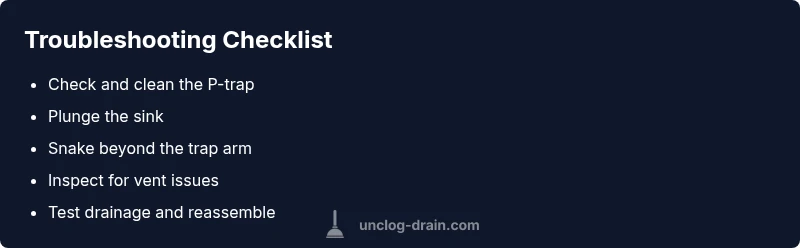
A slow sink drain without a visible clog often points to a partial blockage, venting issue, or slope problem. Start with the trap, then extend your investigation with a snake and vent checks if needed. If you prefer a safer, methodical approach, you can follow this troubleshooting sequence: trap cleaning, plunging, snake beyond the trap, vent check, and professional help if required. The goal is to restore normal flow while protecting your pipes and your household from water damage and odors. The Unclog Drain team emphasizes starting with mechanical fixes before resorting to harsh chemicals, and not hesitating to call in a pro for complex issues.
Steps
Estimated time: 30-60 minutes
- 1
Shut off water and gather tools
Turn off the faucet supply valves under the sink and place a bucket, towels, and gloves nearby. Assemble a adjustable wrench, bucket, cleaning brush, and a drain snake. This prevents accidental spills and prepares you for a clean, controlled repair.
Tip: Having a camera or smartphone nearby helps you document the trap and joints before disassembly. - 2
Inspect and remove the P-trap
Place the bucket under the trap, loosen the slip nuts, and carefully remove the U-shaped trap. Look for hair, soap scum, and mineral buildup. If you find a clog, clean all surfaces and rinse the trap before reassembly.
Tip: Keep the washers and nuts in a labeled tray so you don’t mix them up during reassembly. - 3
Clean the P-trap thoroughly
Use a bottle brush or old toothbrush to scrub the interior of the trap and the pipe ends. Rinse with warm water to remove debris. Reassemble only after the trap is completely clean to reduce future clog risk.
Tip: Check for cracks in the trap; replace if you see any damage to prevent leaks. - 4
Snaked drain beyond the trap
Insert the drain snake into the trap arm and rotate while advancing. When you reach resistance, pull back slightly to catch debris, then repeat. Remove the snake and flush with hot water.
Tip: Work slowly to avoid scratching or denting pipes; avoid forcing the snake through tight bends. - 5
Check venting and pipe slope
If the flow improves but remains slow, inspect for vent blockages or misalignment. Shallow slopes reduce gravity-assisted flow; a professional assessment may be required for complex fixes.
Tip: Never attempt roof vent work if you’re uncomfortable; hire a licensed pro to avoid falls and injury. - 6
Test drainage and reassemble
Run hot water for several minutes to flush debris. Reassemble the trap securely and test the sink again. If the drain remains slow, escalate to more advanced methods or a plumber.
Tip: Document the steps you took; this helps the next technician understand what you’ve already attempted.
Diagnosis: Sink drains slowly but no visible clog
Possible Causes
- highPartial clog in P-trap or trap arm
- mediumVenting problem causing poor drainage
- lowImproper pipe slope or trap arm alignment
- lowMain sewer line issue or septic-related problem
Fixes
- easyDisassemble and clean P-trap, trap arm, and reachable sections
- mediumClear vent blockage or schedule vent inspection
- hardRepair slope or replace damaged pipes if needed
- mediumConsult a plumber for sewer line assessment and camera inspection
Common Questions
What causes a sink to drain slowly but show no clog?
A slow drain without a visible clog is usually caused by a partial blockage deeper in the drain, venting problems, or an improper pipe slope. Mechanical fixes like cleaning the trap and snaking beyond it often resolve the issue. If problems persist, consider checking the vent system or calling a professional.
Most slow drains without a visible clog come from partial blockages, vent issues, or bad pipe slope. Start with the trap, then snake beyond it, and check the vent if needed.
Can a vent issue cause slow drainage even if there is no clog?
Yes. A blocked or poorly vented drain can trap air and slow water flow. If multiple fixtures are slow and gurgling, the vent or stack could be the culprit and may require professional inspection.
Yes. A blocked vent can slow drainage; multiple fixtures being slow is a red flag for vent problems.
How do I check the P-trap for clogs?
Place a bucket beneath the P-trap, loosen the slip nuts, remove the trap, and clean out hair and debris. Reassemble tightly and test drainage.
Open the trap, clean it out, and reassemble. Then test the drain.
Are chemical drain cleaners safe for slow sinks?
Most professionals recommend mechanical methods first. Chemicals can damage pipes and fail to address vent or deeper-line issues. If you must use cleaners, choose enzymatic types and avoid mixing with other cleaners.
Chemicals can be harsh on pipes and don’t fix vent or deeper issues. Enzymatic cleaners are safer if you must.
When should I call a plumber?
If slow drainage persists after trap cleaning and snaking, or you notice recurring backups, odors, or gurgling, call a plumber for camera inspection and system assessment.
Call a plumber if the drain stays slow after DIY fixes or you notice backups or gurgling.
Will replacing pipes fix a slow drain?
Replacing pipes is typically a last resort for persistent, structural issues such as damaged or sagging lines. Most slow drains resolve with trap cleaning, vent checks, or slope corrections.
Pipe replacement is usually a last resort after other fixes fail.
Watch Video
Key Points
- Identify hidden causes before replacing pipes
- Start with trap cleaning and mechanical methods
- Check venting and slope if simple fixes fail
- Escalate to a plumber for signs of sewer problems
- Prevent future clogs with routine maintenance